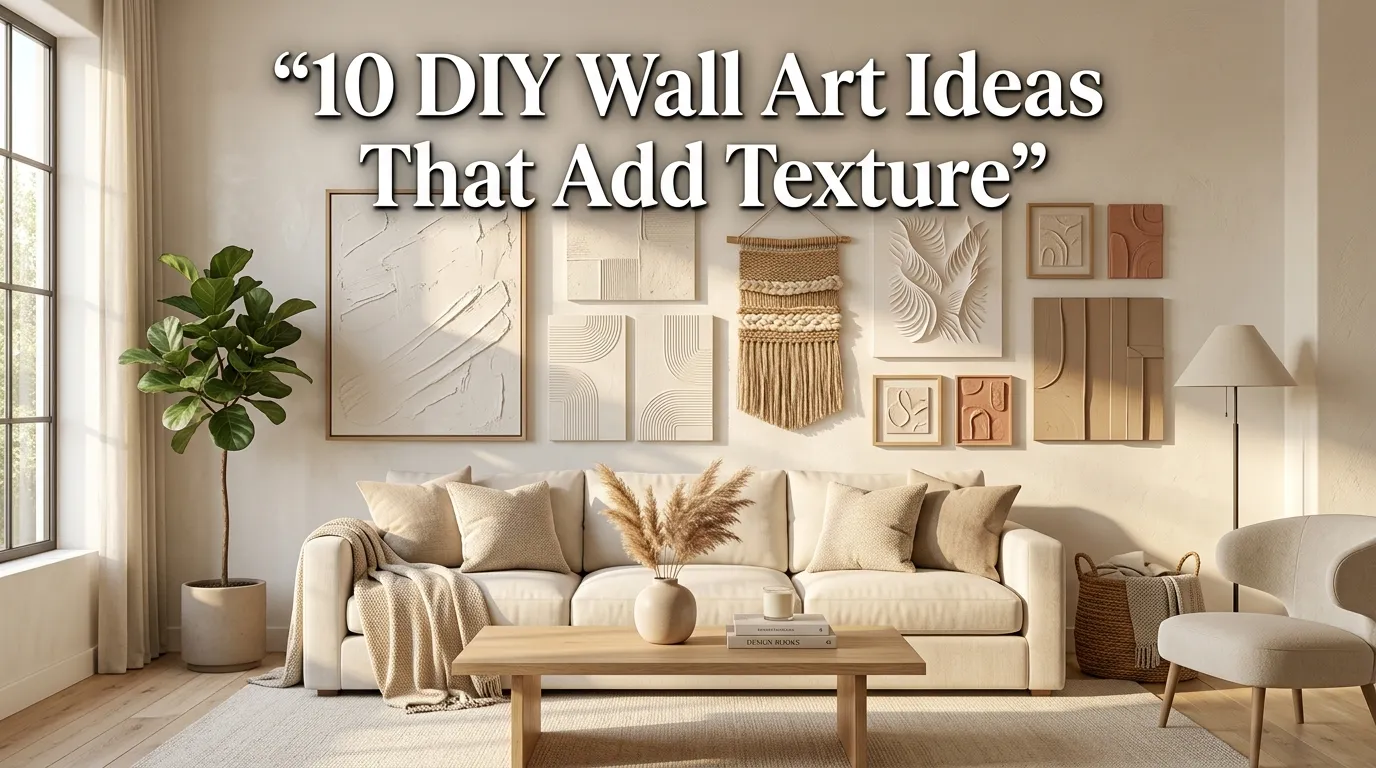
10 DIY Wall Art Ideas That Add Texture
Blank walls can make a room feel unfinished, but filling them doesn’t always mean buying expensive artwork. DIY wall art is an easy way to introduce texture, personality, and visual interest while creating something that feels completely your own.
Textured wall art is especially effective because it adds dimension that flat prints cannot provide. Materials such as linen, canvas, plaster, wood, rope, woven fibers, and handmade paper can create subtle shadows that change throughout the day.
In my experience, the most successful DIY artwork doesn’t need to look overly complicated. Simple shapes, neutral colors, and natural materials can create a sophisticated result that works beautifully with modern, organic, farmhouse, or minimalist interiors.
You also don’t need advanced crafting skills. Many of these projects can be created with inexpensive materials and basic supplies you may already have at home.
The key is choosing artwork that complements the room rather than simply filling empty wall space. Consider the scale of the wall, the furniture beneath it, and the colors already present in your décor.
These DIY wall art ideas focus on texture first, giving you practical ways to create dimensional pieces that look stylish and intentional.
Table of Contents
- Textured Canvas Art
- Fabric Wall Hanging
- Plaster Abstract Art
- Wooden Slat Art
- Rope Wall Art
- Woven Fiber Art
- Layered Paper Art
- Textured Floral Art
- Raised Geometric Art
- DIY Gallery Wall
1. Textured Canvas Art
Quick Benefits
- Easy to customize
- Creates dimension
- Works with neutral décor
- Affordable materials
- Suitable for beginners
Why It Works
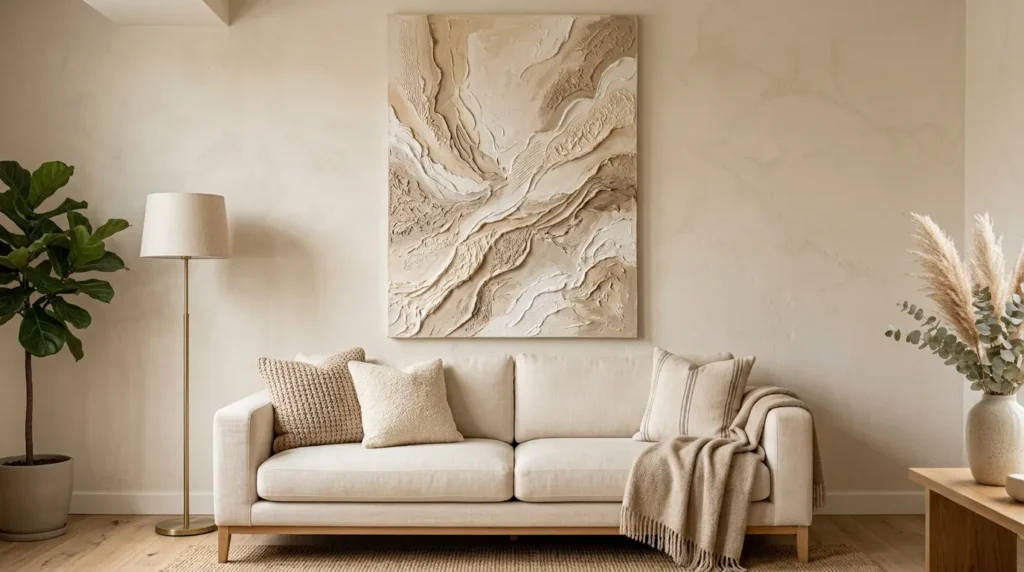
A textured canvas is one of the easiest ways to create artwork with a high-end appearance. Instead of relying entirely on paint, you can use modeling paste or another suitable texture medium to create raised shapes and subtle patterns.
The uneven surface catches light and creates shadows, giving the artwork more depth.
I’ve found that simple abstract designs often look more sophisticated than complicated patterns.
How To Style It
Start with a stretched canvas and create a simple composition using a palette knife or appropriate tool. Keep the colors neutral if you want a soft, modern look.
Hang a large piece above a console, sofa, dresser, or bed where its texture can become a focal point.
2. Fabric Wall Hanging
Quick Benefits
- Adds softness
- Introduces texture
- Lightweight
- Easy to customize
- Works in bedrooms
Why It Works
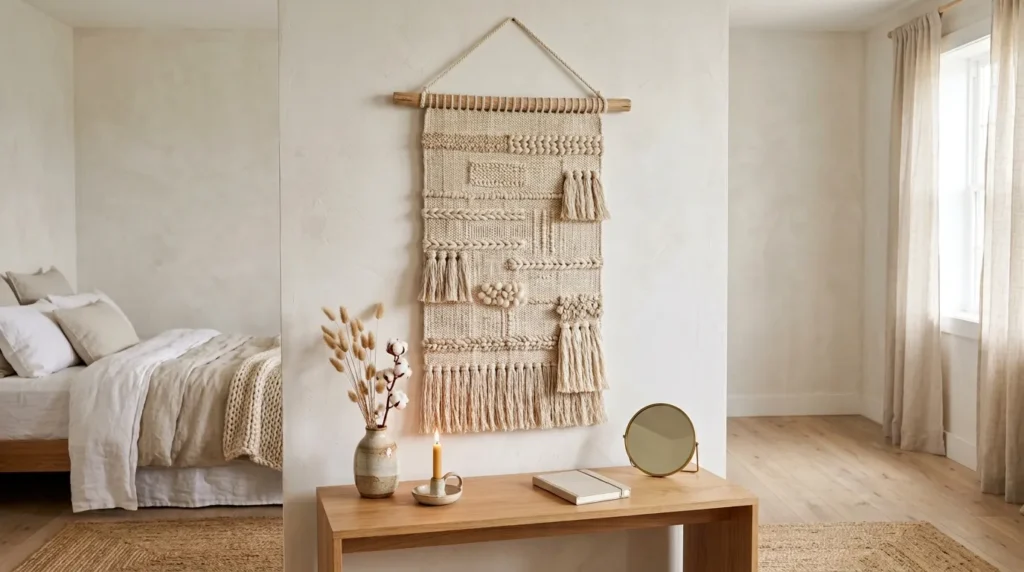
Fabric wall art can soften a room while adding visual texture. Linen, cotton, canvas, and other sturdy textiles can be transformed into simple wall hangings.
The material creates natural folds and shadows that make the artwork feel more dimensional.
I’ve found that neutral fabric wall hangings work especially well in bedrooms and relaxed living spaces.
How To Style It
Choose a fabric that complements your existing colors. Mount it from a simple wooden dowel or suitable hanging structure.
Allow the fabric to drape naturally rather than making it perfectly rigid.
3. Plaster Abstract Art
Quick Benefits
- Creates strong texture
- Looks artistic
- Customizable
- Works with neutral palettes
- Makes a statement
Why It Works
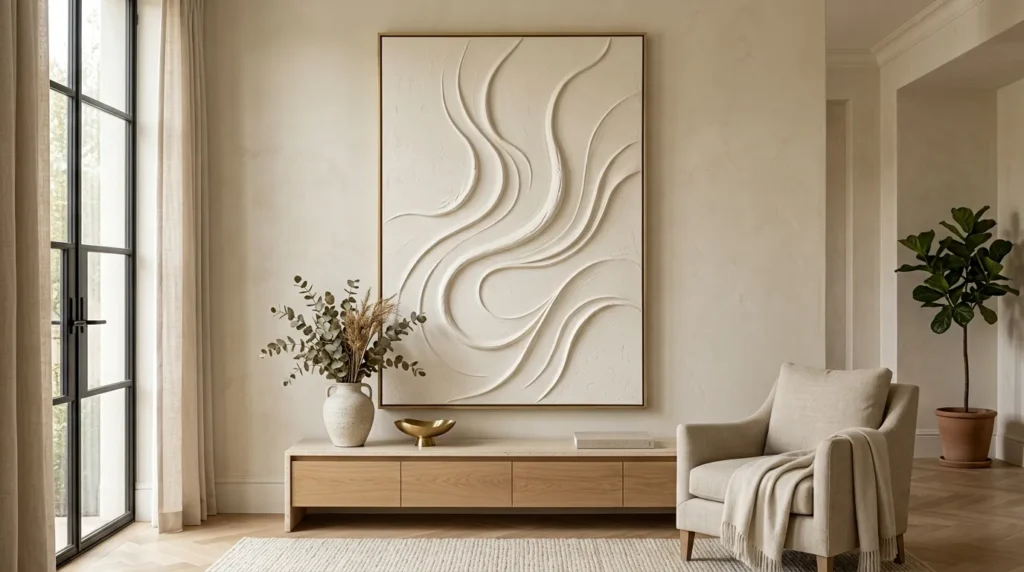
Plaster-inspired artwork creates dramatic texture while maintaining a minimalist appearance. Raised curves, organic shapes, and irregular surfaces can make a simple canvas look like a contemporary gallery piece.
The monochromatic finish allows the texture itself to become the main feature.
I’ve found that creamy white and warm beige finishes look particularly elegant.
How To Style It
Create broad organic shapes rather than covering the entire canvas with heavy texture.
Once dry, paint the surface in a soft neutral shade and hang it where natural or directional lighting can highlight the raised areas.
4. Wooden Slat Art
Quick Benefits
- Adds natural texture
- Creates warmth
- Works with modern interiors
- Highly customizable
- Provides architectural interest
Why It Works
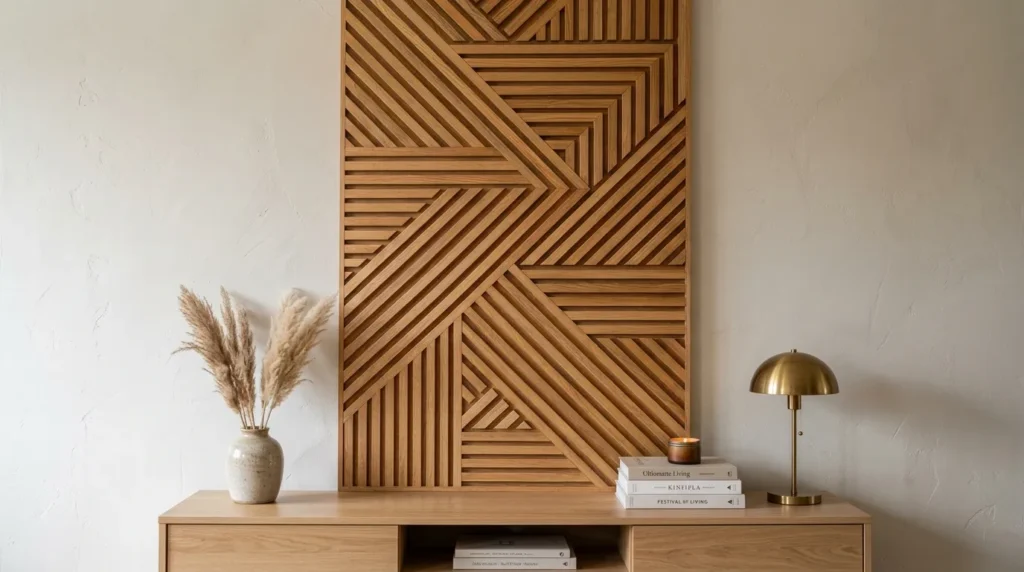
Wood naturally introduces warmth and dimension. Thin wood strips arranged vertically, horizontally, or in geometric patterns can become a striking piece of wall décor.
The shadows between the slats add another layer of visual interest.
I’ve found that simple repetitive patterns often look surprisingly sophisticated.
How To Style It
Choose a wood tone that complements your furniture and flooring. Keep the spacing consistent for a cleaner appearance.
Use the piece as a focal point above a sofa, console, dining area, or bed.
5. Rope Wall Art
Quick Benefits
- Budget-friendly
- Adds organic texture
- Easy to customize
- Lightweight
- Works with natural décor
Why It Works
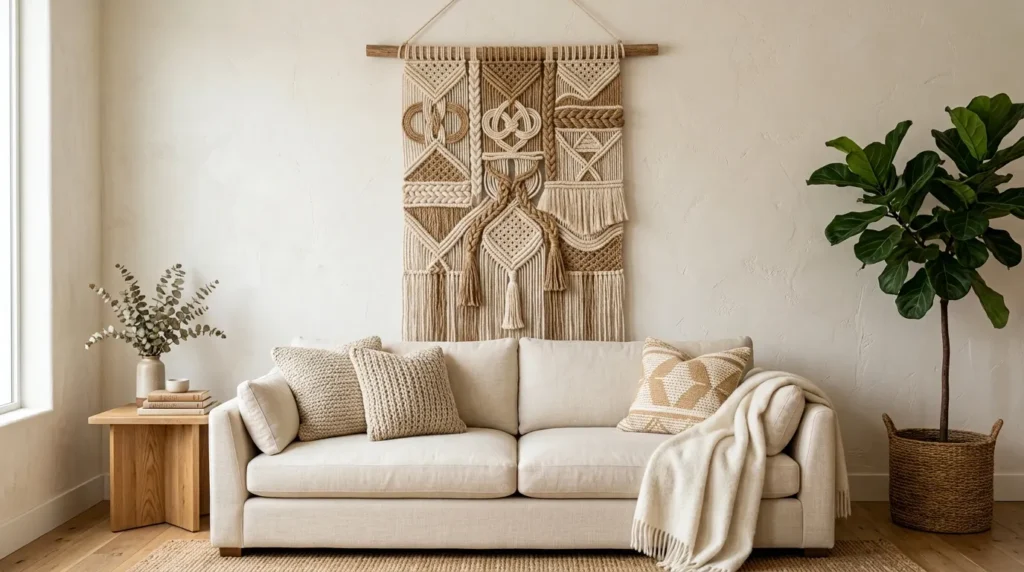
Rope can create surprisingly beautiful wall art because its fibers naturally add texture. You can arrange it into geometric shapes, abstract patterns, or simple botanical-inspired designs.
Natural jute, cotton, and similar materials work especially well in warm neutral interiors.
I’ve found that rope art looks best when the design remains relatively simple.
How To Style It
Use a sturdy backing or suitable hanging structure. Arrange the rope into a balanced pattern and secure it carefully.
Pair it with wood, woven baskets, linen, and other natural materials.
6. Woven Fiber Art
Quick Benefits
- Adds natural texture
- Creates warmth
- Softens blank walls
- Works with neutral décor
- Adds handmade character
Why It Works
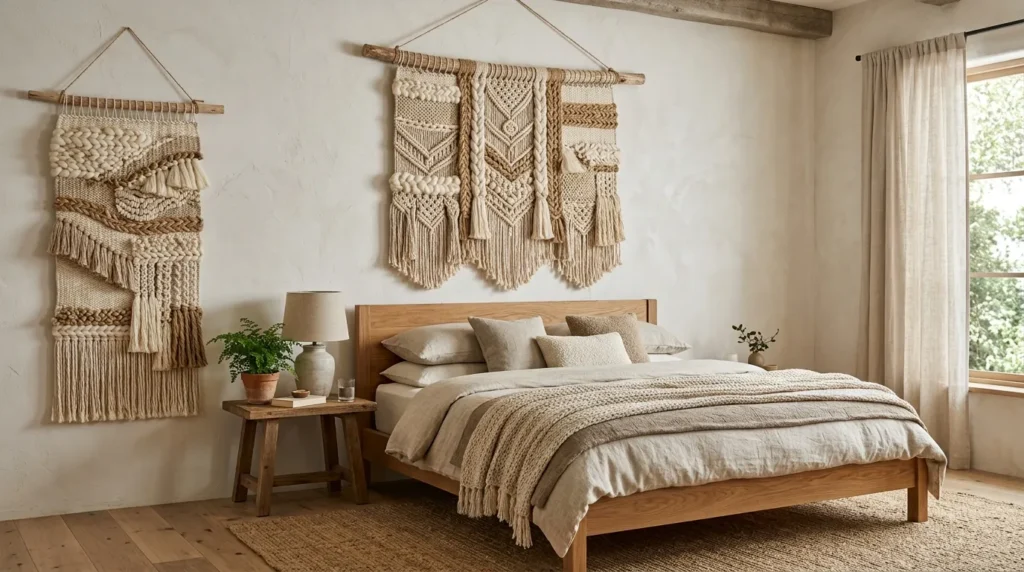
Woven wall art brings softness and dimension to a room through natural fibers and handcrafted patterns. Materials such as cotton, wool, jute, and other suitable fibers can create everything from simple minimalist pieces to more detailed decorative designs.
The layered strands create gentle shadows that change with the light.
I’ve found that woven artwork works especially well when a room already includes wood, linen, rattan, or other organic materials.
How To Style It
Choose one large woven piece for a strong focal point or create a small grouping of related pieces.
Keep the colors within the existing room palette so the texture becomes the main feature rather than competing with other décor.
7. Layered Paper Art
Quick Benefits
- Very affordable
- Lightweight
- Easy to customize
- Creates dimension
- Beginner-friendly
Why It Works
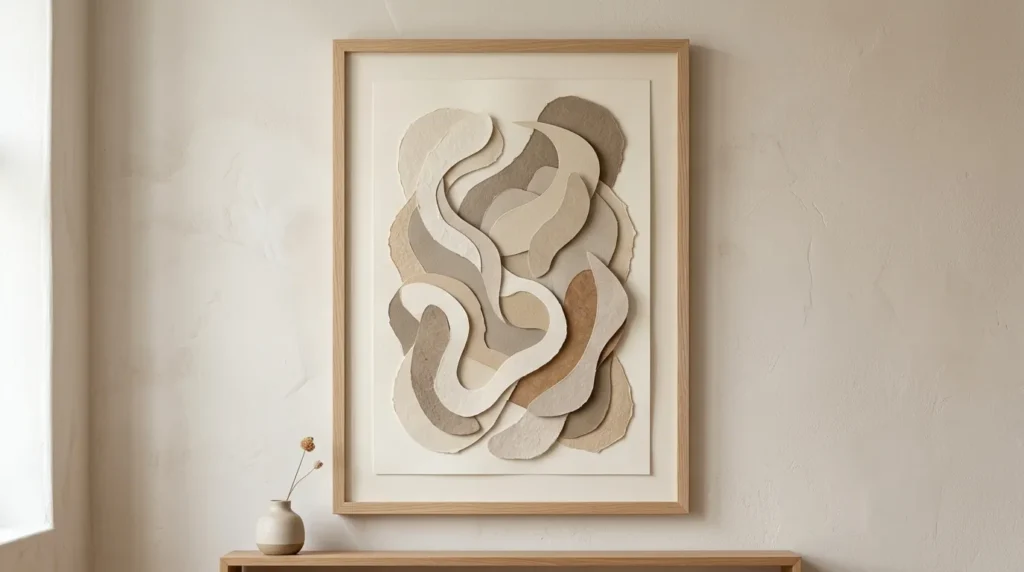
Layered paper can create surprisingly sophisticated wall art. By cutting shapes at different sizes and stacking them with small spaces between layers, you can create depth and subtle shadows.
This technique works particularly well for abstract, botanical, geometric, and minimalist designs.
I’ve found that monochromatic paper art often looks much more expensive than the materials suggest.
How To Style It
Choose several shades within the same color family. Cut simple organic or geometric shapes and layer them onto a sturdy backing.
Place the finished artwork in a simple frame with enough depth to accommodate the layers.
8. Textured Floral Art
Quick Benefits
- Adds softness
- Introduces botanical detail
- Creates dimension
- Personalizes walls
- Works in bedrooms and living rooms
Why It Works
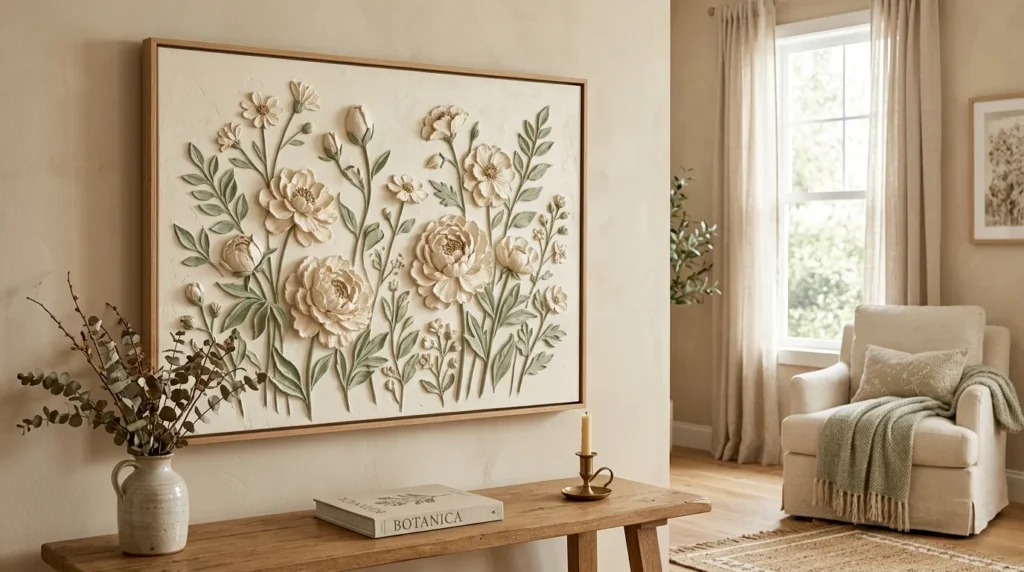
Floral-inspired artwork doesn’t have to be a traditional painted bouquet. Fabric petals, dried botanical elements, paper flowers, or raised painted shapes can create dimensional floral compositions.
The result can feel artistic without being overly decorative.
I’ve found that simplified botanical forms are easier to style than highly colorful floral artwork.
How To Style It
Use a restrained palette such as cream, beige, sage, muted brown, or dusty rose.
Choose a large central composition for a statement wall or create several coordinated smaller pieces for a gallery arrangement.
9. Raised Geometric Art
Quick Benefits
- Adds modern texture
- Creates clean lines
- Looks sophisticated
- Easy to customize
- Works with minimalist interiors
Why It Works
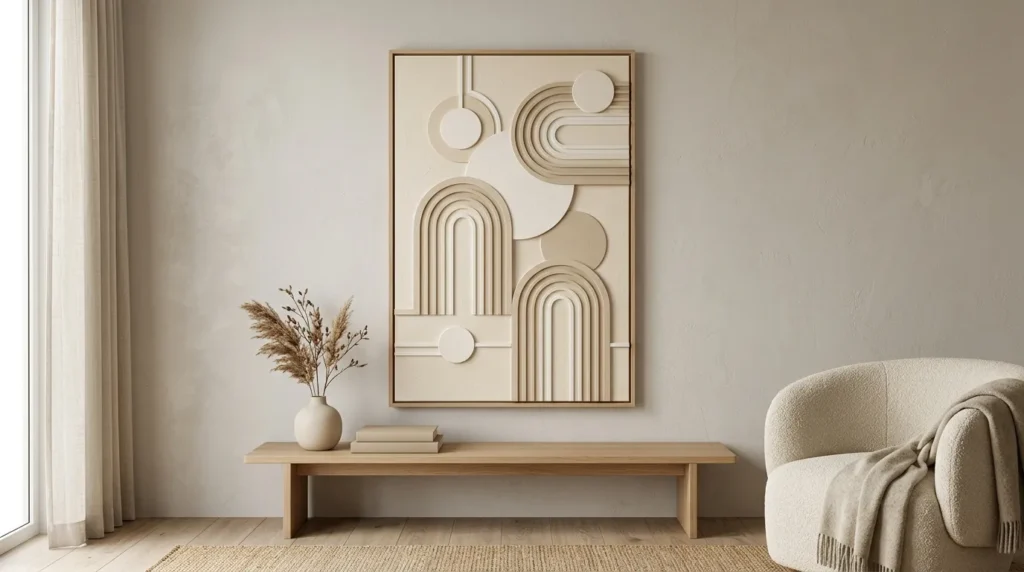
Raised geometric artwork combines structure with texture. Simple circles, arches, lines, squares, or overlapping forms can create a contemporary focal point.
The shadows created by the raised elements give the design dimension without requiring bright colors.
I’ve found that tonal geometric art works particularly well in modern and minimalist homes.
How To Style It
Choose two or three related neutral shades or use a single monochromatic finish.
Keep the composition balanced and avoid using too many competing shapes.
10. DIY Gallery Wall
Quick Benefits
- Fills large walls
- Highly customizable
- Mixes textures
- Creates personality
- Can grow over time
Why It Works
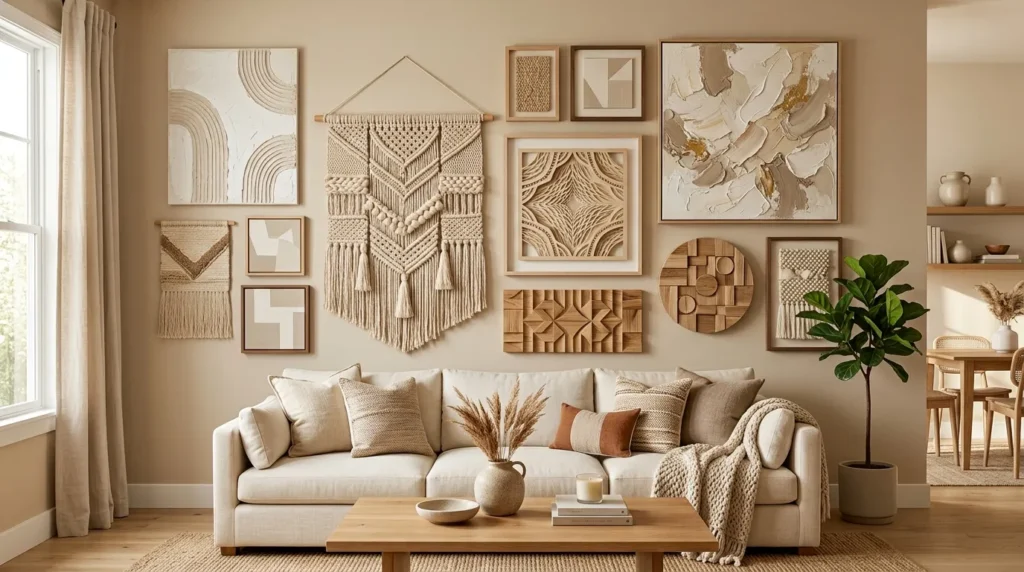
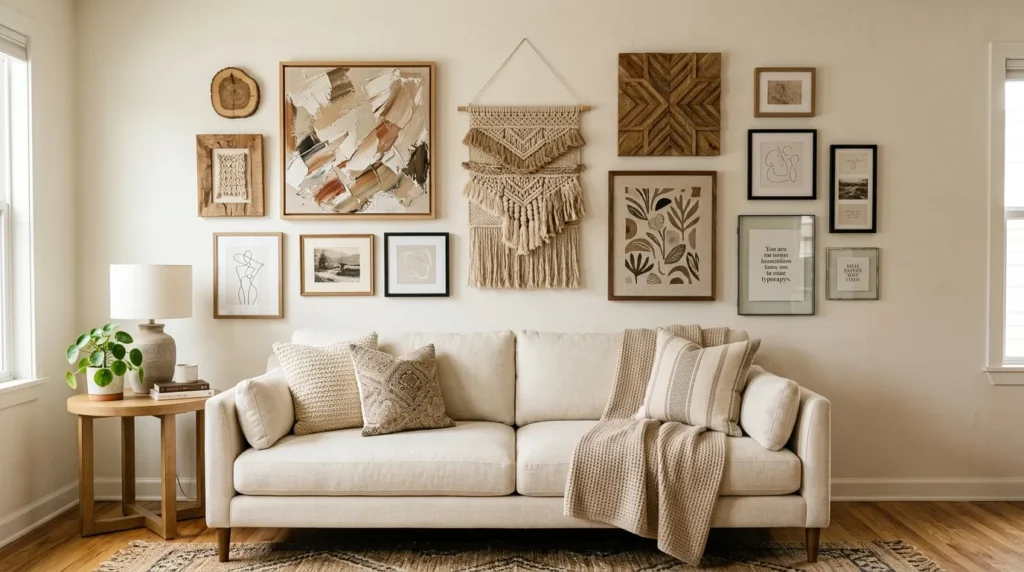
A gallery wall gives you the opportunity to combine different types of textured artwork rather than relying on a single piece.
You can mix canvas, woven art, wood, fabric, photography, and handmade pieces while maintaining a cohesive color palette.
I’ve found that repeating one or two materials helps a mixed gallery wall feel intentional rather than random.
How To Style It
Start by selecting a consistent color palette. Lay the artwork on the floor before hanging it so you can experiment with spacing and arrangement.
Mix larger anchor pieces with smaller textured accents, keeping the overall composition balanced.
Frequently Asked Questions
How can I make DIY wall art look expensive?
Use a restrained color palette, oversized proportions, quality-looking materials, simple compositions, and clean framing. Texture can also make inexpensive materials appear more sophisticated.
What materials can add texture to wall art?
Canvas paste, plaster-style mediums, fabric, wood, rope, woven fibers, paper, dried botanicals, and dimensional craft materials can all create interesting surfaces.
What is the easiest textured wall art for beginners?
Textured canvas, fabric wall hangings, layered paper art, and simple rope designs are approachable options that don’t require advanced crafting skills.
How do I choose the right size for DIY wall art?
Consider the wall and furniture beneath it. Artwork above a sofa, bed, or console generally looks more balanced when it has enough visual width to relate to the furniture.
Can textured wall art work with neutral décor?
Yes. Neutral textured art can add dimension without introducing strong colors, making it particularly suitable for minimalist, organic, modern, and transitional interiors.
How do I display multiple DIY artworks together?
Use a consistent color palette and repeat materials or frame finishes. Vary the artwork sizes while maintaining intentional spacing.
Conclusion
DIY wall art is an excellent way to add personality and texture without spending a fortune on finished artwork. The best projects don’t need complicated designs or expensive supplies.
Start with simple materials such as canvas, fabric, wood, paper, rope, or woven fibers. Focus on texture, proportion, and a color palette that complements your existing room.
For the most polished result, give larger walls a substantial focal piece rather than filling every inch with small decorations. Let the texture create visual interest while keeping the surrounding décor relatively simple.
Whether you prefer organic shapes, geometric designs, natural fibers, or layered materials, a handmade textured artwork can make your space feel warmer, more personal, and beautifully finished.