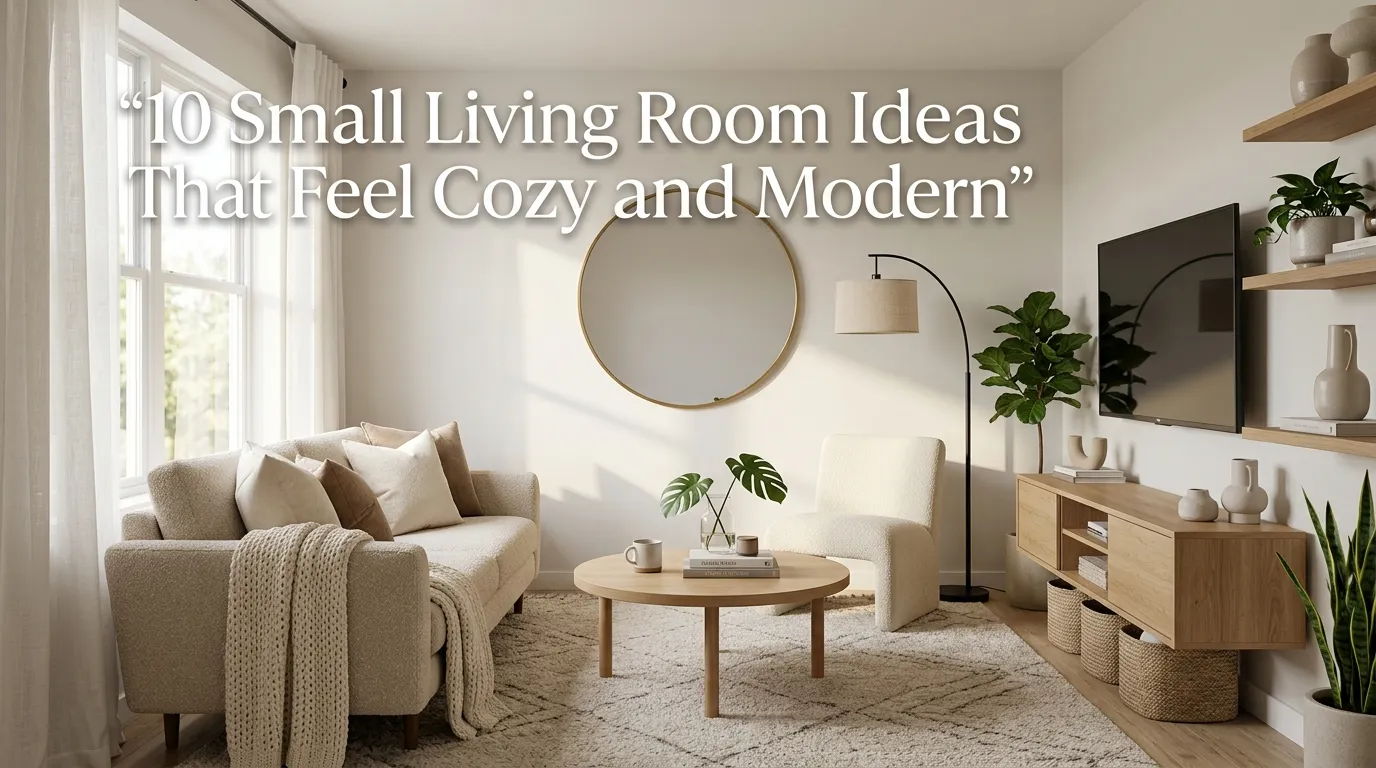
10 Small Living Room Ideas That Feel Cozy and Modern
A small living room can be one of the most inviting spaces in a home when it is designed with the right balance of comfort, style, and functionality. Limited square footage does not mean you have to sacrifice a modern look or a cozy atmosphere. In fact, smaller spaces often have the advantage of feeling more intimate, warm, and thoughtfully curated.
Many homeowners struggle with making a compact living room feel comfortable without making it appear crowded. The challenge is finding furniture, colors, layouts, and décor pieces that create a sense of openness while still reflecting personal style.
In my experience, the most successful small living rooms focus on intentional choices rather than adding more items. A carefully selected sofa, layered lighting, smart storage solutions, and a few meaningful decorative touches can completely change how a room feels.
Modern design works especially well in smaller spaces because it emphasizes clean lines, practical layouts, and a clutter-free appearance. When combined with cozy elements like soft textiles, warm lighting, natural materials, and comfortable seating, the result is a living room that feels stylish but still welcoming.
One thing that works especially well is creating visual balance. Using lighter colors can make walls feel more open, while adding texture through rugs, pillows, curtains, and wood accents prevents the room from feeling cold. Multi-functional furniture and thoughtful placement also help every inch of space serve a purpose.
Whether you live in an apartment, townhouse, small home, or simply want to make your current living room feel larger, these ideas can help you create a space that feels both modern and comfortable.
In this guide, you’ll discover 10 Small Living Room Ideas That Feel Cozy and Modern with practical styling tips, layout inspiration, and design strategies you can use to create a beautiful everyday living space.
Table of Contents
1. Neutral Color Layers
Create a calm and spacious feeling with soft modern tones.
2. Smart Furniture Choices
Choose practical pieces that maximize comfort and space.
3. Built-In Storage Ideas
Add organization while maintaining a clean modern look.
4. Floating Furniture Layout
Create openness with a lighter visual arrangement.
5. Warm Lighting Design
Use layered lighting to make the room feel cozy.
6. Textured Soft Furnishings
Add comfort through fabrics, rugs, and decorative layers.
7. Modern Accent Walls
Create personality without overwhelming the room.
8. Multi-Functional Pieces
Make every furniture item work harder.
9. Natural Material Touches
Bring warmth with wood, plants, and organic textures.
10. Minimal Cozy Styling
Create a balanced room with intentional décor.
1. Neutral Color Layers
Quick Benefits
- Makes small rooms feel larger
- Creates a calm atmosphere
- Works with modern décor
- Allows easy seasonal updates
- Adds timeless style
Why It Works
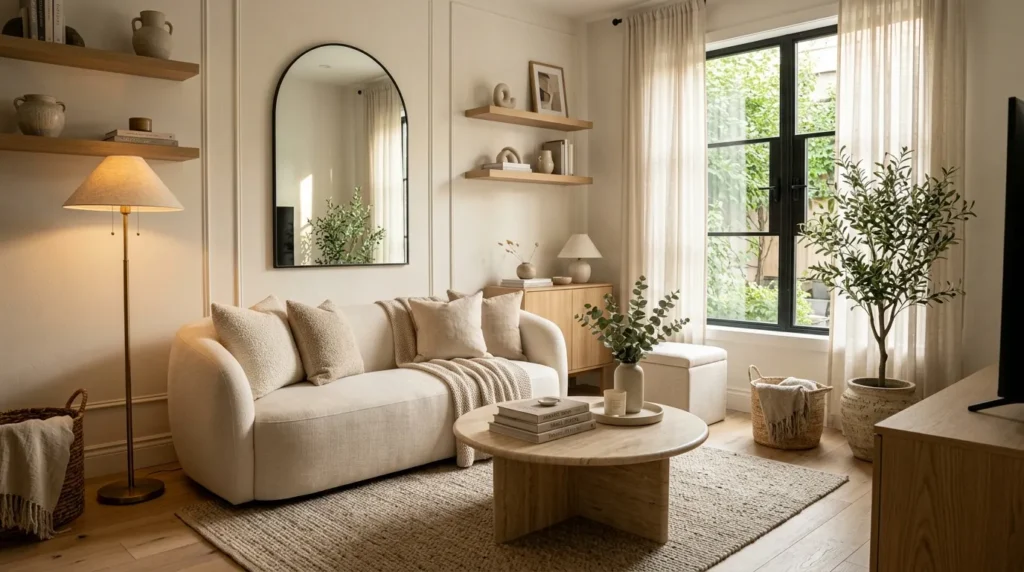
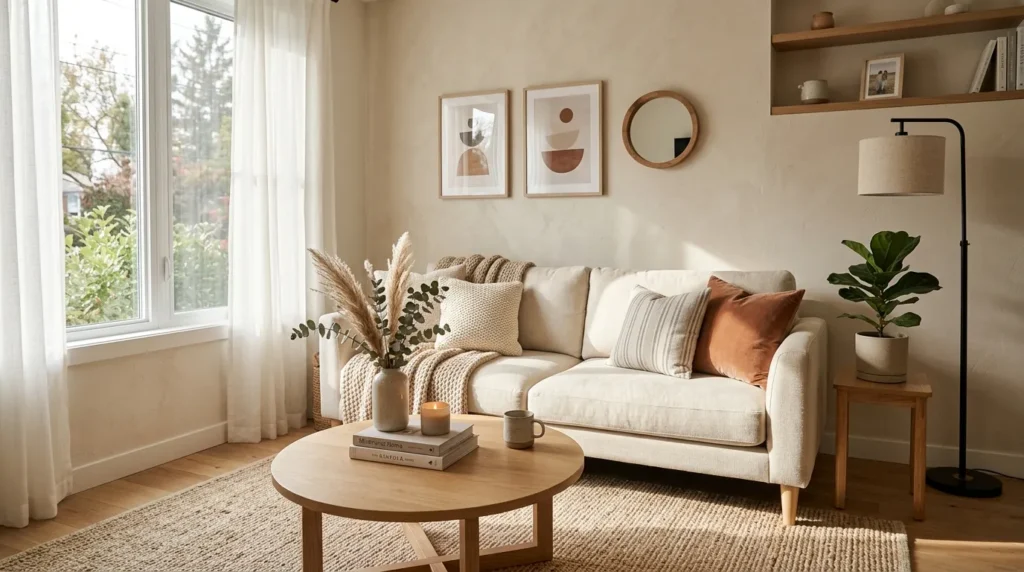
Neutral colors are one of the most effective design tools for small living rooms because they create a visually open and peaceful environment. Shades like warm white, beige, soft gray, taupe, and cream reflect light and help the room feel more spacious.
I’ve noticed that small spaces often look more sophisticated when they use a layered neutral palette instead of relying on one single color. Different shades create depth while maintaining a cohesive appearance.
Modern interiors often use neutral tones because they create a clean foundation that allows furniture, artwork, and textures to stand out. The room feels organized without appearing boring.
The key is adding warmth through variation. A completely white room can sometimes feel cold, but combining creamy walls with beige fabrics, wooden accents, and soft textiles creates a more inviting atmosphere.
Neutral colors also make decorating easier because they work with many styles. You can introduce seasonal colors through pillows, blankets, artwork, or accessories without changing the entire room.
How To Style It
Start with a soft neutral wall color such as warm white, light beige, or greige. These shades help bounce natural light around the room and create an airy foundation.
Layer different neutral textures through furniture and accessories. Combine a linen sofa with a woven rug, knitted throw blankets, cotton pillows, and wooden décor pieces.
Avoid making everything the exact same shade. Instead, mix tones like cream, sand, ivory, and soft gray to create visual interest.
Add small accents through black metal details, greenery, or natural wood to prevent the room from feeling flat. This approach creates a modern living room that feels comfortable, elegant, and easy to maintain.
2. Smart Furniture Choices
Quick Benefits
- Maximizes available space
- Improves room flow
- Reduces visual clutter
- Adds modern functionality
- Creates a comfortable layout
Why It Works
Furniture selection has a major impact on how a small living room feels. The right pieces can make the room appear larger, while oversized or poorly arranged furniture can quickly make the space feel crowded.
In my experience, many homeowners make the mistake of choosing furniture based only on appearance rather than scale. A beautiful sofa that is too large for the room can limit movement and make the entire space feel smaller.
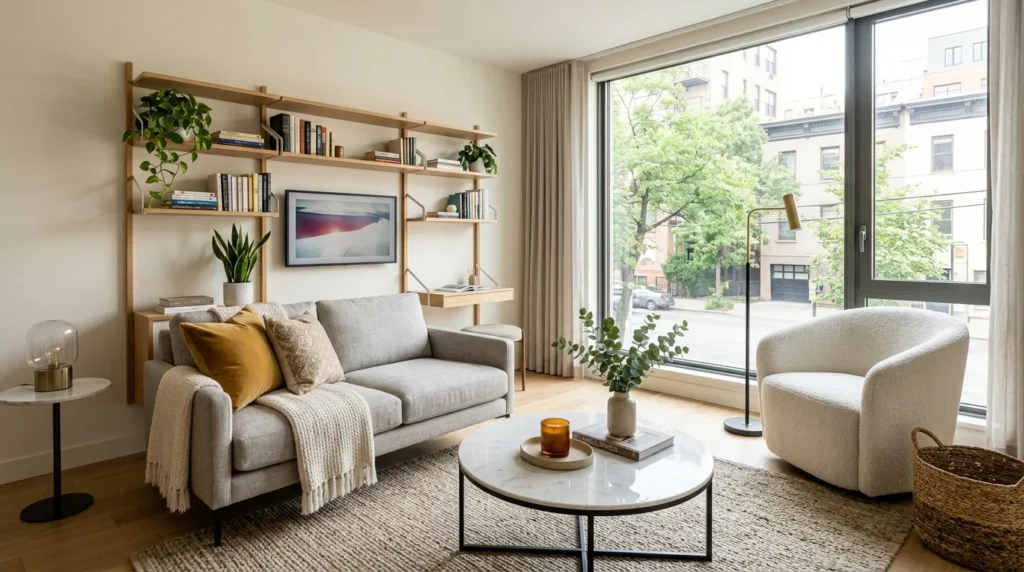
Modern small-space design focuses on choosing furniture that fits the proportions of the room. Clean-lined sofas, slim armchairs, nesting tables, and raised furniture legs help create a lighter visual appearance.
Another important factor is flexibility. Furniture that serves multiple purposes allows a small living room to adapt to different needs, whether you are relaxing, entertaining guests, or working from home.
The goal is not having less furniture—it is having the right furniture.
How To Style It
Choose a sofa with a streamlined shape instead of bulky designs with oversized arms. Sectionals can work well in small rooms when selected carefully and placed correctly.
Use furniture with visible legs because the open space underneath creates the illusion of more floor area.
Add compact pieces such as nesting coffee tables, slim side tables, or accent chairs that can move easily when needed.
Keep pathways clear by avoiding unnecessary furniture pieces. A well-planned layout with comfortable spacing will make the room feel more open and functional.
3. Built-In Storage Ideas
Quick Benefits
- Reduces clutter
- Creates a cleaner appearance
- Adds practical organization
- Uses vertical space
- Supports modern design
Why It Works
Storage is one of the biggest challenges in small living rooms, but smart storage solutions can completely transform how the space looks and functions. Built-in storage creates organization without adding bulky furniture.
I’ve seen small living rooms feel dramatically larger when everyday items have a dedicated place. Clutter makes a room feel visually busy, while hidden storage allows important design features to stand out.
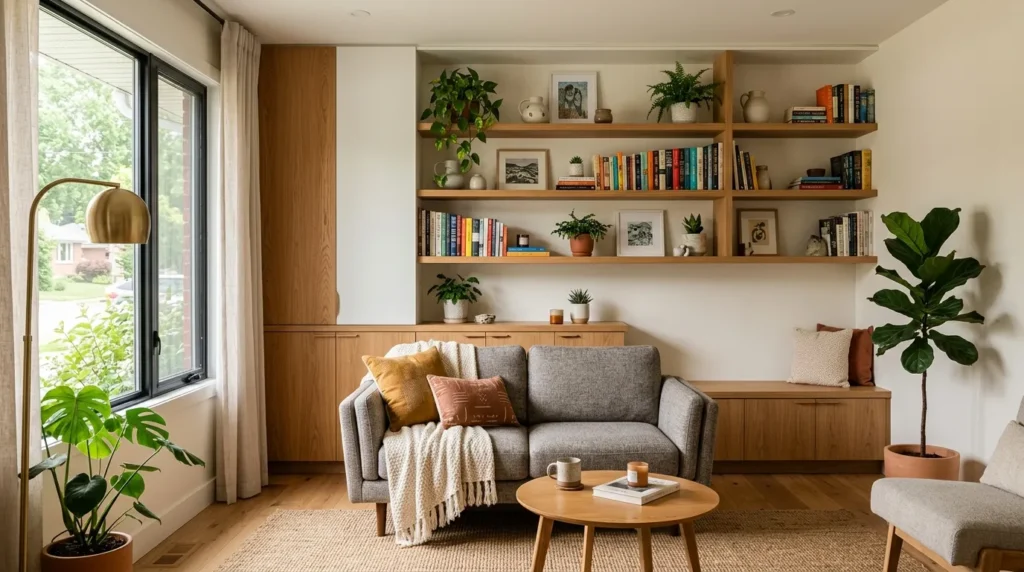
Modern built-in solutions work because they use available space efficiently. Wall-mounted shelves, custom cabinets, and integrated media units can provide storage while maintaining a sleek appearance.
Vertical storage is especially valuable in small rooms because it uses wall space instead of taking away from the floor area.
The best storage designs combine practicality with style. Instead of treating storage as something to hide, modern interiors make it part of the décor.
How To Style It
Install floating shelves to display books, plants, artwork, and decorative objects without creating a heavy look.
Choose built-in cabinets below a television or along an empty wall to hide electronics, blankets, games, and everyday items.
Use baskets, decorative boxes, and storage ottomans to keep smaller items organized while adding texture.
Match storage finishes with the room’s color palette for a seamless appearance. Light wood, painted cabinetry, and neutral finishes help maintain a modern and spacious feeling.
4. Floating Furniture Layout
Quick Benefits
- Creates a more open feeling
- Improves room movement
- Makes small spaces feel lighter
- Adds modern design appeal
- Creates flexible seating options
Why It Works
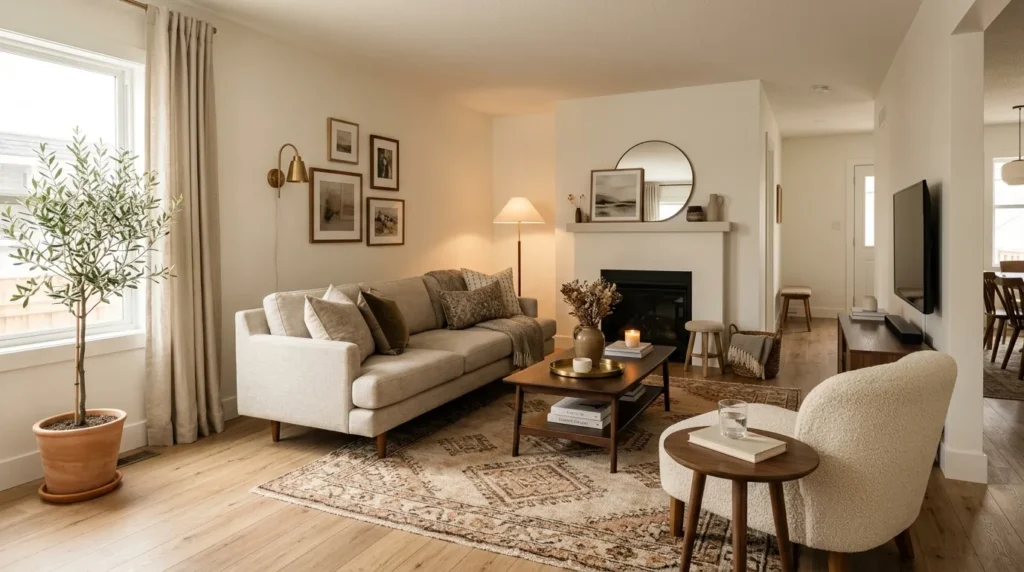
A floating furniture layout can completely change the way a small living room feels by creating better visual flow. Instead of pushing every piece against the walls, this approach uses thoughtful spacing to make the room feel more balanced and intentional.
In my experience, many small rooms feel cramped because furniture placement blocks natural pathways. A room does not always appear larger because of its size—it feels larger when the eye can move easily through the space.
Modern designers often use floating arrangements because they create zones without needing walls. A sofa positioned slightly away from the wall, paired with a small coffee table and accent chair, can create a comfortable conversation area.
This layout also helps define the purpose of the room. Even in an open-concept home, furniture placement can separate the living area from dining or workspace zones.
The key is maintaining enough walking space while creating a cozy arrangement that feels connected.
How To Style It
Start by placing your main seating piece where it creates the best conversation area rather than automatically pushing it against the wall.
Use a small area rug to anchor the furniture and visually define the living room zone. Place the front legs of sofas and chairs on the rug to create a connected look.
Add a slim console table behind the sofa if space allows. This provides a place for lamps, plants, books, or decorative accessories.
Keep pathways open by choosing smaller-scale furniture pieces. A floating layout works best when every item has enough breathing room around it.
5. Warm Lighting Design
Quick Benefits
- Creates a cozy atmosphere
- Makes the room feel inviting
- Adds depth and dimension
- Enhances modern décor
- Improves evening comfort
Why It Works
Lighting plays one of the biggest roles in making a small living room feel comfortable and stylish. Even a beautifully decorated space can feel cold if it only relies on one overhead light.
I’ve noticed that cozy homes usually use multiple layers of lighting instead of a single source. This creates warmth and allows different areas of the room to serve different purposes.
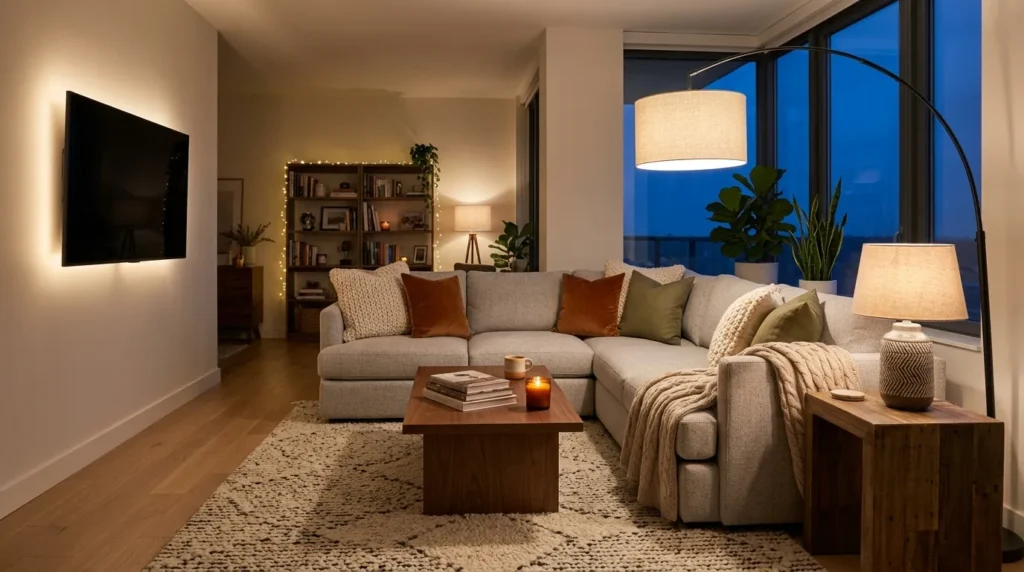
Modern living rooms often combine ambient lighting, task lighting, and accent lighting to create a balanced atmosphere. A floor lamp beside a chair, table lamps on shelves, and soft wall lighting can make the room feel more thoughtfully designed.
Warm lighting also enhances textures and materials. It brings out the beauty of wood, fabrics, artwork, and decorative details.
The goal is creating a soft glow that makes the room feel relaxing during evenings while still providing enough practical light.
How To Style It
Replace harsh white bulbs with warm-toned lighting that creates a comfortable atmosphere. Use bulbs around the warm white range for a softer residential feeling.
Add a combination of lighting sources throughout the room. Place a floor lamp near seating, a table lamp on a console, or wall lights to save surface space.
Use lamps with simple modern designs that complement your décor. Materials like brushed metal, ceramic, glass, and natural wood work beautifully in contemporary spaces.
Highlight special areas such as artwork, shelves, or plants with accent lighting. These small details add depth and make the room feel more luxurious.
6. Textured Soft Furnishings
Quick Benefits
- Adds warmth and comfort
- Creates visual interest
- Makes modern rooms feel inviting
- Softens clean designs
- Allows easy updates
Why It Works
Soft furnishings are essential for making a small living room feel cozy. While modern design often focuses on clean lines and simplicity, textures prevent the space from feeling too plain or cold.
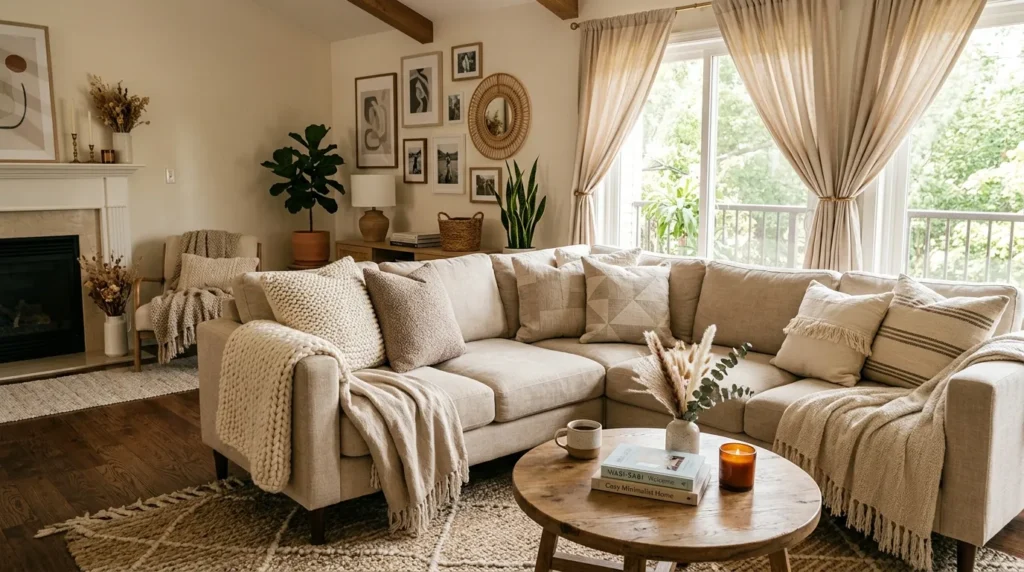
In my experience, the most comfortable living rooms usually combine several textures rather than relying only on color. A neutral sofa becomes much more inviting when layered with woven pillows, a soft throw blanket, and a textured rug.
Texture creates depth without taking up physical space, making it perfect for smaller rooms. You can add personality without filling the area with extra furniture or decorations.
Modern cozy design often uses natural fabrics and comfortable materials because they create a relaxed atmosphere. Linen, cotton, wool, boucle, and woven textiles add softness while maintaining a stylish appearance.
The key is creating balance. Too many competing textures can feel overwhelming, but carefully selected layers create a polished look.
How To Style It
Start with a comfortable area rug that defines the seating area and adds softness underfoot. Choose patterns or textures that complement your existing color palette.
Layer pillows in different fabrics such as linen, velvet, cotton, or boucle. Mix sizes and shapes while keeping colors coordinated.
Add a cozy throw blanket over the sofa or accent chair for both style and everyday comfort.
Include textured accessories like woven baskets, curtains, knitted pieces, or natural fiber décor. These small additions can make the entire room feel warmer without creating clutter.
7. Modern Accent Walls
Quick Benefits
- Adds personality to small spaces
- Creates a focal point
- Enhances modern style
- Makes walls more interesting
- Avoids excessive decoration
Why It Works
A modern accent wall can add character to a small living room without taking up valuable floor space. Instead of adding more furniture or accessories, a carefully designed wall becomes the main decorative feature.
I’ve noticed that small rooms often benefit from having one strong visual element. When everything competes for attention, the space can feel busy. A focused accent wall creates balance and gives the room a clear design direction.
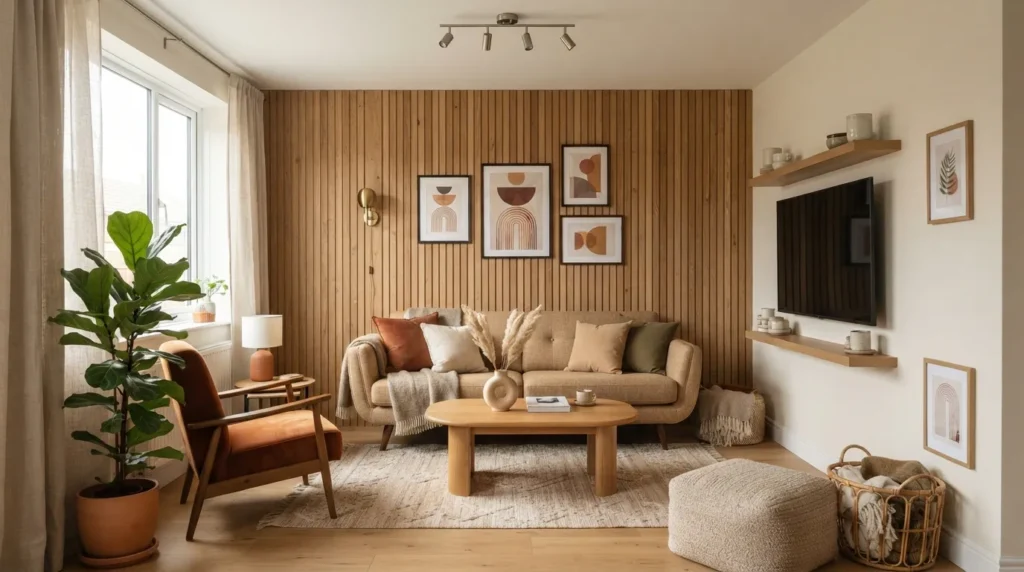
Modern accent walls are not limited to bold paint colors. They can include textured wallpaper, wood panels, stone finishes, built-in shelving, or artistic treatments.
The right accent wall can also influence how the room feels. Vertical panels can make ceilings appear taller, while darker tones can create a cozy and sophisticated atmosphere.
The key is choosing a design that supports the room rather than overpowering it.
How To Style It
Choose the wall that naturally draws attention, such as the wall behind the sofa or television area.
For a warm modern look, consider wood slat panels, textured wallpaper, or painted arches. For a simpler update, use a deeper neutral paint shade like charcoal, olive, or warm taupe.
Balance the accent wall with lighter furniture and décor so the room does not feel too heavy.
Add complementary elements such as artwork, plants, or lighting to connect the wall design with the rest of the room.
8. Multi-Functional Pieces
Quick Benefits
- Saves valuable space
- Improves everyday functionality
- Keeps rooms organized
- Supports flexible living
- Creates a cleaner modern look
Why It Works
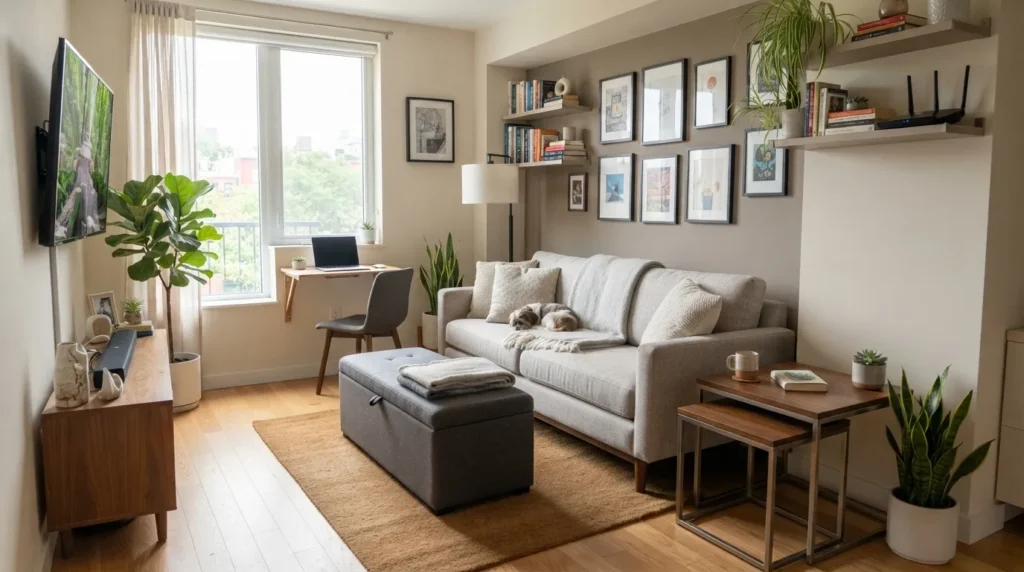
Multi-functional furniture is one of the smartest solutions for small living rooms because every piece needs to earn its place. When space is limited, furniture that serves more than one purpose helps create a comfortable room without unnecessary clutter.
In my experience, small spaces work best when homeowners choose pieces based on lifestyle rather than trends. A coffee table with storage, an ottoman that provides extra seating, or a sofa bed can make a room much more practical.
Modern design focuses heavily on flexibility because homes are used for many different activities today. A living room may need to function as a relaxing retreat, entertainment area, workspace, or guest room depending on the day.
Multi-purpose pieces allow the room to adapt without requiring more square footage. They also help maintain a cleaner appearance because fewer items are needed.
The key is selecting functional furniture that still matches the overall design style.
How To Style It
Choose a storage ottoman that can work as a footrest, extra seating, and hidden storage for blankets or accessories.
Consider nesting coffee tables that can expand when guests arrive and stack neatly when not needed.
Use a console table behind the sofa as a workspace, display area, or storage solution. Slim furniture pieces are especially useful in compact rooms.
For apartments or smaller homes, a stylish sleeper sofa can provide a comfortable guest option without needing a separate room.
Keep the design cohesive by choosing pieces with similar materials, colors, and finishes. Functional furniture can still look elegant and intentional.
9. Natural Material Touches
Quick Benefits
- Adds warmth to modern spaces
- Creates a relaxing atmosphere
- Brings organic beauty indoors
- Improves visual texture
- Complements neutral décor
Why It Works
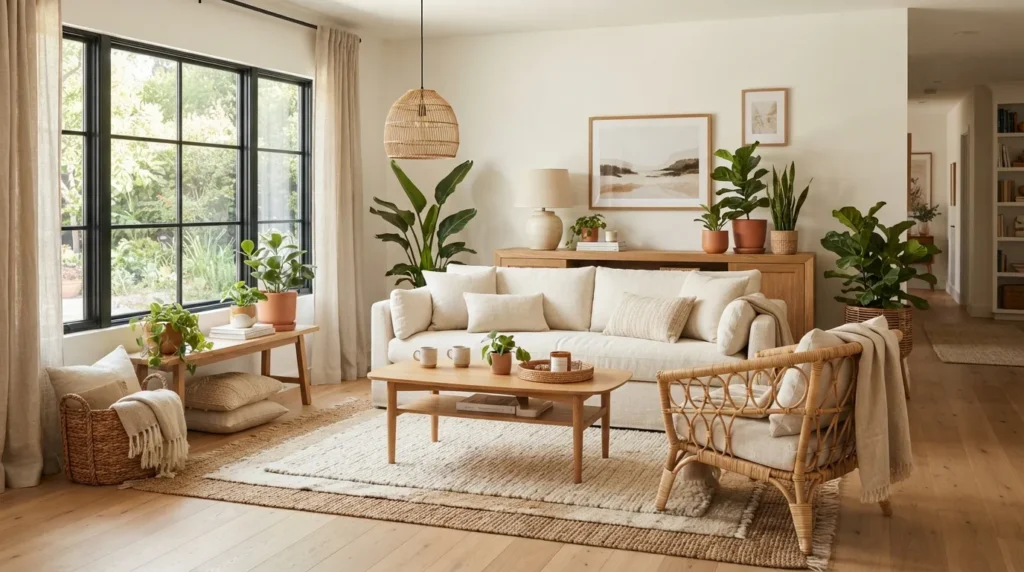
Natural materials bring warmth and personality to small living rooms while creating a connection with the outdoors. Modern spaces can sometimes feel too clean or minimal, but organic textures help make them more comfortable and inviting.
I’ve noticed that rooms often feel more balanced when they include materials like wood, stone, rattan, linen, and natural fibers. These elements add character without overwhelming the space.
Designers frequently use natural materials because they create timeless appeal. Unlike trendy decorations that may quickly feel outdated, organic textures remain beautiful across many styles.
Wood furniture adds warmth, woven baskets provide texture, and plants introduce natural color. Together, these details create a cozy modern atmosphere that feels relaxed and sophisticated.
Natural materials are also ideal for small spaces because they add visual interest without requiring additional furniture or accessories.
The goal is creating a room that feels modern while still connected to nature.
How To Style It
Add wooden elements through coffee tables, shelving, side tables, or decorative accents. Light wood tones work especially well in small living rooms because they maintain an airy feeling.
Include woven baskets for storage, rattan chairs, jute rugs, or linen curtains to introduce natural texture.
Bring in greenery through indoor plants placed on shelves, corners, or side tables. Plants add life and help soften modern furniture lines.
Combine natural materials with neutral colors such as cream, beige, and soft gray for a warm contemporary look.
Avoid using too many different materials at once. Choose a few organic elements and repeat them throughout the room for a cohesive design.
10. Minimal Cozy Styling
Quick Benefits
- Keeps small rooms visually open
- Reduces clutter
- Creates a peaceful atmosphere
- Highlights meaningful décor
- Supports modern design
Why It Works
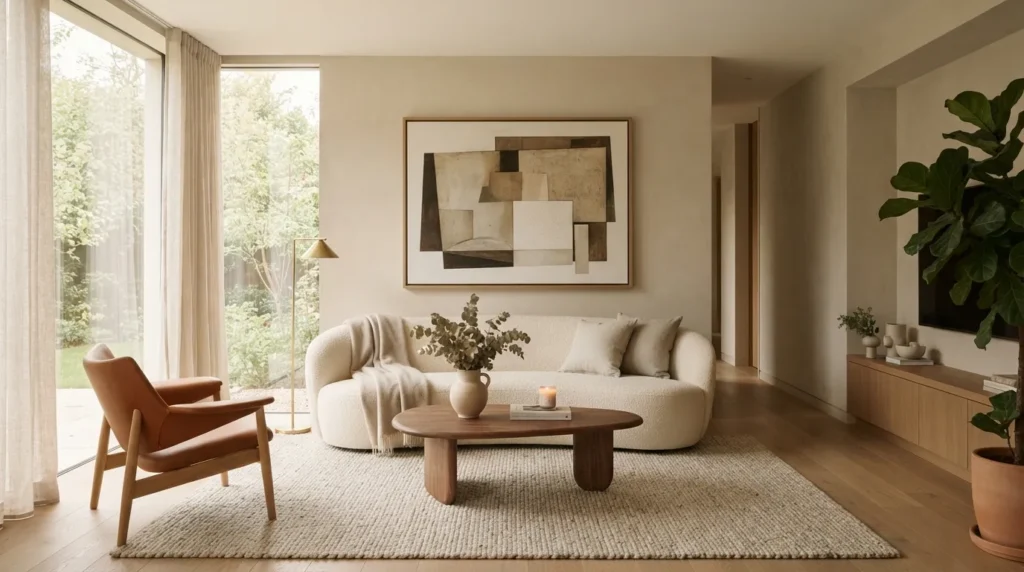
Minimal cozy styling combines the simplicity of modern design with the comfort people want from a living room. The goal is not creating an empty space—it is creating a room where every item has a purpose.
In my experience, small living rooms often become more beautiful when homeowners focus on quality instead of quantity. Too many decorations can make a compact room feel crowded, while carefully chosen pieces create a more sophisticated appearance.
Modern minimalism works because it allows important design elements to stand out. A beautiful sofa, unique artwork, or statement lighting piece becomes more noticeable when surrounded by thoughtful simplicity.
The cozy part comes from adding warmth through textures, lighting, and personal details. A minimal room should still feel lived-in and welcoming.
The best small living rooms balance clean design with comfort.
How To Style It
Start by removing unnecessary items and keeping only pieces that are useful or meaningful. This immediately creates a calmer visual environment.
Choose a few statement accessories instead of many small decorations. A large piece of artwork, beautiful vase, or sculptural lamp can create more impact.
Use soft textiles to maintain comfort. Add a plush rug, cozy blankets, and layered pillows while keeping the color palette coordinated.
Include personal touches such as books, photographs, plants, or handmade décor. These details make the room feel like home without creating clutter.
A minimal cozy living room should feel intentional, comfortable, and easy to enjoy every day.
Frequently Asked Questions
1. How can I make a small living room feel cozy and modern?
To make a small living room feel cozy and modern, focus on a balanced color palette, comfortable furniture, layered lighting, and thoughtful décor. Use neutral tones, soft textures, multi-functional furniture, and natural materials to create a stylish space that feels open and inviting.
2. What colors make a small living room look bigger?
Light neutral colors such as warm white, beige, cream, soft gray, and greige can make small living rooms appear larger because they reflect light and create an airy feeling. Adding subtle contrast through textures and natural materials prevents the space from feeling flat.
3. What furniture is best for a small living room?
The best furniture for small living rooms includes slim sofas, furniture with visible legs, nesting tables, storage ottomans, and multi-functional pieces. Choosing furniture that fits the room scale helps maintain comfort while improving movement and visual space.
4. How do I decorate a small living room without making it cluttered?
Use fewer but more meaningful décor pieces. Focus on functional accessories, hidden storage, vertical shelving, and coordinated colors. A small room often looks more stylish when it has breathing room instead of too many decorative items.
5. Should a small living room have an accent wall?
Yes, an accent wall can work beautifully in a small living room when used thoughtfully. Choose one focal wall and keep the remaining décor balanced. Wood panels, textured wallpaper, or a deeper neutral paint color can add personality without overwhelming the space.
6. How can I make my small living room look expensive?
Create a more luxurious appearance by using layered lighting, quality textiles, natural materials, coordinated colors, and carefully selected décor. Simple upgrades like elegant curtains, a textured rug, and stylish accessories can make a room feel more refined.
Conclusion
Creating a small living room that feels cozy and modern is all about making intentional design choices. The most successful spaces do not depend on size—they depend on balance, comfort, and thoughtful styling.
By choosing the right furniture, using a calming color palette, adding warm lighting, and incorporating natural textures, even a compact living room can become a beautiful and functional part of your home.
In my experience, the biggest transformations often come from small changes. A new rug, better furniture arrangement, layered lighting, or a carefully styled accent wall can completely change how a room feels.
Remember that modern design does not mean your space has to feel cold or empty. The best contemporary interiors combine clean lines with cozy details that make everyday life more comfortable.
Start with the area that bothers you most, whether it is clutter, layout, lighting, or lack of personality. Improve one element at a time and build a room that reflects your lifestyle.
A small living room can become one of the most welcoming spaces in your home when every detail is chosen with purpose.
Related Articles
- 10 Small Living Room Ideas with Cozy Neutral Decor
- 10 Modern Living Room Ideas with Organic Style
- 10 Cozy Apartment Living Room Ideas
- 10 Neutral Home Decor Ideas for a Timeless Look
- 10 Minimalist Living Room Ideas That Feel Warm