Wide vs Narrow Nightstands: What Size Proportions Balance a King Bed?
Choosing between wide vs narrow nightstands when you own a king bed often comes down to the math of your floor plan versus your storage needs. While a king-sized mattress is massive, the furniture flanking it doesn’t always need to match that scale to look intentional. Balancing these proportions requires a clear understanding of your available bedroom square footage and the visual weight of your chosen pieces.
By prioritizing both function and aesthetic symmetry, you can create a sanctuary that feels grounded rather than crowded. This analysis explores the dimensions and design principles necessary to achieve a professional, polished look in your primary suite.
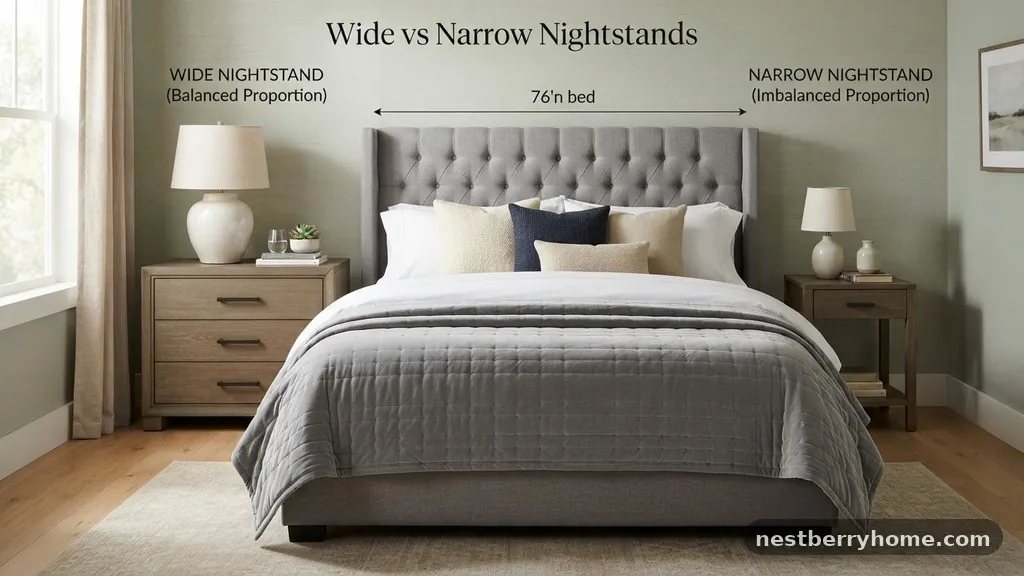
When considering the debate of wide vs narrow nightstands, the ideal width for a king bed is typically between 24 and 30 inches. A king bed measures 76 inches across, which makes standard 20-inch tables look slightly undersized or “lost” next to the frame. For a balanced, high-end look, aim for a nightstand that is at least 24 inches wide to create a visual anchor.
If your bedroom is spacious, opting for a 30-inch wide piece provides a substantial, custom-built feel that complements the expansive mattress. Anything narrower than 20 inches often forces you to sacrifice surface area for lamps, books, and chargers.
The Importance of Visual Proportion

Visual weight is just as important as physical measurement when selecting bedside furniture. A narrow nightstand might be physically adequate, but if it has spindly legs or a glass top, it will disappear against the bulk of a king bed.
Conversely, a wide nightstand with a dark, solid wood finish can overwhelm a small room, even if the math technically works. You are aiming for a sense of equilibrium where the furniture feels like a natural extension of the bed.
Consider the “rule of thirds” when evaluating your layout. If your nightstand is significantly smaller than the height or width of the bed, the bed will look like it is floating in a void.
A wider piece helps “ground” the king bed, effectively extending the horizontal line of the headboard across the wall. This creates a cohesive wall unit appearance rather than a collection of disparate items.
Measuring Your Available Floor Space
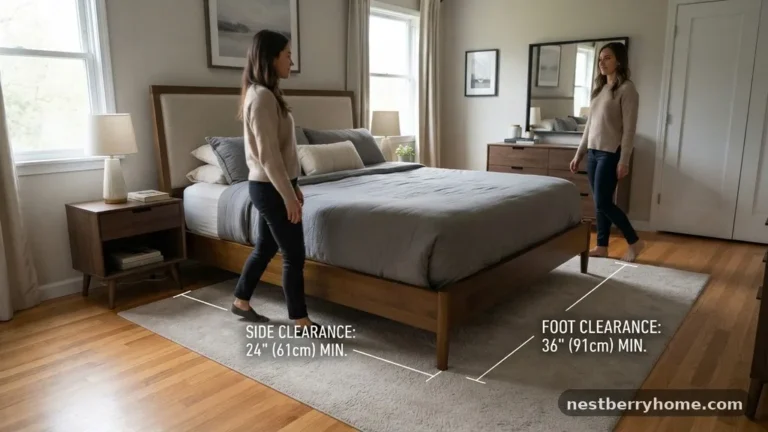
Before you commit to a specific size, you must measure the clearance on both sides of the bed. Ideally, you want at least 30 to 36 inches of total space on either side of the mattress to allow for comfortable movement.
If you have only 20 inches of clearance, a 30-inch wide table is physically impossible without blocking your path. In these tighter scenarios, you must choose a narrower profile to maintain functional traffic flow.
It is helpful to map your room with painter’s tape on the floor to visualize the footprint of different sizes. This allows you to see how much “walkway” remains once the furniture is in place.
Never prioritize a wide, statement piece if it means you have to turn sideways to navigate to the foot of the bed. Practicality should always dictate the maximum allowable width for your nightstand.
Determining the Ideal Nightstand Height

Height is often overlooked in the quest for the perfect width, yet it is the most critical factor for daily comfort. The top of your nightstand should be roughly level with the top of your mattress or, at most, 2 to 3 inches higher.
This ensures that you can reach your lamp, phone, or water without having to strain upward or reach down into a pit. If your king bed sits on a high-profile box spring, a standard 24-inch table will feel frustratingly low.
You can find the standard height recommendations for various bed types through the Sleep Foundation guide to bedroom ergonomics. If you have a platform bed, you might need a shorter nightstand, perhaps around 20 to 22 inches.
Always measure from the floor to the top of your mattress before purchasing. If you fall in love with a piece that is too short, you can sometimes add decorative feet or a stone topper to gain those missing few inches.
Storage Needs vs Aesthetic Minimalism
Your personal habits should dictate whether you lean toward a wide or narrow design. If you are a minimalist who only needs space for a glass of water and a phone, a narrow, single-drawer table is sufficient.
However, if you store reading materials, medications, and journals at your bedside, a wider piece with deep drawers is essential. A wide nightstand often offers the benefit of three or more drawers, effectively acting as a secondary dresser.
Think about the “clutter factor” when choosing your size. A narrow table that is constantly covered in stacks of books will look messy and chaotic, regardless of how nice the furniture is.
A wider table gives you the surface area to keep essential items organized without spilling over. If you have limited closet space, prioritize a wider nightstand to maximize your storage utility.
Comparing Standard Dimensions
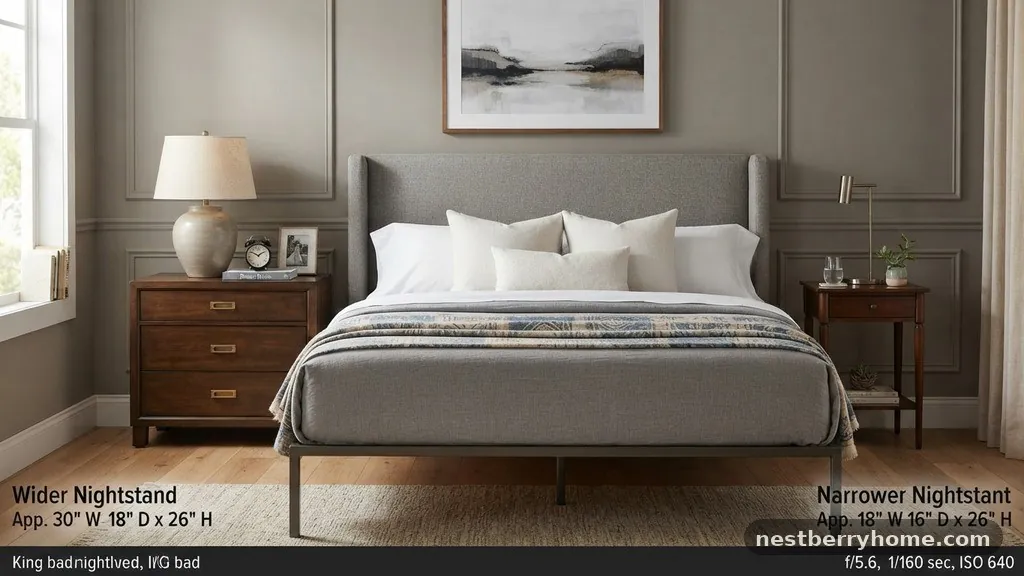
The following table provides a quick reference for common nightstand categories and their typical use cases for king-sized setups.
| Type | Typical Width | Best For |
|---|---|---|
| Narrow/Compact | 16–20 inches | Small rooms with tight clearance |
| Standard/Mid-size | 24–26 inches | Average bedrooms with moderate space |
| Wide/Statement | 28–36 inches | Large master suites with ample wall space |
Use this data to narrow down your search based on your specific bedroom constraints. If your room is under 120 square feet, a 30-inch nightstand will likely feel like an intrusion.
If your primary suite is expansive, a 16-inch table will look like a mistake. Aim for the mid-range if you are unsure, as it offers the most versatility.
The Role of Lighting and Scale
The lamps you place on your nightstands play a massive role in how the scale is perceived. If you choose a narrow nightstand, you must select a lamp with a smaller base, or the shade will hang off the edge.
A wide nightstand allows for larger, more sculptural table lamps that can serve as the focal point of the bedroom. Balancing the scale of the light fixture with the surface area of the table is key to a professional design.
If your lamps are too large for your nightstands, the entire bedside area will feel top-heavy and unstable. Conversely, tiny lamps on a wide, substantial nightstand will look like they are drowning in empty space.
Always check the footprint of your lampshade before finalizing your nightstand purchase. A good rule of thumb is that the lamp base should occupy no more than 60% of the table’s surface.
Material and Finish Considerations

The material of your nightstand can affect how “wide” it feels to the eye. Light-colored woods or white-painted finishes often feel more airy and less imposing than dark, heavy walnut or black lacquer.
If you feel you need a wider nightstand for storage but fear it will look bulky, choose a piece with legs rather than a solid boxy base. The visible floor space beneath the piece creates an illusion of openness that makes the room feel larger.
Mixed materials, such as metal frames with wood drawers, also help break up the visual mass. This strategy allows you to enjoy the functionality of a wider nightstand without the visual weight of a solid block of furniture.
Consider the texture of the other furniture in your room. If your bed frame is upholstered, a wood nightstand provides a nice contrast that prevents the room from feeling too soft or monotonous.
Symmetry and the “Gap” Debate
Should there be a gap between the nightstand and the bed? Most designers agree that a small gap of 1 to 2 inches is beneficial for both aesthetics and functionality.
This prevents the nightstand from rubbing against the fabric or wood of the bed frame, which can cause scratches or fraying over time. It also makes it easier to tuck in your bedding without the table getting in the way.
However, some people prefer a flush look, especially if the nightstand and the headboard are part of a matching set. If you choose to place them flush, ensure that the drawer or door of the nightstand can still open freely.
If the nightstand is too wide, it may block the path to the bed, making the gap a matter of necessity rather than preference. Always test the opening clearance of your drawers before securing the table against the bed.
Common Mistakes to Avoid

Many homeowners make the mistake of buying nightstands that are too short for their modern, thicker mattresses. This creates a disconnect where you are reaching “down” to turn off your lamp, which is ergonomically poor.
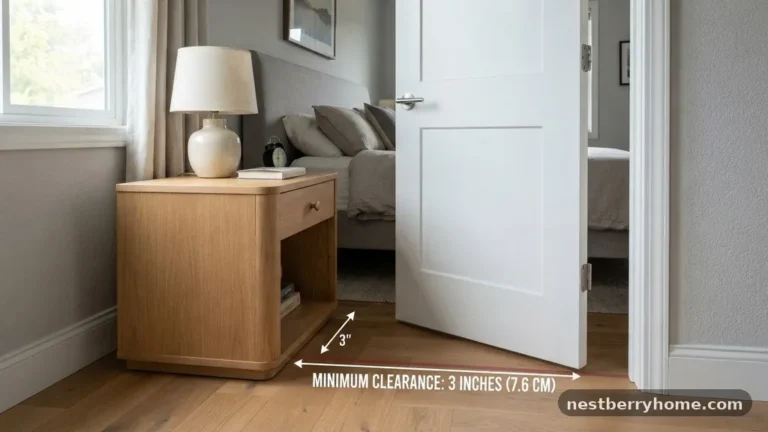
Another frequent error is ignoring the proximity of door frames or closet doors. You might have the space for a wide nightstand, but if it prevents a closet door from opening fully, it becomes a daily annoyance.
Avoid buying “sets” just for the sake of matching if the dimensions don’t fit your layout. It is often better to buy two separate tables that fit your space perfectly than to force a set that is too large or too small.
Finally, don’t forget to account for the thickness of your headboard. If you have a thick, tufted headboard, it will push the bed further into the room, reducing your available width for nightstands.
FAQ: Addressing Your Concerns
What is the minimum width a nightstand should be for a king bed?
The minimum recommended width for a nightstand next to a king bed is 20 inches. Anything smaller often looks disproportionate and lacks the necessary surface area for a lamp and essentials.
Can I use a dresser as a nightstand?
Yes, using a small dresser as a nightstand is a popular choice for larger rooms. It provides excellent storage, though you must ensure it does not exceed the height of your mattress significantly.
What if my room is too small for wide nightstands?
If space is limited, opt for wall-mounted floating nightstands. These provide surface space without taking up floor space, which keeps the room looking open and less cluttered.
Should the nightstand be the exact same height as the bed?
It should be within 2 to 3 inches of the mattress top. If it is too low, you will feel like you are reaching toward the floor; if it is too high, it may feel awkward to access items while lying down.
Are there specific trends for nightstand styles in 2026?
Current trends favor organic, textured materials like cane, rattan, and light oak. Designers are also moving away from perfectly matching sets in favor of curated, complementary pieces that add character to the bedroom.
Creating Your Ideal Bedroom Setup
Finding the right balance in the wide vs narrow nightstands debate is a process of reconciling your storage needs with your room’s physical limitations. By measuring your space accurately and keeping the height of your mattress in mind, you can select pieces that feel both intentional and functional. Remember that the goal is to create a sense of harmony that supports your rest and daily routine.
Start by clearing your current bedside area and using painter’s tape to mark out the dimensions you are considering. This simple step often reveals more than any measurement on paper ever could. Once you have a clear picture of the footprint, you can confidently shop for pieces that complement your king bed.
If you ever find yourself stuck, prioritize the height and the clearance, as these factors are the most difficult to “fix” after a purchase. Your bedroom should be a place of comfort, so take the time to get the proportions right.