10 Bedroom Wall Decor Ideas Using Floating Shelves
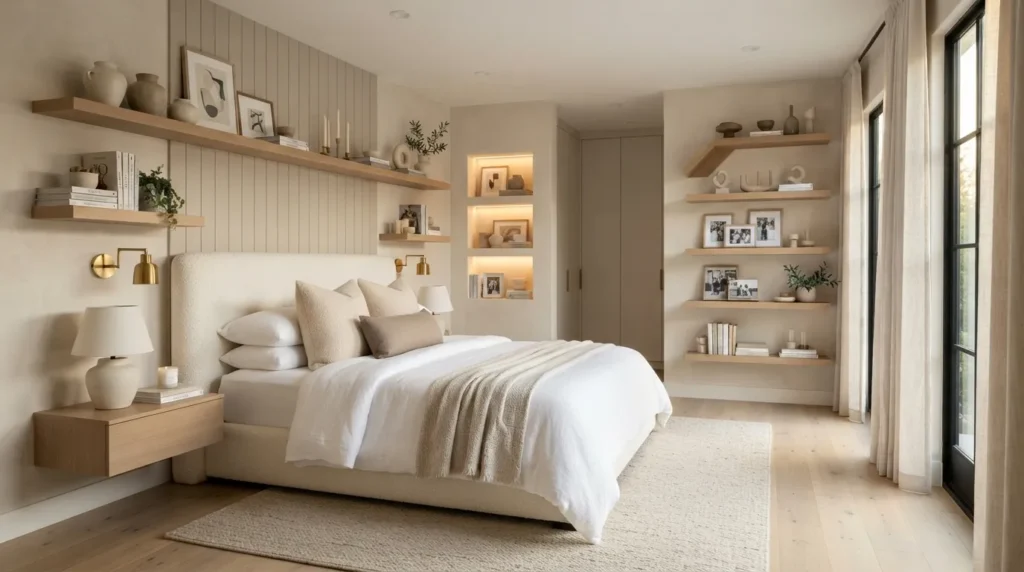
A bedroom wall covered in unused space is one of the most common design frustrations I hear about, and it’s usually an easy fix hiding in plain sight. Floating shelves solve two problems at once: they fill that awkward blank wall, and they give you a place to display the things that make a room feel like yours, without eating up floor space or requiring a full renovation.
In my experience walking through client homes and helping friends refresh their bedrooms on a budget, floating shelves are one of the most underused tools in home decor. People jump straight to gallery walls or oversized art, but shelves give you something a flat picture never can: dimension, texture, and a spot to rotate décor with the seasons. A mistake many homeowners make is treating their bedroom walls as an afterthought, saving all their design energy for the living room. But your bedroom is where you start and end every day, and the wall above your bed or beside your nightstand deserves the same intention.
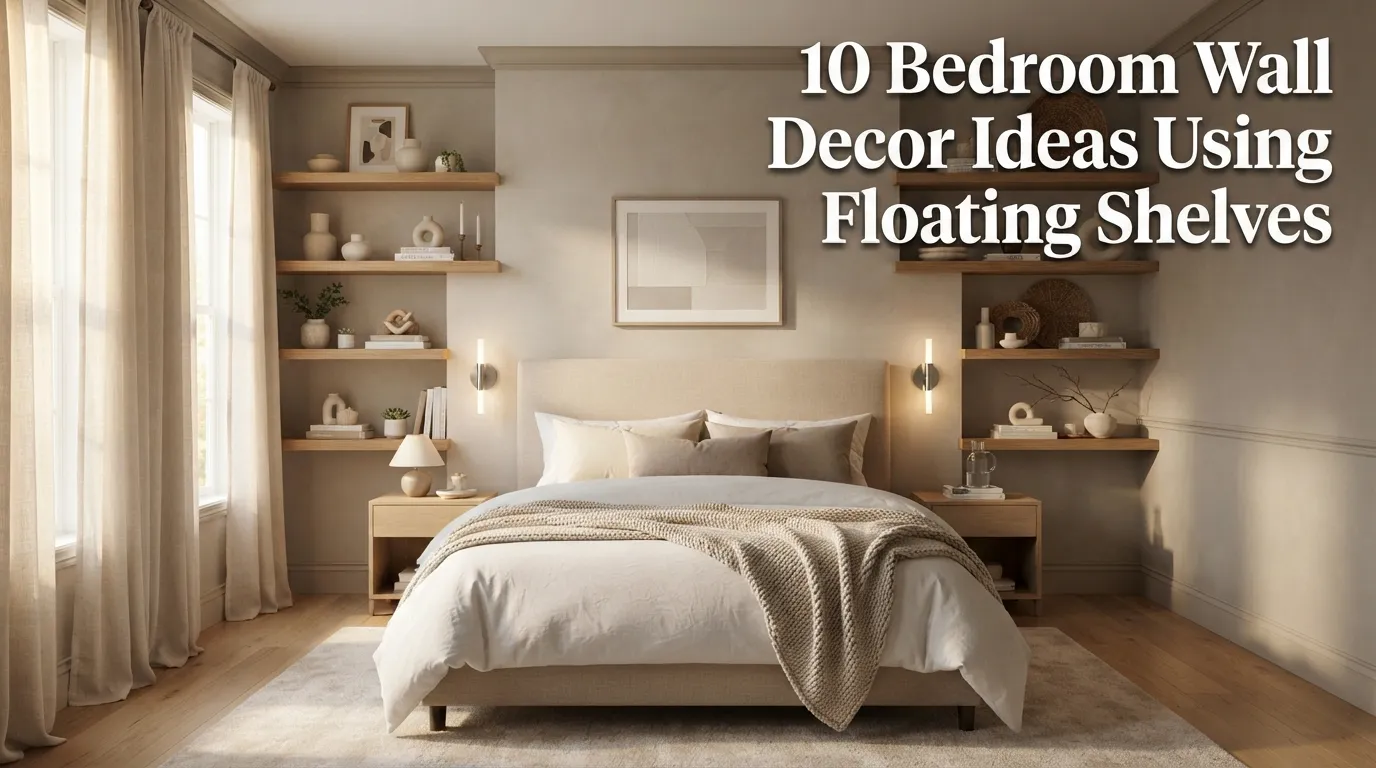
This article walks through ten specific, tested ways to use floating shelves for bedroom wall decor, from simple single-shelf styling to layered arrangements that look like they came from a designer showroom. I’ve noticed that the best bedroom shelf styling isn’t about buying more décor, it’s about arranging what you already love with better spacing, contrast, and balance. Each idea below includes why it works, exactly how to style it, and practical notes on materials, spacing, and layout so you can recreate it this weekend.
Whether you’re working with a small apartment bedroom, a farmhouse-style primary suite, or a rental where you can’t paint the walls, there’s a floating shelf idea here that fits your space and your budget.
Table of Contents
- Floating Shelf Trio — Three matching shelves stacked for a clean, symmetrical focal point.
- Asymmetrical Shelf Layout — Staggered shelf placement for a modern, artistic feel.
- Above Headboard Shelves — Using the wall space directly above your bed frame.
- Woven Basket Shelves — Pairing natural textures with open shelving for warmth.
- Book Ledge Display — Slim ledges built for stacking books face-out.
- Corner Floating Shelves — Making use of an often-ignored corner wall.
- Matching Nightstand Shelves — Wall-mounted shelves that replace bulky nightstands.
- Plant Accent Shelves — Bringing greenery up and off the floor.
- Framed Art Shelf Combo — Layering leaning art with shelf styling.
- Minimalist Single Shelf — One shelf, done right, for understated impact.
1. Floating Shelf Trio
Quick Benefits
- Creates instant visual balance without measuring for a full gallery wall
- Works above dressers, headboards, or empty accent walls
- Easy to restyle seasonally without new hardware
- Budget-friendly since most trios come as matching sets
- Suits nearly every bedroom style, from farmhouse to modern
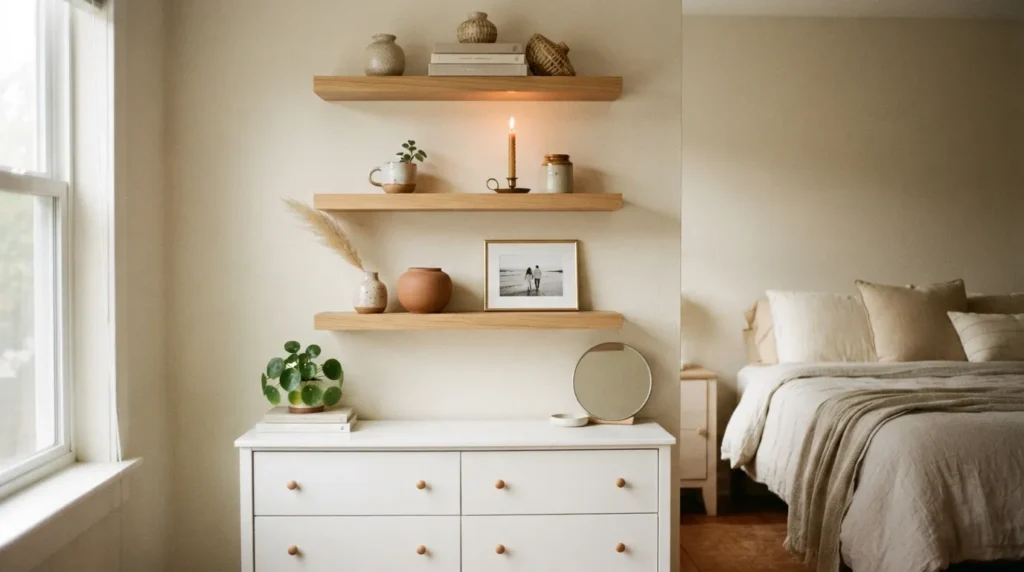
Why It Works Three shelves, evenly spaced and identically sized, give a wall an intentional, gallery-like rhythm without the complexity of mixed frames or artwork. In my experience, symmetry is one of the fastest ways to make a space feel finished, because the eye doesn’t have to work to find balance. A floating shelf trio also solves the problem of a wall that’s too plain for a single piece of art but too small for a full gallery arrangement. That’s why many designers recommend starting here for bedrooms that need structure but not clutter. The repetition of identical shelves also makes the styling itself easier, since you’re essentially designing the same small vignette three times with slight variation.
How To Style It Space the shelves 8 to 10 inches apart vertically, centered above a dresser or on either side of a window. Use shelves in the same finish, ideally 18 to 24 inches long, mounted with concealed brackets for a floating look. Style each shelf with two to three items of varying height, a small frame, a candle or vase, and one organic object like a dried branch. Keep the color palette consistent across all three shelves so the trio reads as one composition rather than three separate displays. If your walls are rented and painting isn’t an option, choose light wood or white shelves that work with almost any wall color.
2. Asymmetrical Shelf Layout
Quick Benefits
- Adds a modern, artistic edge that flat gallery walls can’t achieve
- Draws the eye upward, making low ceilings feel taller
- Works well in awkward or narrow wall sections
- Allows mixing shelf sizes and finishes for a curated look
- Great for showcasing a mix of art, plants, and books together
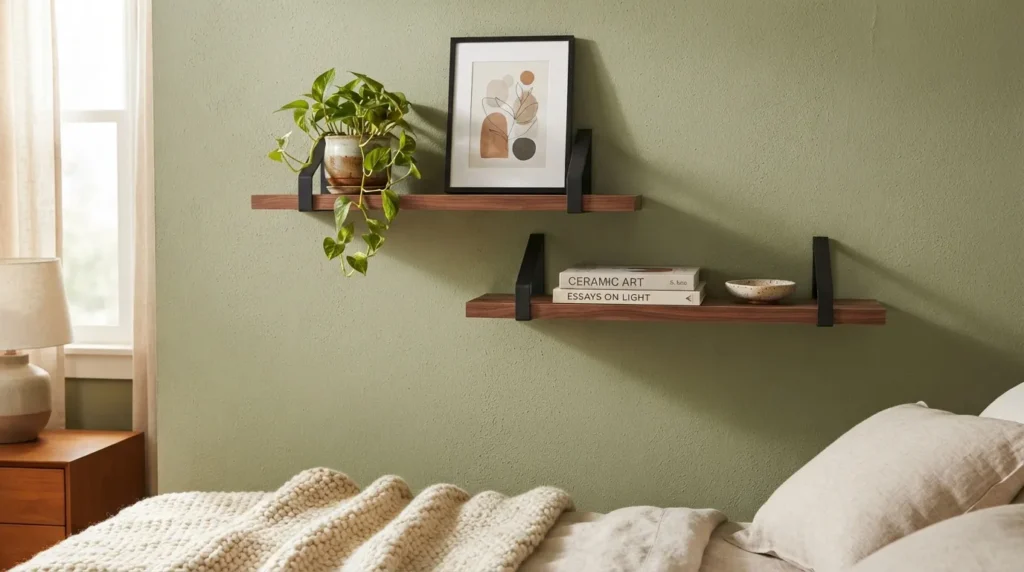
Why It Works Staggered shelves break the predictability of a straight row, which is exactly what makes them feel more like art and less like storage. I’ve seen this idea transform spaces that felt stiff or overly matched into rooms that look thoughtfully curated over time. The asymmetry also creates natural negative space, which gives each item room to breathe instead of competing for attention. Because the shelves sit at different heights and widths, this layout is especially useful in bedrooms with uneven wall space, like beside a closet door or above a low dresser where a symmetrical arrangement wouldn’t fit cleanly.
How To Style It Choose two or three shelves in varying lengths, such as 24, 18, and 12 inches, and mount them at staggered heights with 6 to 12 inches of vertical gap. Offset the horizontal placement slightly so no two shelves align perfectly. Use a mix of materials, like a walnut shelf paired with a matte black one, to reinforce the intentional imbalance. Style the largest shelf with your biggest statement piece, then let the smaller shelves hold single objects, a framed photo, a small plant, or a stack of two books. Step back frequently while styling to check that the overall shape still feels balanced even though the shelves themselves aren’t aligned.
3. Above Headboard Shelves
Quick Benefits
- Replaces the need for oversized, expensive statement art
- Adds function directly where you need it, beside your pillow
- Frees up nightstand space for lamps or books
- Creates a soft, layered focal point behind the bed
- Works in small bedrooms where wall space is limited
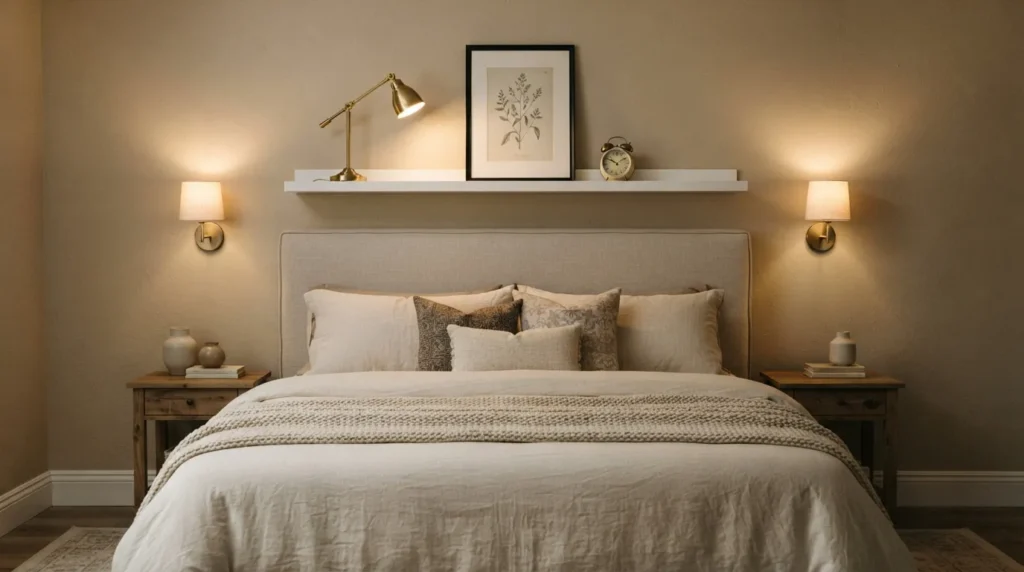
Why It Works The wall above a headboard is often the largest uninterrupted surface in a bedroom, yet it’s frequently left with a single oversized print or nothing at all. One simple trick I always suggest is treating that space as functional real estate instead of pure decoration. A shelf above the headboard gives you a spot for a reading lamp, a small clock, or a rotating stack of books, all without cluttering the nightstands. It also softens the hard edge of a tall headboard by adding a horizontal line that breaks up the wall visually.
How To Style It Mount a single long shelf, 36 to 48 inches, centered above the headboard and at least 8 inches above the top of the bed frame for clearance. Choose a sturdy shelf rated for the weight of any lighting or décor you plan to add, especially if you’re placing a small lamp on it. Style with a low profile in mind since anything too tall can feel precarious above a bed. A small plant, two or three framed pieces leaned rather than hung, and a compact clock work well together. Avoid heavy or breakable décor directly above the pillows for both safety and everyday practicality.
4. Woven Basket Shelves
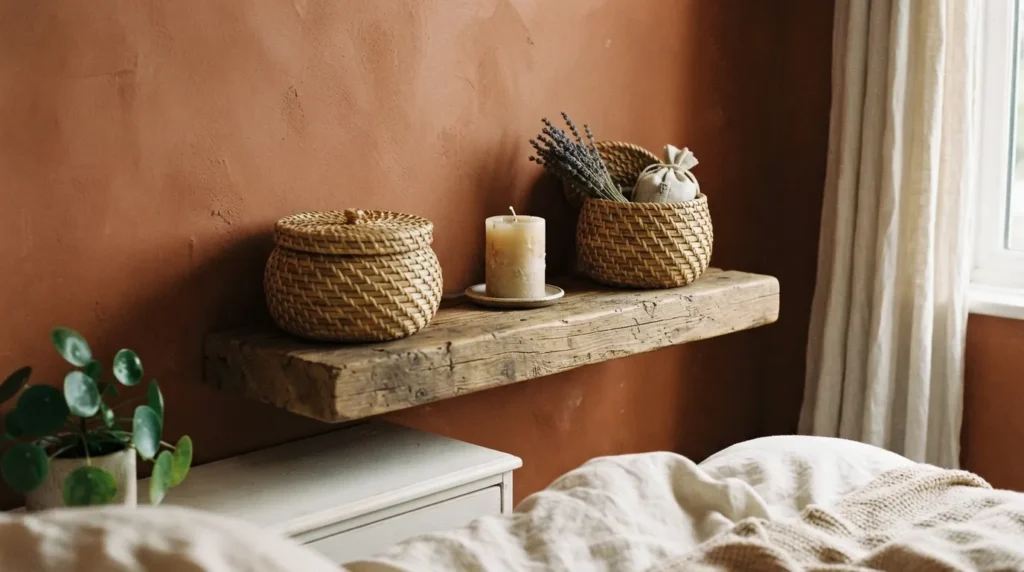
Quick Benefits
- Adds natural texture that balances hard furniture lines
- Provides hidden storage that still looks decorative
- Fits farmhouse, coastal, and boho bedroom styles especially well
- Softens a room without adding visual clutter
- Inexpensive way to add warmth to a neutral palette
Why It Works Woven textures do a lot of quiet work in a bedroom. In my experience, a room filled only with hard surfaces, wood furniture, painted walls, glass frames, can start to feel cold no matter how well it’s decorated. Small woven baskets on a floating shelf introduce a tactile, handmade quality that immediately warms up the space. They also solve a practical problem, giving you a place to tuck away small items like extra blankets, hair accessories, or chargers, without those items being visible clutter.
How To Style It Choose shelves with slightly more depth, around 10 to 12 inches, to comfortably hold small woven baskets without them overhanging the edge. Pair one or two baskets per shelf with a single decorative object, like a candle or small framed print, to avoid the shelf feeling like pure storage. Natural rattan or seagrass baskets work especially well against painted walls in soft white, sage, or terracotta tones. If your bedroom leans more modern, choose baskets with cleaner lines and a darker woven material to keep the texture without leaning too rustic.
5. Book Ledge Display
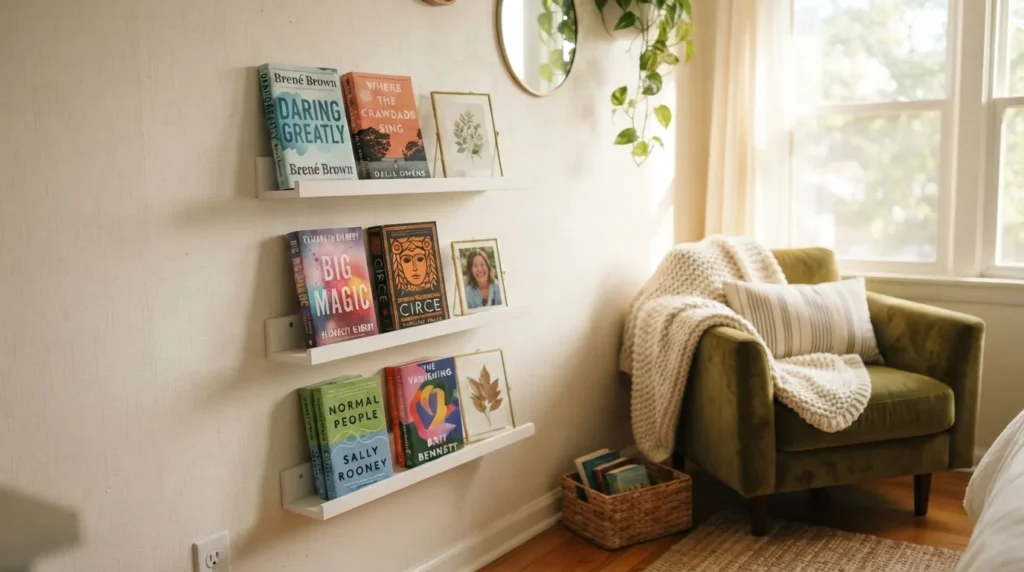
Quick Benefits
- Turns everyday books into intentional wall decor
- Makes it easy to rotate reading material without restyling everything
- Adds color and personality through book spines and covers
- Works beautifully in reading nooks or beside a bed
- Requires very little depth, ideal for tight bedrooms
Why It Works A book ledge is a slim, shallow shelf designed specifically to hold books face-out rather than spine-out, and it’s one of the most personal forms of bedroom decor you can add. I’ve noticed that displaying books this way makes a room feel lived-in and intellectually warm in a way that generic decorative objects rarely achieve. It also solves a real storage issue for readers who are always mid-book and don’t want a stack building up on the nightstand.
How To Style It Mount two or three narrow ledges, typically 2 to 4 inches deep, in a vertical row with 8 to 10 inches of spacing. Lean two to three books per ledge rather than lining them up flat, and rotate the front-facing book based on cover color or current reading. Add a single small object, like a tiny frame or a pressed flower in a thin vase, on one ledge to break up the repetition of books. This idea works especially well beside a reading chair or on the wall opposite the bed where you’ll actually see the covers while relaxing.
6. Corner Floating Shelves
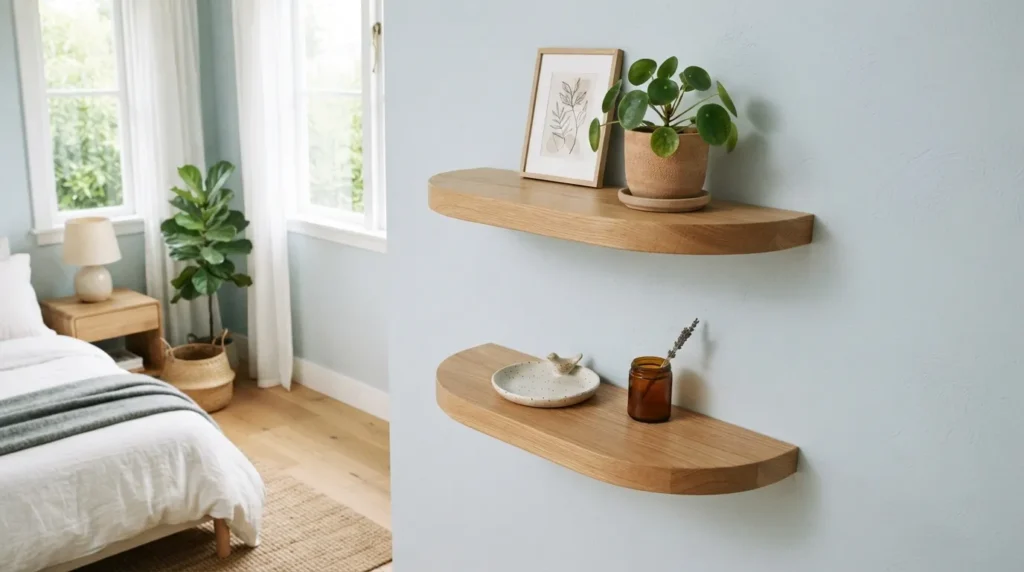
Quick Benefits
- Makes use of dead corner space most bedrooms waste
- Adds shelving without shrinking usable floor area
- Creates a soft, curved visual break from straight walls
- Ideal for small bedrooms or awkward layouts
- Doubles as a display spot for plants or lighting
Why It Works Corners are some of the most overlooked areas in bedroom design, usually left empty or crowded with a chair no one sits in. A mistake many homeowners make is assuming corners are unusable for shelving, when in fact corner floating shelves are specifically designed to fit that angle. That’s why many designers recommend corner shelves for smaller bedrooms especially, since they add storage and display space without consuming any floor footprint the way a corner shelf unit or floor cabinet would.
How To Style It Install two or three triangular or curved corner shelves stacked vertically, spaced 8 to 10 inches apart, in the same finish as your other bedroom hardware. Style with smaller items than you would use on a standard shelf, since corner shelves typically have less usable surface area. A small plant on the top shelf, a candle on the middle, and a compact stack of books or a trinket dish on the bottom creates a simple, balanced look. This is also a great spot for a small reading lamp if the corner sits near a chair.
7. Matching Nightstand Shelves
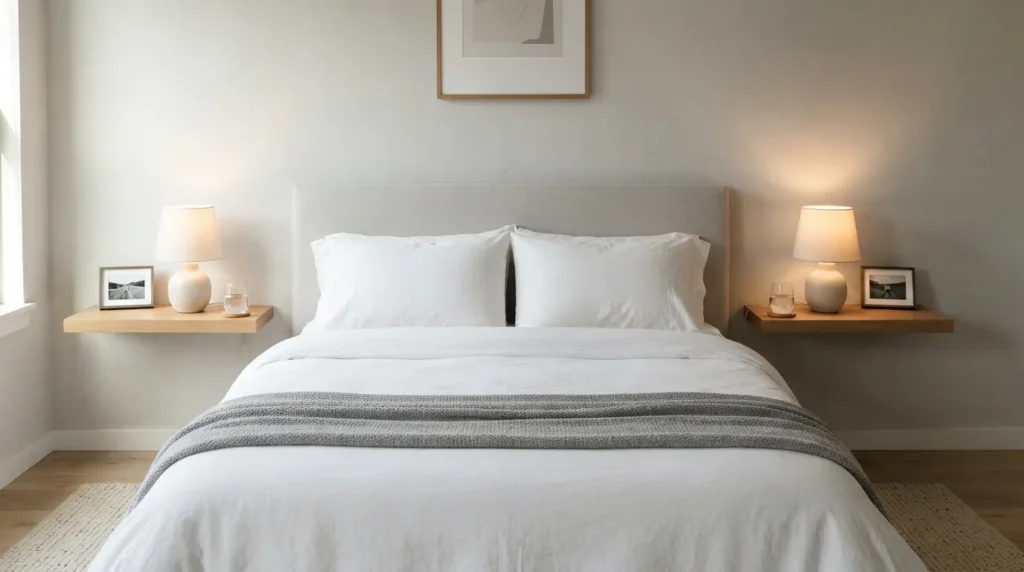
Quick Benefits
- Frees up floor space in smaller bedrooms
- Creates a clean, symmetrical look on either side of the bed
- Easier to keep tidy than traditional nightstands with drawers
- Works well in rentals where furniture flexibility matters
- Adds a modern, minimalist alternative to bulky furniture
Why It Works Replacing traditional nightstands with a single floating shelf on each side of the bed is one of the most functional floating shelf ideas for smaller bedrooms. If you’re anything like me, you’ve dealt with a nightstand that becomes a catch-all for everything except what actually belongs there. A shelf forces a bit more intentionality, since there’s no drawer to hide clutter in. It also visually opens up the floor around the bed, which makes even a small bedroom feel more spacious.
How To Style It Mount one shelf on each side of the bed at a height roughly level with the top of your mattress, usually 24 to 26 inches from the floor depending on bed height. Keep styling minimal and functional: a small lamp, a coaster or dish for a glass of water, and one personal item like a small frame or a candle. Choose shelves rated to hold the weight of a lamp securely, and use anchors suited to your wall type. For couples sharing a room, keep both shelves styled identically for a clean, symmetrical look on either side of the headboard.
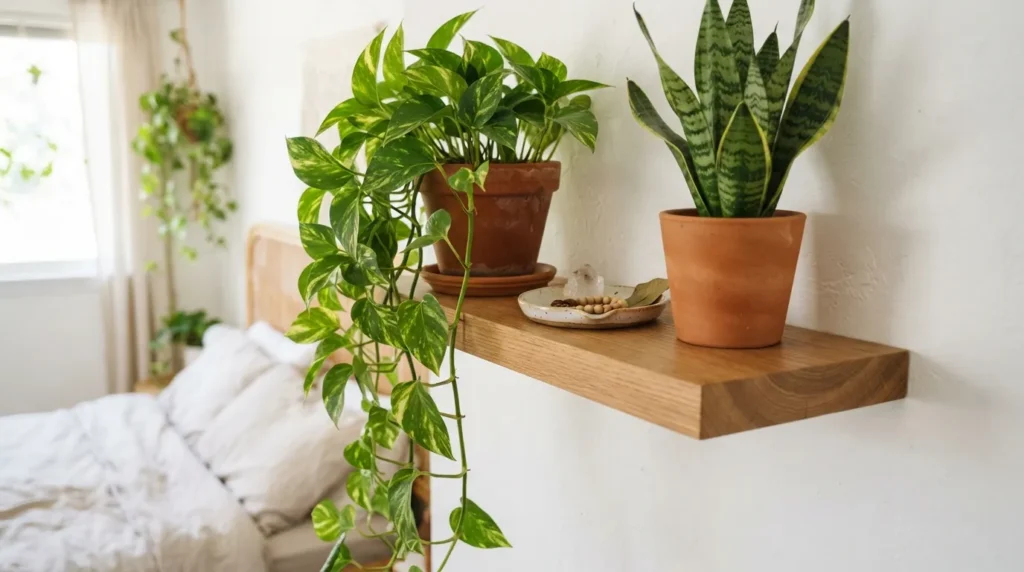
8. Plant Accent Shelves
Quick Benefits
- Brings greenery into the bedroom without using floor space
- Improves the overall mood and freshness of the room
- Works with both real and realistic faux plants
- Adds natural color that pairs with almost any palette
- Easy to swap or add to seasonally
Why It Works Plants are one of the simplest ways to make a bedroom feel alive, but floor space for planters is often limited, especially in smaller rooms. Elevating plants onto a floating shelf solves that problem while also adding visual height to the wall. One thing that works especially well is placing trailing plants, like pothos or string of pearls, on a higher shelf so the vines can cascade down naturally, creating movement that a static object can’t provide. It’s a small detail, but it makes a shelf display feel more organic and less staged.
How To Style It Choose a shelf with enough depth, at least 8 inches, to comfortably hold a planter without it looking like it might tip forward. Mix a trailing plant with one upright plant, like a small snake plant or pothos in a taller pot, to create height variation. If natural light is limited in the bedroom, opt for realistic faux plants or low-light varieties like pothos and ZZ plants. Round out the shelf with one non-plant item, a small ceramic dish or a framed print, so the display doesn’t feel like a plant shelf alone.
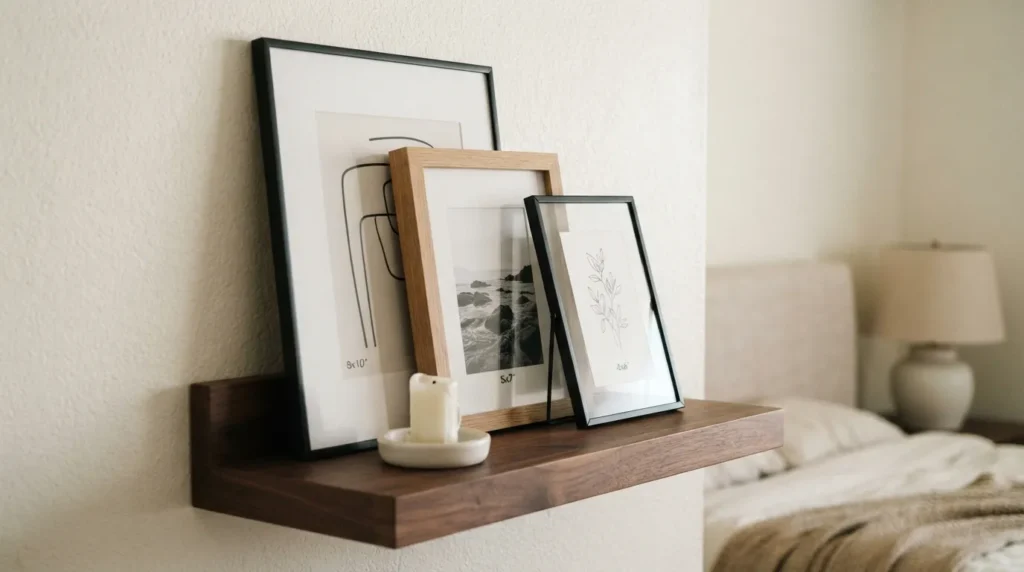
9. Framed Art Shelf Combo
Quick Benefits
- Lets you display more art than wall-hanging alone allows
- Makes it easy to rotate or swap frames without new nail holes
- Creates a layered, gallery-style look with minimal effort
- Works well for mismatched or collected frame styles
- Adds depth that flat hung art can’t achieve alone
Why It Works Leaning framed art on a shelf instead of hanging it directly on the wall gives you the flexibility of a gallery wall without the commitment of multiple nail holes. In my experience, this is one of the easiest ways to update a bedroom’s look seasonally, since swapping a leaned frame takes seconds. Layering two or three frames of different sizes in front of each other also creates a sense of depth that a single flat piece of art simply can’t replicate on its own.
How To Style It Use a shelf with enough depth, ideally 6 to 8 inches, to support leaned frames without them slipping forward. Layer frames from largest in back to smallest in front, offsetting them slightly so each one is partially visible. Mix frame finishes, like a thin black metal frame with a natural wood one, for contrast. Add one small object in front of the frames, like a short candle or a tiny vase, to ground the arrangement and keep it from feeling like frames propped in a row.
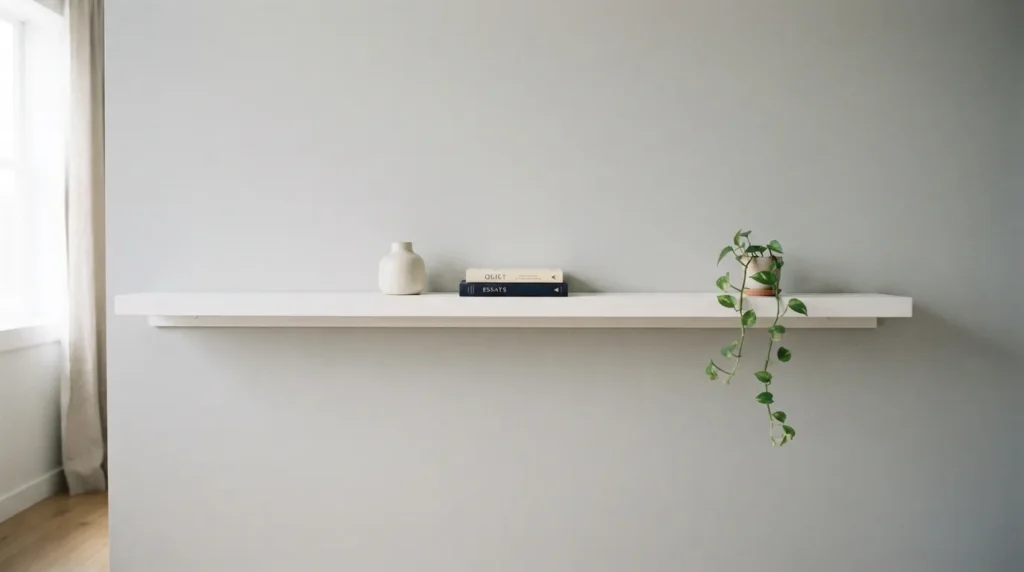
10. Minimalist Single Shelf
Quick Benefits
- Delivers impact without overwhelming a small or busy wall
- Easiest and fastest floating shelf idea to install
- Works in nearly any bedroom style or color scheme
- Keeps focus on a few meaningful, well-chosen items
- Ideal for renters or minimalist decorating approaches
Why It Works Sometimes the most effective bedroom wall decor idea is also the simplest. A single, well-placed shelf styled with restraint can carry as much visual weight as a full gallery arrangement, especially in a bedroom that already has a lot of pattern or color elsewhere. I’ve seen this idea transform spaces that felt visually busy into rooms that suddenly feel calm and intentional, simply by removing the impulse to fill every inch of wall space.
How To Style It Choose one shelf, 24 to 36 inches long, and mount it at eye level on an otherwise empty wall. Style with no more than three items: one taller piece like a vase or small frame, one shorter object, and one organic element like a small plant or a dried branch. Leave visible negative space on both ends of the shelf rather than centering everything tightly together. This approach works especially well in bedrooms with patterned bedding, bold wall color, or existing artwork elsewhere in the room, since the shelf becomes a quiet visual break rather than another focal point competing for attention.
Common Questions About Bedroom Floating Shelves
How high should floating shelves be above a bed? Most designers recommend mounting shelves at least 8 to 12 inches above the top of the headboard for both visual balance and practical clearance. This keeps the shelf from feeling cramped against the bed while still reading as connected to it. Adjust slightly based on ceiling height and headboard style.
How much weight can a floating shelf hold? This depends entirely on the shelf and the mounting hardware, but most standard floating shelves rated for home use hold between 15 and 50 pounds when installed into wall studs. Always check the manufacturer’s weight rating and use appropriate anchors if you’re not mounting directly into a stud.
Related Articles
- Cozy Bedroom Ideas
- Small Bedroom Layout Solutions
- Modern Farmhouse Bedroom Decor
- Neutral Home Styling Tips
- DIY Accent Wall Ideas
Frequently Asked Questions
How many floating shelves should I put in a bedroom? Most bedrooms look best with one to three shelf groupings total, depending on wall space. A single wall might feature a trio above the dresser and a matching pair beside the bed, but avoid overcrowding every wall, since empty space is part of what makes shelf styling feel intentional rather than cluttered.
What is the best height to hang bedroom floating shelves? Eye level, roughly 57 to 60 inches from the floor to the center of the shelf, works well for shelves you’ll view while standing. For shelves above furniture like a bed or dresser, leave 8 to 12 inches of clearance above the furniture piece instead of using a fixed height.
Can floating shelves work in a small bedroom? Yes, and they’re often a better choice than freestanding furniture in small bedrooms specifically because they don’t use floor space. Corner shelves and slim book ledges are especially useful in tight layouts where every square foot matters.
Do floating shelves damage rental walls? Standard floating shelf brackets typically require drilling, which most rentals allow with landlord permission, though small holes are usually easy to patch. For strict no-drill situations, look for command-strip-rated lightweight shelves designed for rental use, though these hold significantly less weight.
What should I avoid putting on bedroom floating shelves? Avoid anything fragile or heavy directly above the bed, since items can shift or fall over time. Also avoid overcrowding shelves with too many small objects, which tends to read as cluttered rather than curated no matter how nice the individual pieces are.
How do I style floating shelves without them looking cluttered? Stick to two to four items per shelf, vary height without varying it too much, and always leave some visible negative space. A helpful rule is to style in odd numbers and let one item be the clear focal point rather than giving every object equal visual weight.
Are floating shelves better than a gallery wall? Neither is inherently better, they serve different purposes. Floating shelves offer flexibility to rotate décor and add three-dimensional objects like plants or books, while gallery walls are better for a fixed, all-art display. Many bedrooms benefit from combining both approaches on different walls.
Final Thoughts
Floating shelves are one of the most flexible, budget-friendly ways to bring personality and function to a bedroom wall. Start with one or two ideas from this list, whether that’s a simple single shelf above your dresser or a full trio behind the headboard, and build from there as you find what actually fits how you live in the room. The goal isn’t to fill every wall at once, it’s to create spots that feel considered, useful, and genuinely yours.
If you’re just getting started, I’d suggest picking the wall that bothers you most right now, likely the one above the bed or beside a nightstand, and tackling that first. Once you see how much a single well-styled shelf can change the feel of a room, the rest of the bedroom tends to follow naturally.