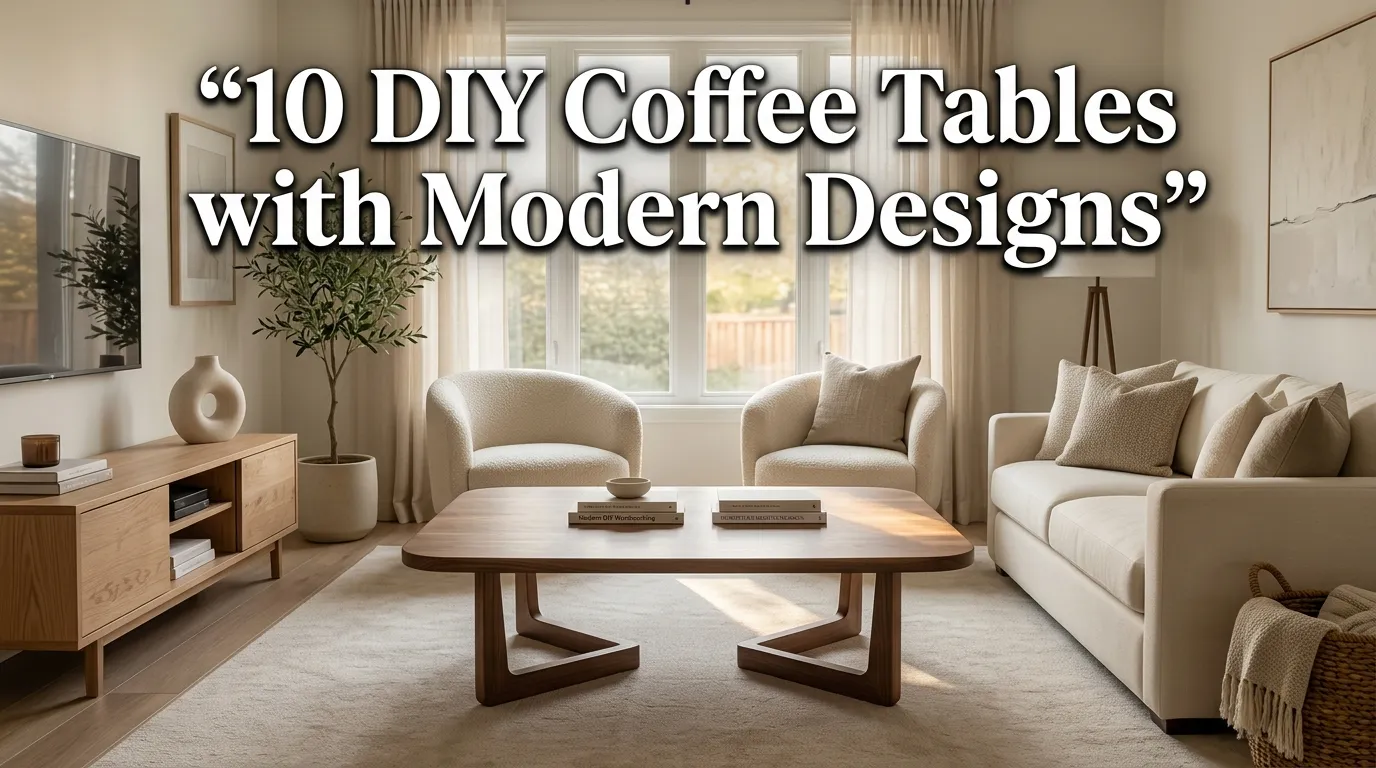
10 DIY Coffee Tables with Modern Designs
A coffee table can become one of the most important pieces in a living room because it connects the seating area and helps define the overall style. But buying a designer-looking table can quickly become expensive.
A DIY coffee table gives you the opportunity to create something that fits your room perfectly while choosing the size, shape, finish, and materials yourself.
Modern coffee tables don’t have to be complicated. Clean lines, natural wood, simple geometric shapes, mixed materials, and understated finishes can create a sophisticated look without advanced woodworking skills.
In my experience, proportion is one of the most important factors. A beautiful table can still feel awkward if it is too large for the seating area or too tall compared with the sofa.
Before starting a project, measure the available space carefully and consider how the table will be used. If you need storage, choose a design with shelves or a lift-top surface. If you want an airy appearance, consider open legs or a simple slab-style top.
These DIY coffee table ideas combine modern aesthetics with practical designs, giving you several options for creating a stylish centerpiece for your living room.
Table of Contents
- Build a Simple Wood Table
- Create a Hairpin Leg Table
- Make a Slatted Coffee Table
- Build a Storage Table
- Create a Round Coffee Table
- Try a Concrete-Top Design
- Make a Live-Edge Table
- Build a Nesting Table
- Create a Minimalist Slab Table
- Make a Two-Tone Coffee Table
1. Build a Simple Wood Table
Quick Benefits
- Beginner-friendly
- Affordable materials
- Easy to customize
- Warm appearance
- Works with many styles
Why It Works
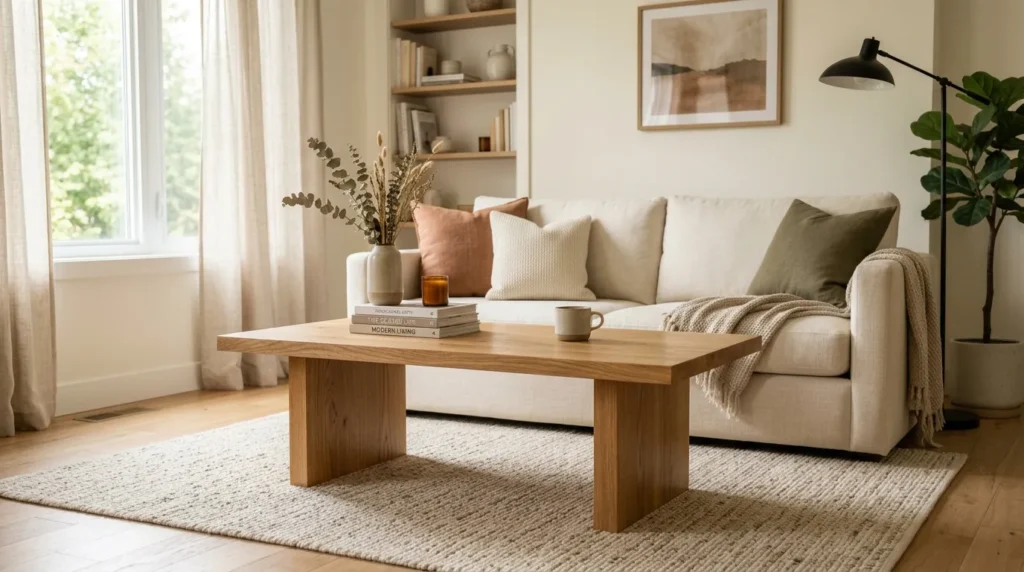
A simple wooden coffee table is one of the easiest ways to create a modern centerpiece. A clean rectangular top paired with straightforward legs creates a timeless silhouette.
Natural wood grain adds warmth while keeping the overall shape simple.
I’ve found that uncomplicated furniture often looks more sophisticated when the proportions and finish are carefully considered.
How To Style It
Choose a wood tone that complements your flooring and other furniture. Sand the surface thoroughly and use an appropriate finish for durability.
Keep the tabletop styling minimal with a tray, books, ceramic object, or small plant.
2. Create a Hairpin Leg Table
Quick Benefits
- Modern appearance
- Simple construction
- Lightweight look
- Works in small spaces
- Easy to customize
Why It Works
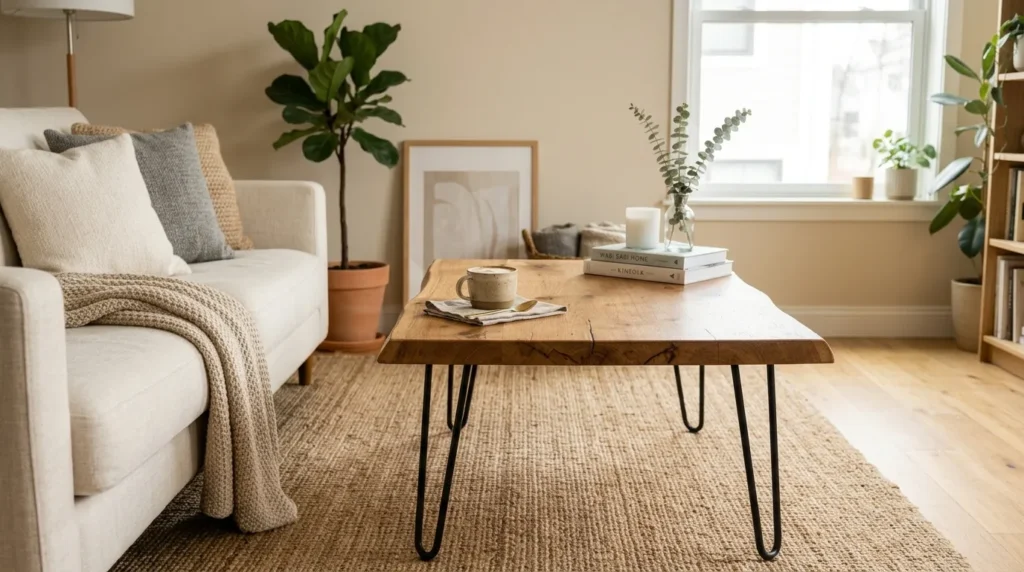
Hairpin legs create a visually lightweight base that works beautifully with modern and industrial-inspired interiors.
Because the legs are relatively minimal, the tabletop becomes the main design feature. Wood provides warmth while the metal legs add contrast.
I’ve found that this style is particularly useful when you want a coffee table that doesn’t visually overwhelm a small living room.
How To Style It
Choose a wooden top with a finish that complements your existing furniture. Pair it with neutral seating and a simple rug.
Use a restrained tabletop arrangement so the clean silhouette remains visible.
3. Make a Slatted Coffee Table
Quick Benefits
- Adds texture
- Creates visual interest
- Feels modern
- Uses natural materials
- Works as a statement piece
Why It Works
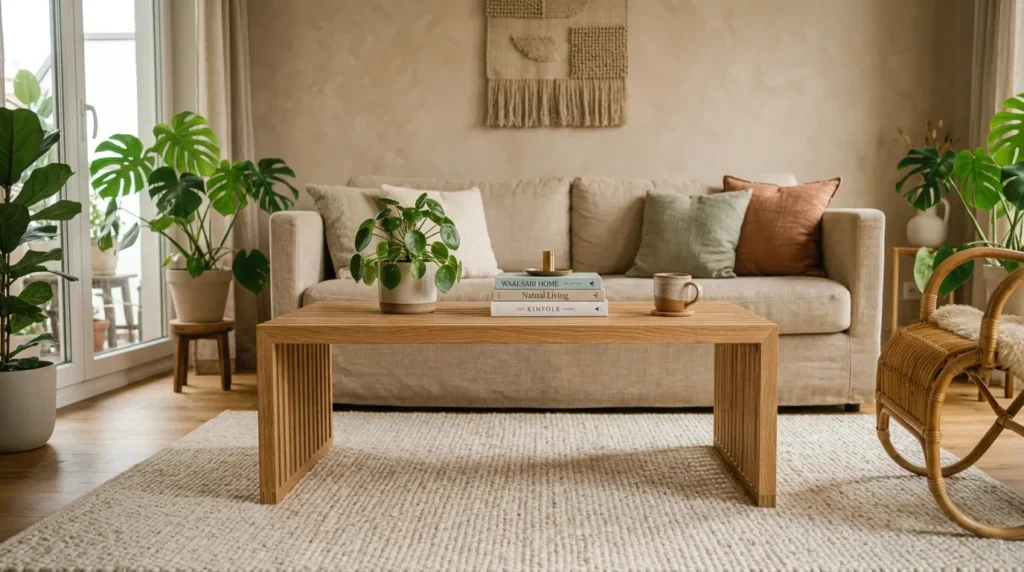
Wood slats add dimension while maintaining clean modern lines. The repeated pattern creates texture and subtle shadows that make a simple table feel more architectural.
This design works particularly well with organic modern interiors.
I’ve found that slatted furniture looks best when the spacing is consistent and the overall shape remains simple.
How To Style It
Use natural or lightly stained wood to emphasize the grain. Pair the table with soft upholstery, woven textiles, and neutral colors.
Keep accessories simple so the slatted structure remains the focal point.
4. Build a Storage Table
Quick Benefits
- Adds hidden storage
- Keeps the living room organized
- Maximizes space
- Adds functionality
- Works well in family rooms
Why It Works
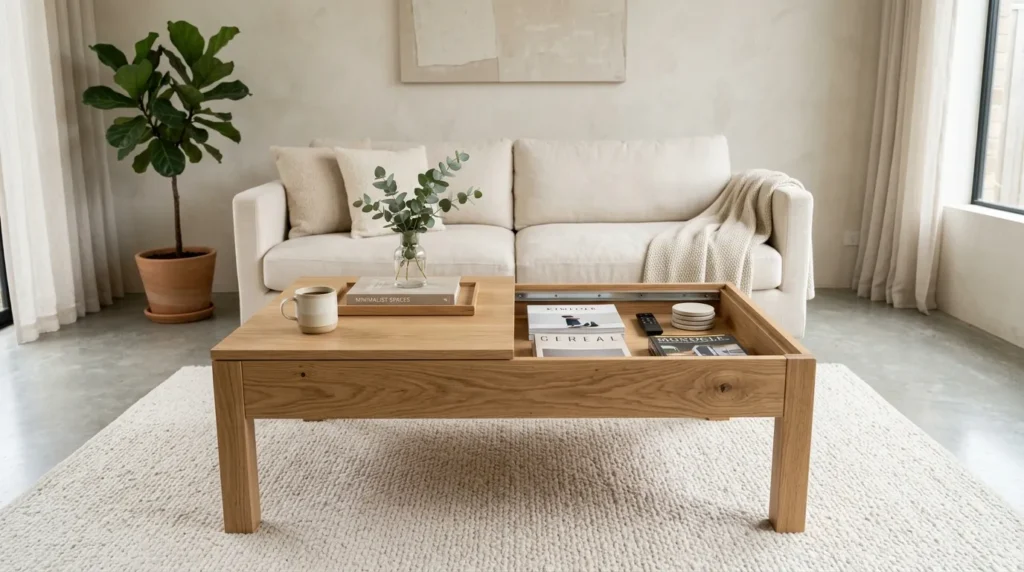
A coffee table with built-in storage can help keep remote controls, books, blankets, games, and everyday items organized.
In smaller living rooms, multifunctional furniture can make a major difference because every piece needs to serve a purpose.
I’ve found that closed storage creates the cleanest appearance when you want a modern room to feel uncluttered.
How To Style It
Choose a design with drawers, baskets, shelves, or a lift-top depending on your needs.
Use decorative objects sparingly on the surface so the table remains practical.
5. Create a Round Coffee Table
Quick Benefits
- Softens straight lines
- Improves circulation
- Works in compact rooms
- Creates visual interest
- Feels contemporary
Why It Works
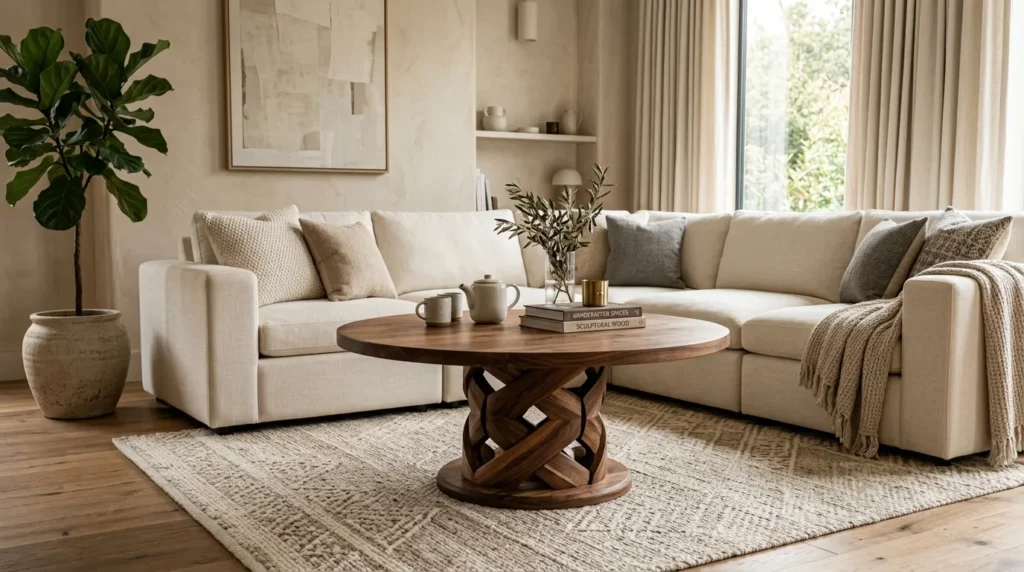
A round coffee table can soften the strong rectangular lines commonly found in sofas, rugs, and media furniture.
It can also make movement around the seating area feel more natural.
I’ve found that round tables are particularly helpful in smaller rooms where sharp corners can make circulation feel tight.
How To Style It
Choose a tabletop size that leaves comfortable walking space around it. A pedestal or central base can create a clean modern appearance.
Use a round tray or low decorative arrangement to reinforce the shape.
6. Try a Concrete-Top Design
Quick Benefits
- Adds modern texture
- Creates a strong focal point
- Feels architectural
- Works with wood
- Suits contemporary rooms
Why It Works
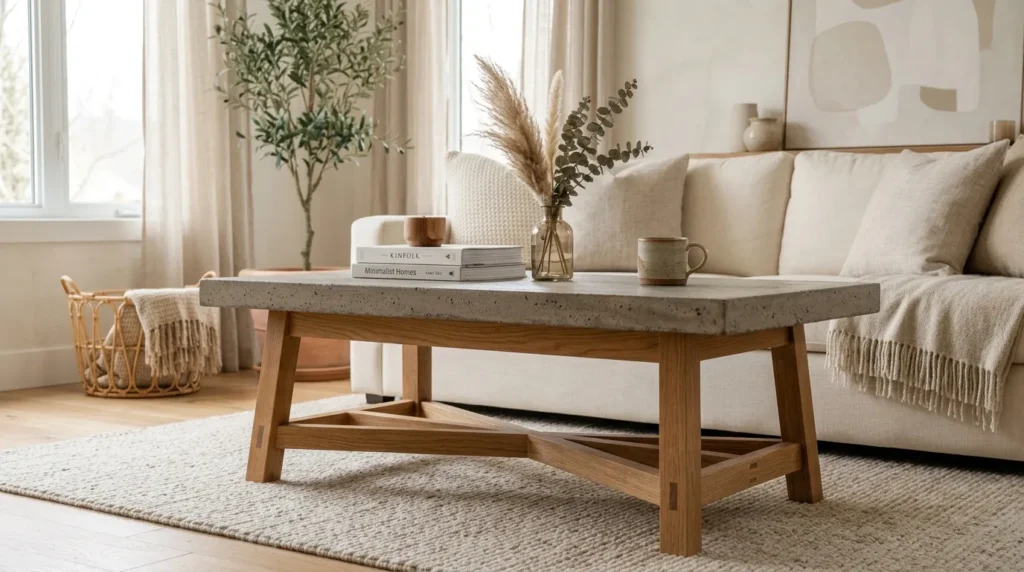
Concrete introduces a substantial, architectural quality that works beautifully in modern living rooms. A concrete-style tabletop paired with a simple wood or metal base creates contrast between smooth surfaces and natural materials.
The cool character of concrete can also balance warm textiles and wood furniture.
I’ve found that concrete looks especially appealing when the rest of the room uses soft neutral colors.
How To Style It
Use a properly supported tabletop and follow appropriate safety and curing instructions if working with actual concrete.
Pair the finished table with a soft rug, cream upholstery, natural wood, and warm lighting to balance its heavier appearance.
7. Make a Live-Edge Table
Quick Benefits
- Adds natural character
- Creates a unique piece
- Highlights wood grain
- Works with modern décor
- Makes a statement
Why It Works
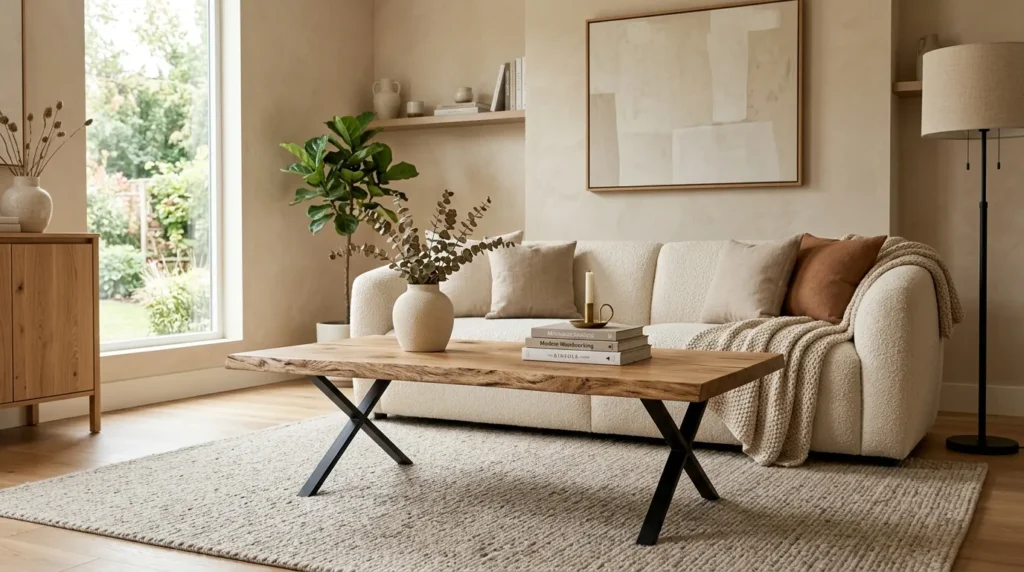
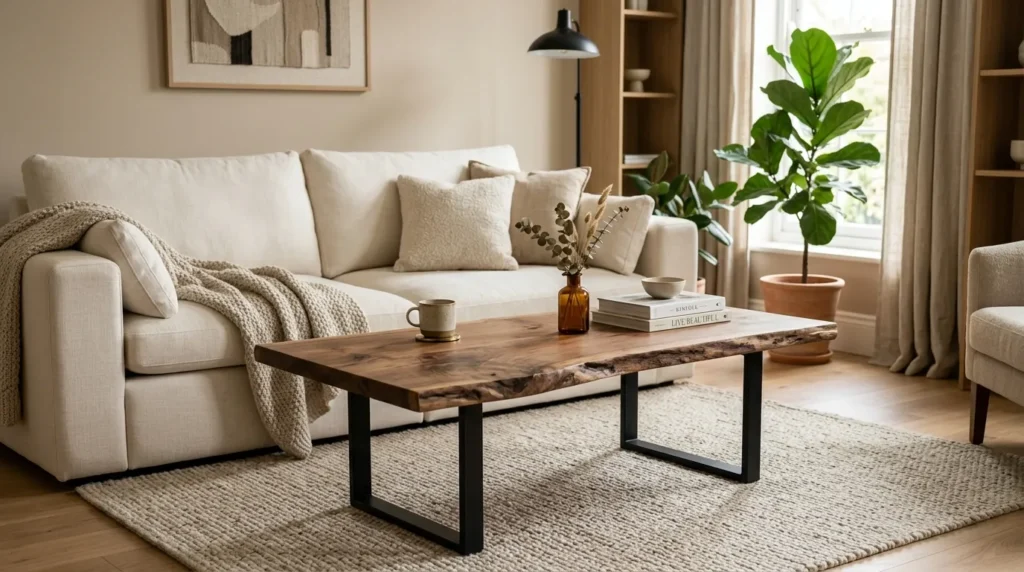
A live-edge tabletop brings the organic shape of natural wood into a modern interior. The irregular edge creates contrast against clean-lined sofas and furniture.
No two pieces look exactly alike, making this approach especially appealing if you want a one-of-a-kind table.
I’ve found that natural wood becomes even more striking when the rest of the room is relatively restrained.
How To Style It
Choose a properly prepared, kiln-dried slab from a reputable source and finish it according to the manufacturer’s recommendations.
Pair it with simple metal or wood legs so the natural edge remains the main feature.
8. Build a Nesting Table
Quick Benefits
- Saves space
- Adds flexibility
- Works in small rooms
- Creates layered styling
- Easy to rearrange
Why It Works
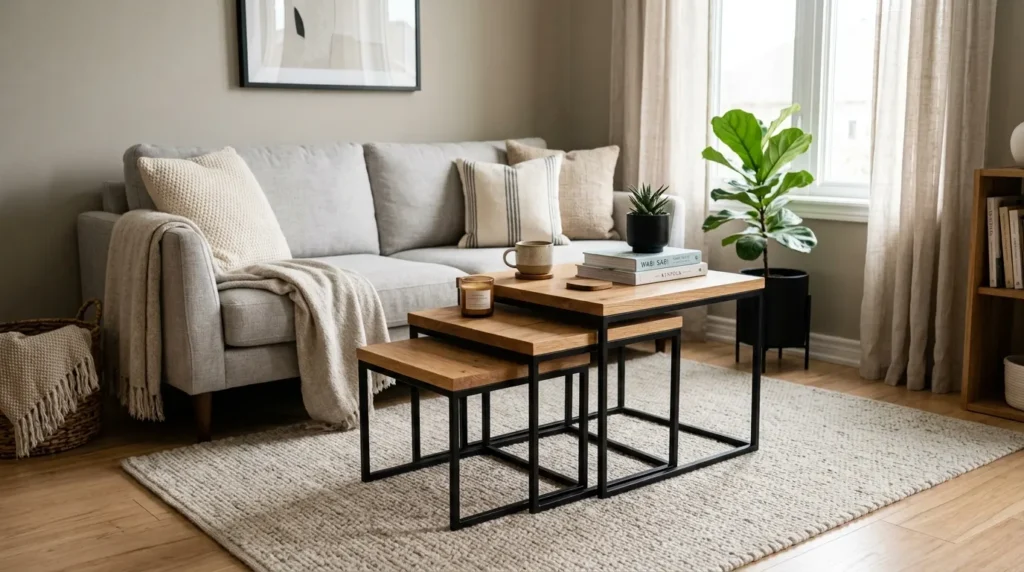
Nesting tables are useful when you need flexibility without committing to one large coffee table. Smaller tables can slide underneath each other and separate when additional surfaces are needed.
This makes the design especially practical for compact living rooms or homes where furniture needs to adapt.
I’ve found that nesting tables also create interesting height variation within a seating area.
How To Style It
Use complementary materials and shapes so the tables feel like one coordinated set.
Keep the smaller table partially tucked underneath the larger one for a clean appearance, then separate them when needed.
9. Create a Minimalist Slab Table
Quick Benefits
- Clean appearance
- Simple construction
- Modern silhouette
- Visually uncluttered
- Easy to customize
Why It Works
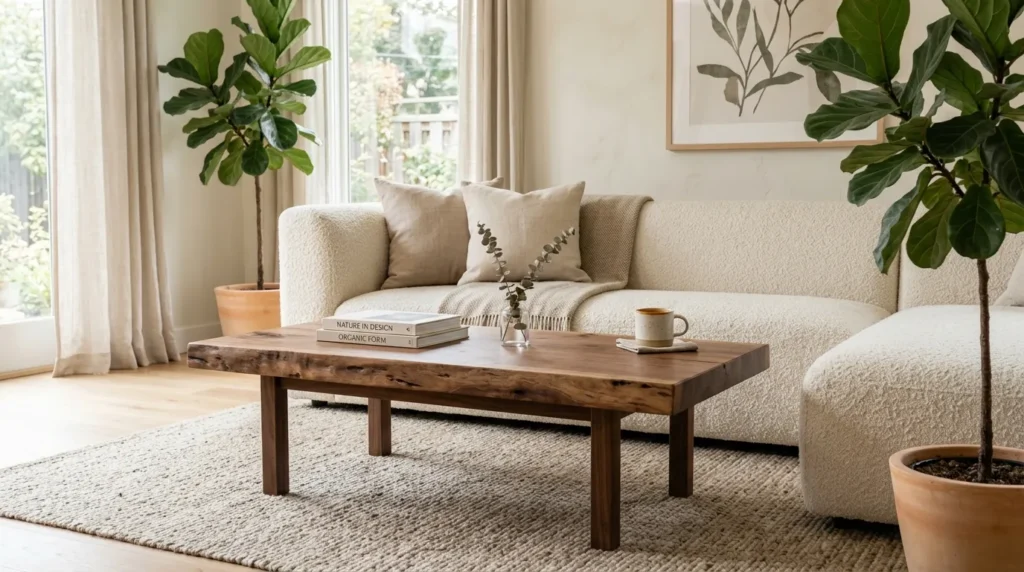
A slab-style coffee table focuses on proportion and material rather than decorative details. A thick wooden top with simple supporting legs can create a sophisticated modern centerpiece.
The lack of unnecessary ornamentation makes this design easy to incorporate into different interiors.
I’ve found that minimalist furniture often looks best when the material itself provides enough visual interest.
How To Style It
Choose a high-quality-looking wood finish and keep the base simple. Consider rounded corners if you want a softer contemporary appearance.
Add only a few carefully selected accessories to preserve the minimalist aesthetic.
10. Make a Two-Tone Coffee Table
Quick Benefits
- Adds contrast
- Creates visual interest
- Looks customized
- Combines materials
- Works with modern interiors
Why It Works
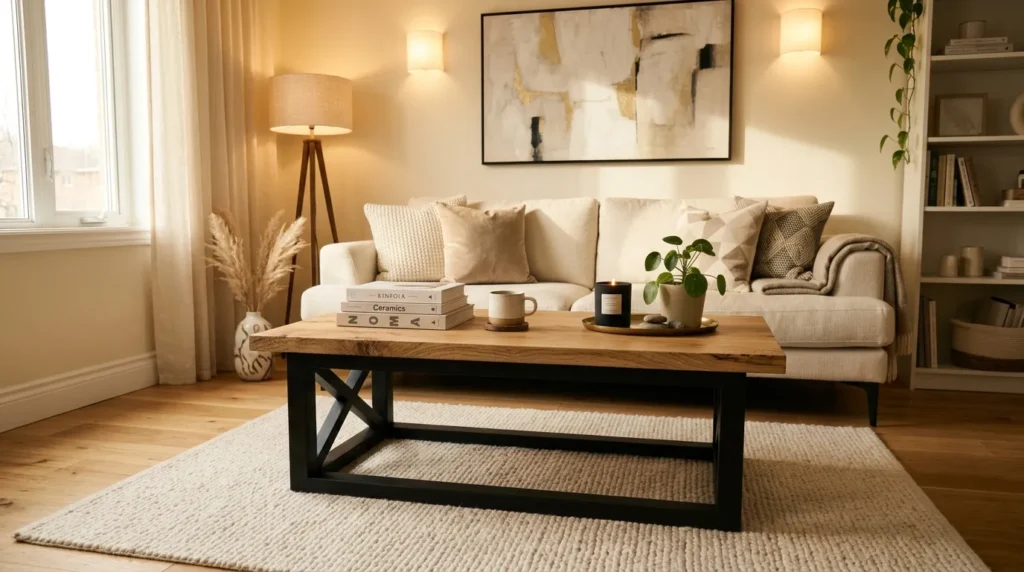
A two-tone design allows you to combine complementary materials or finishes. Natural wood paired with black, cream, white, or another muted tone can create a polished modern appearance.
The contrast helps define the table’s individual components while keeping the design cohesive.
I’ve found that using one dominant material and one accent finish creates the most balanced result.
How To Style It
Choose two finishes already present elsewhere in the room. For example, repeat black metal from lighting while using natural wood to coordinate with flooring or shelving.
Keep the tabletop décor simple so the contrasting construction remains visible.
Frequently Asked Questions
What is the easiest DIY coffee table to build?
A basic wooden coffee table with a simple rectangular top and straightforward legs is generally one of the easiest designs for beginners.
What wood is best for a DIY coffee table?
The best choice depends on your budget, tools, desired appearance, and durability needs. Pine can be economical, while hardwoods such as oak or maple can provide a more substantial finished look.
How high should a coffee table be?
A coffee table is typically designed to sit around the height of the sofa seat or slightly lower. Always measure your specific seating before building.
How do I make a DIY coffee table look expensive?
Focus on clean proportions, smooth finishing, quality-looking materials, simple hardware, and a restrained design. A carefully finished surface can make an inexpensive project look much more polished.
What coffee table shape is best for a small living room?
Round or oval tables can work well in compact rooms because their curved edges can improve circulation. Nesting tables are another flexible option.
Can I make a coffee table without advanced woodworking skills?
Yes. Simple slab tables, hairpin-leg tables, basic storage designs, and straightforward wood tables can be adapted for beginner-friendly construction.
Conclusion
A DIY coffee table can be much more than a budget alternative to store-bought furniture. It gives you control over the dimensions, materials, finish, and overall style so you can create a piece that works specifically for your living room.
Start by considering the size of your seating area and how you actually use the table. Then choose a design that matches your skill level and available tools.
Natural wood, concrete, metal, storage features, and contrasting finishes can all create modern results without complicated shapes.
The most important detail is careful finishing. Smooth edges, consistent measurements, secure construction, and an appropriate protective finish can make a simple DIY table feel intentionally designed.