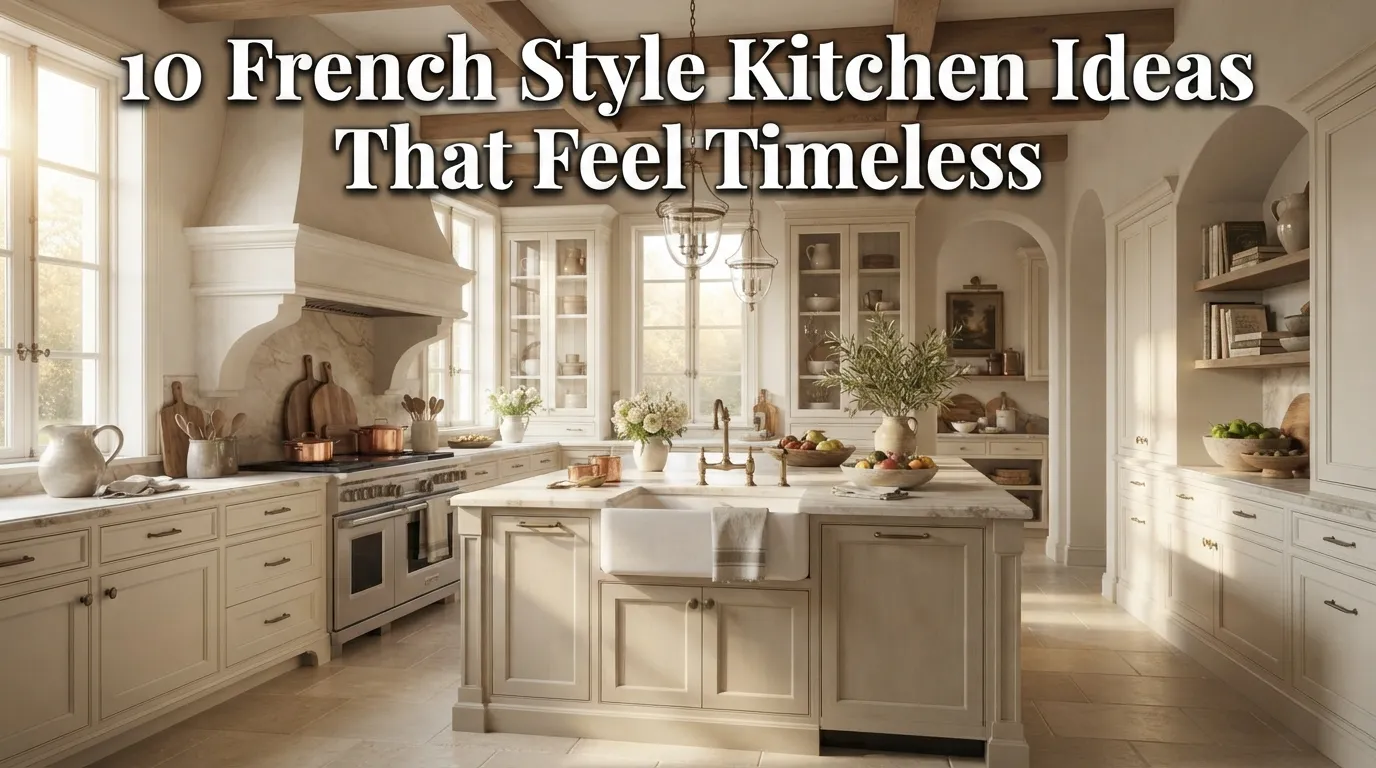
10 French Style Kitchen Ideas That Feel Timeless
There’s a reason French style kitchens rarely look dated the way trend-driven kitchens do. Walk into a home built around this look ten years after it was finished, and it still feels intentional, warm, and correct. That’s not an accident. French kitchen design leans on proportion, material honesty, and restraint rather than whatever’s currently trending on a moodboard, which is exactly why it holds up so well over time.
In my experience working through kitchen renovations and helping homeowners pick finishes that won’t feel tired in five years, the biggest mistake I see is chasing a “French country” Pinterest board full of trendy add-ons, distressed everything, excessive toile, ornate hardware on every surface, rather than understanding the handful of principles that actually make the style work. A mistake many homeowners make is assuming French style means “more decoration.” In reality, the most convincing French kitchens are often quieter than people expect: natural materials, soft color, good proportions, and a few well-chosen details instead of many mediocre ones.
This article walks through ten specific, buildable elements of a timeless French style kitchen, from limewashed cabinetry to a proper butcher block island, with practical guidance on materials, finishes, and layout so the look actually holds up in a real, working kitchen. I’ve noticed that the kitchens people love most years later are the ones built around function first, beauty second, which happens to be the exact philosophy behind traditional French kitchen design in the first place.
Whether you’re planning a full renovation, a lighter refresh, or just want to borrow a few ideas for a rental-friendly update, there’s something here you can apply at whatever scale fits your space and your budget.
Table of Contents
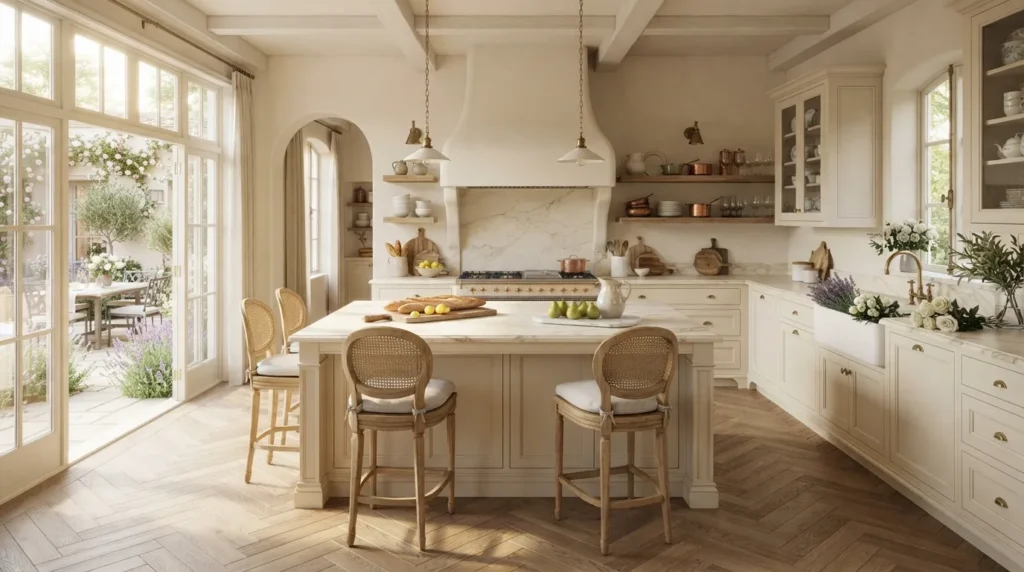
- Limewashed Cabinet Finish — A soft, textured painted finish that ages beautifully.
- Open Plate Rack Shelving — Exposed shelving for everyday dishware display.
- Brass Unlacquered Hardware — Warm metal fixtures that develop character over time.
- Butcher Block Island — A natural wood work surface at the heart of the kitchen.
- Zellige Tile Backsplash — Handmade tile with organic texture and subtle variation.
- Vintage-Inspired Range — A statement stove that anchors the whole room.
- Woven Cafe Curtains — Soft window coverings with quiet European charm.
- Stone Farmhouse Sink — A deep, functional sink that feels both old and practical.
- Herb Garden Windowsill — Fresh greenery brought directly into daily cooking.
- Linen and Copper Accents — Layered textures that finish the room’s warmth.
1. Limewashed Cabinet Finish
Quick Benefits
- Adds soft texture instead of a flat painted look
- Ages gracefully rather than showing chips or wear harshly
- Works with both light and deep cabinet color choices
- Pairs naturally with wood, stone, and brass finishes
- Feels handcrafted rather than mass-produced
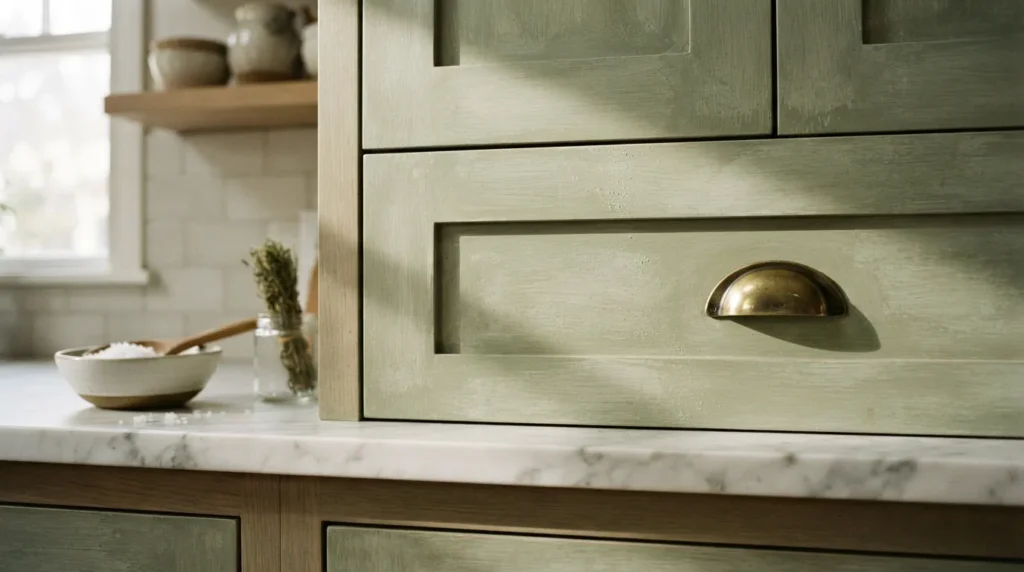
Why It Works A limewash finish creates subtle variation in tone and texture across the cabinet surface, which is exactly what separates a French-inspired kitchen from a generic painted one. In my experience, flat, perfectly uniform paint reads as new and, ironically, less finished, while limewash immediately suggests craftsmanship and age in the best sense. That’s why many designers recommend it specifically for French country and French farmhouse kitchens, since the technique has roots in traditional European plasterwork and carries that same handmade quality into cabinetry.
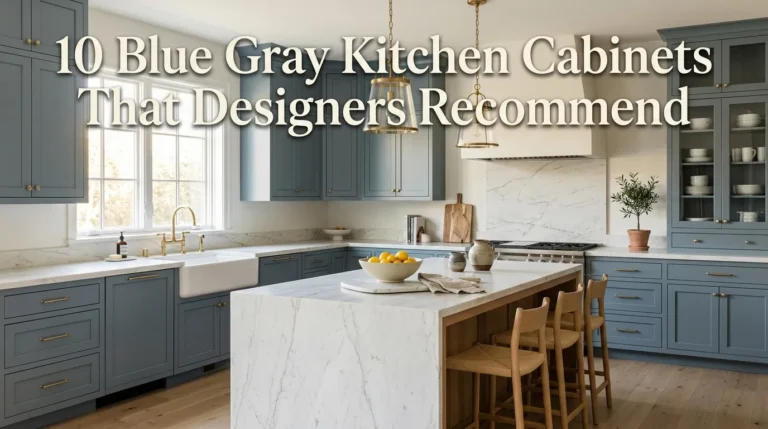
How To Style It Choose a soft, muted color for the limewash base, sage green, warm putty, soft blue-gray, or off-white are all classic choices that read as timeless rather than trendy. Apply the limewash in thin, layered coats using a natural bristle brush, allowing some brushstroke texture to remain visible rather than sanding it perfectly smooth. Seal with a matte protective topcoat suited for kitchen use to guard against moisture and daily wear. Pair the finish with simple, unfussy cabinet door styles, shaker or beadboard, so the texture of the paint stays the visual focus rather than competing with ornate door details.
2. Open Plate Rack Shelving
Quick Benefits
- Turns everyday dishware into part of the kitchen’s decor
- Adds visual warmth compared to closed cabinet fronts
- Makes daily dishes easier to reach and put away
- Works well in both full kitchens and smaller nooks
- Encourages a slightly more curated, intentional dish collection
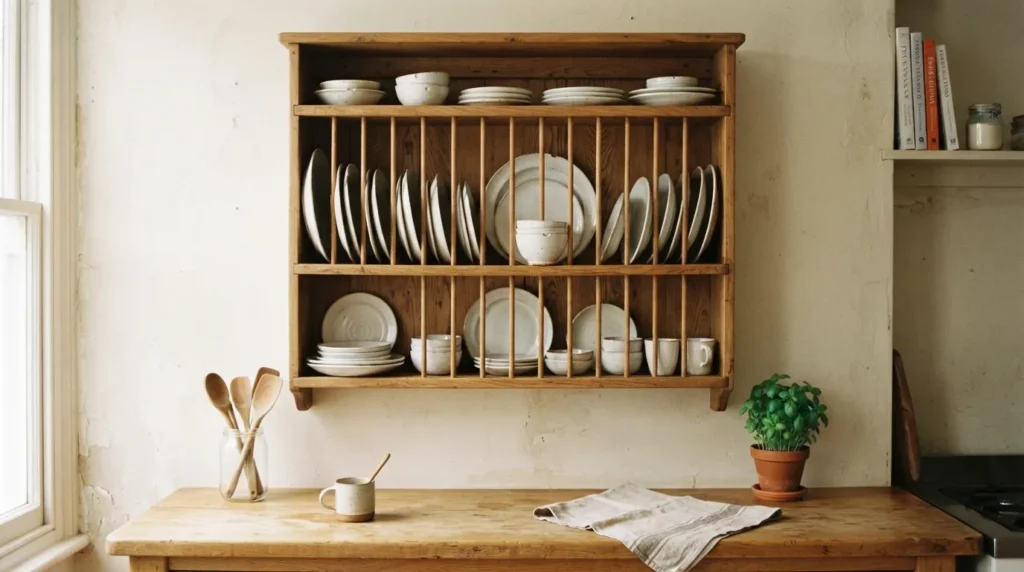
Why It Works Open plate racks are a hallmark of traditional French kitchens, where dishware was displayed rather than hidden, both for convenience and because good ceramics were considered worth showing. One thing that works especially well is using this idea to break up a wall of closed cabinetry, giving the eye somewhere to land besides flat cabinet doors. A plate rack also solves a practical daily problem, drying racks and closed cabinets often create a disconnect between washing dishes and putting them away, while an open rack lets plates air dry in the exact spot they’re stored.
How To Style It Install a simple wood plate rack, either as a standalone shelf unit or built into an existing cabinet run, with vertical slats spaced to hold plates upright. Choose a mix of white, cream, and softly patterned dishware rather than a single uniform set, which reads as more collected and personal over time. Pair the rack with open shelving nearby for bowls, mugs, or glassware, using a consistent color palette so the open storage feels curated rather than cluttered. Keep the rack limited to items used regularly, since anything sitting untouched for months tends to collect dust and lose its charm.
3. Brass Unlacquered Hardware
Quick Benefits
- Develops a natural, living patina that improves with age
- Adds warmth that chrome or matte black hardware can’t replicate
- Pairs beautifully with both light and dark cabinet colors
- Signals quality and intention in small daily-use details
- Becomes more distinctive and personal the longer it’s used
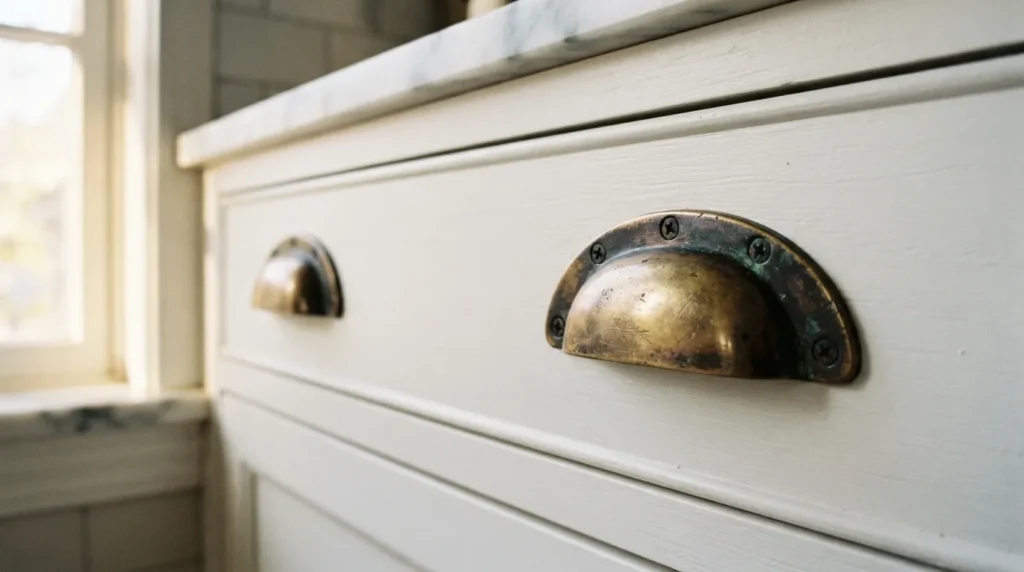
Why It Works Unlacquered brass is different from the shiny, uniform brass finishes popular in past decades, it’s designed to tarnish and darken naturally with touch and time, which is precisely what gives it character. I’ve seen this idea transform kitchens that otherwise looked like any other renovation into something that feels collected and lived-in almost immediately. A mistake many homeowners make is choosing lacquered or plated gold hardware instead, which stays artificially shiny and, over time, actually looks more dated than unlacquered brass that’s allowed to age naturally.
How To Style It Choose simple, classic hardware shapes, cup pulls, knob pulls, or slim bar handles, in unlacquered brass for cabinet doors and drawers. Extend the material to faucet fixtures, cabinet latches, and even light fixtures for a cohesive, intentional look throughout the kitchen. Avoid mixing more than one or two additional metal finishes in the same space, since brass works best as the dominant metal tone rather than one of several competing for attention. Let the patina develop naturally rather than polishing it regularly, since the uneven darkening around handles and edges is exactly what gives the hardware its timeless quality.
4. Butcher Block Island
Quick Benefits
- Adds warmth and natural material contrast against cabinetry
- Provides a genuinely functional cutting and prep surface
- Softens an all-stone or all-tile kitchen with organic texture
- Works in both large kitchens and smaller island layouts
- Ages with visible character rather than looking worn out
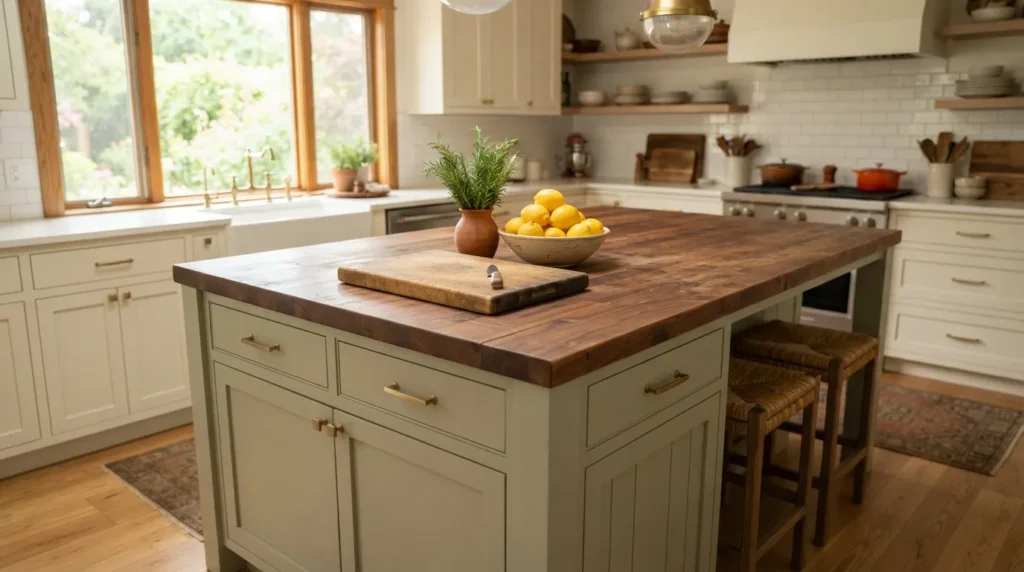
Why It Works A butcher block island brings the kitchen back to its most functional roots, a solid, honest surface built for actual food preparation rather than pure display. In my experience, kitchens that rely entirely on stone or engineered surfaces can start to feel a little cold or showroom-like, while a butcher block top immediately warms the whole room and grounds it. It’s also one of the most functional French kitchen details on this list, since a proper wood island top has been used for prep work in French kitchens for generations, long before it became a design trend.
How To Style It Choose a solid wood butcher block, maple, walnut, or oak are all traditional choices, in a thickness of at least 1.5 to 2 inches for durability and visual weight. Treat the surface regularly with food-safe mineral oil to maintain both its function and appearance, and expect some natural darkening and minor marks over time, which add to the character rather than detract from it. Pair the wood top with a contrasting island base, painted in a soft color or left as natural wood with turned or paneled detailing, for a furniture-like look rather than a built-in one. Keep island styling simple: a wood cutting board, a bowl of fruit, and a small vase of fresh herbs are enough.
5. Zellige Tile Backsplash
Quick Benefits
- Adds organic texture and subtle color variation across the wall
- Handmade quality that reads as artisanal rather than mass-produced
- Reflects light unevenly, creating natural depth and movement
- Works as a bold moment or a quiet background depending on tone
- Pairs beautifully with both modern and traditional French kitchens
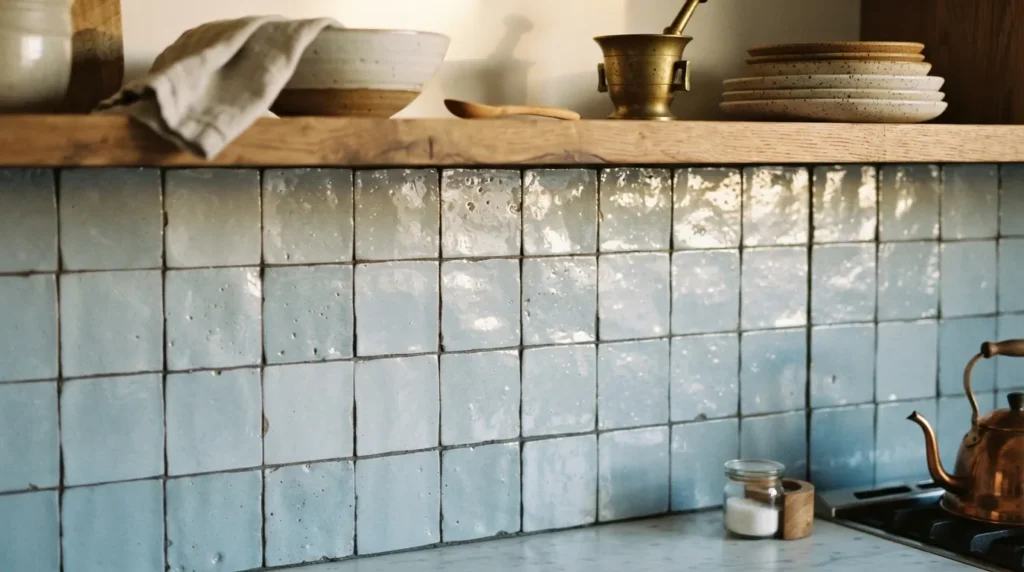
Why It Works Zellige tile is handmade, and no two tiles are perfectly identical, which creates a subtle, glowing variation in color and surface texture that machine-made tile simply cannot replicate. That’s why many designers recommend it specifically for kitchens aiming for a timeless, collected feel, since the tile’s imperfections are the entire point. A flawless, uniform tile wall can look sharp initially but often reads as sterile over time, while zellige’s organic quality keeps the space feeling warm and handcrafted no matter how long it’s been installed.
How To Style It Choose a soft, muted zellige color, warm white, pale blue, or soft green are classic choices, and install it in a simple running bond or brick pattern to let the tile’s natural variation be the visual interest rather than an elaborate layout pattern. Use a grout color close to the tile tone rather than a high-contrast grout line, which keeps the wall reading as one cohesive textured surface. Extend the tile a few inches up the wall behind the stove as a focal feature, or run it full height between countertop and upper cabinets for a more immersive effect. Pair with simple, unfussy surrounding materials so the tile itself remains the star of the wall.
6. Vintage-Inspired Range
Quick Benefits
- Anchors the kitchen with a clear visual focal point
- Adds a sense of craftsmanship rare in standard appliances
- Available in colors that support a broader design palette
- Signals quality and intention at the kitchen’s functional center
- Works in both compact and large kitchen layouts
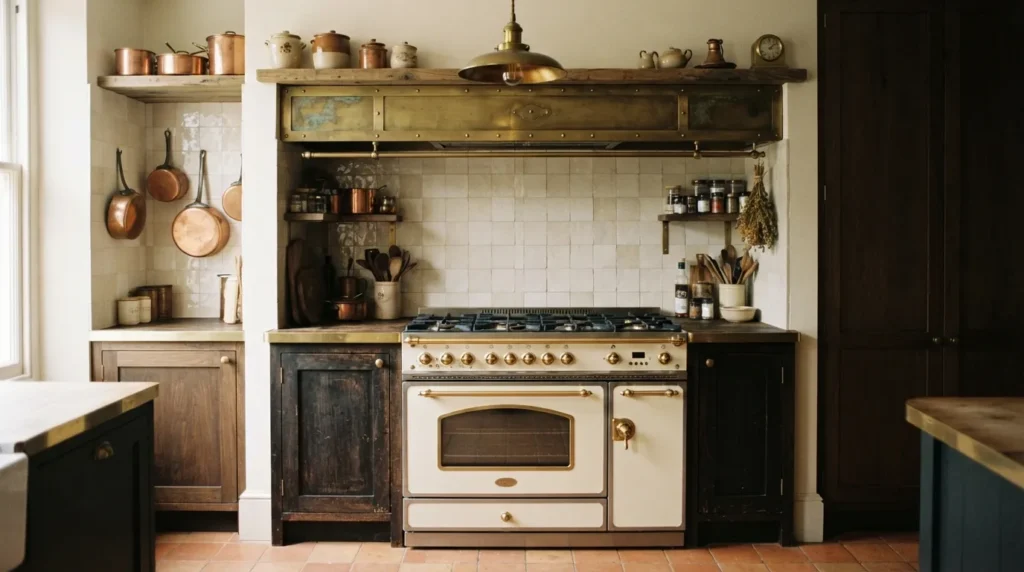
Why It Works The range is naturally the visual and functional center of any kitchen, and choosing one with vintage-inspired styling, rounded edges, brass or chrome trim, a rich enamel color, gives the whole room a focal point that feels considered rather than purely utilitarian. One simple trick I always suggest is letting the range set the color direction for the rest of the kitchen rather than treating it as an afterthought once cabinetry and counters are already decided. A statement range in a soft color like cream, sage, or deep blue can quietly guide every other material choice around it.
How To Style It Choose a range with classic proportions and detailing, brass or nickel trim, control knobs rather than a flat digital panel, and a solid enamel finish in a color that complements your cabinetry. Frame the range with the kitchen’s most detailed material moment, whether that’s the zellige tile backsplash or a stone hood surround, so it reads as the room’s centerpiece. Keep the surrounding counter space near the range relatively clear, styled with just a few functional items like a wood spoon holder or a small dish for salt, so the range itself remains the visual focus rather than competing with clutter.
7. Woven Cafe Curtains
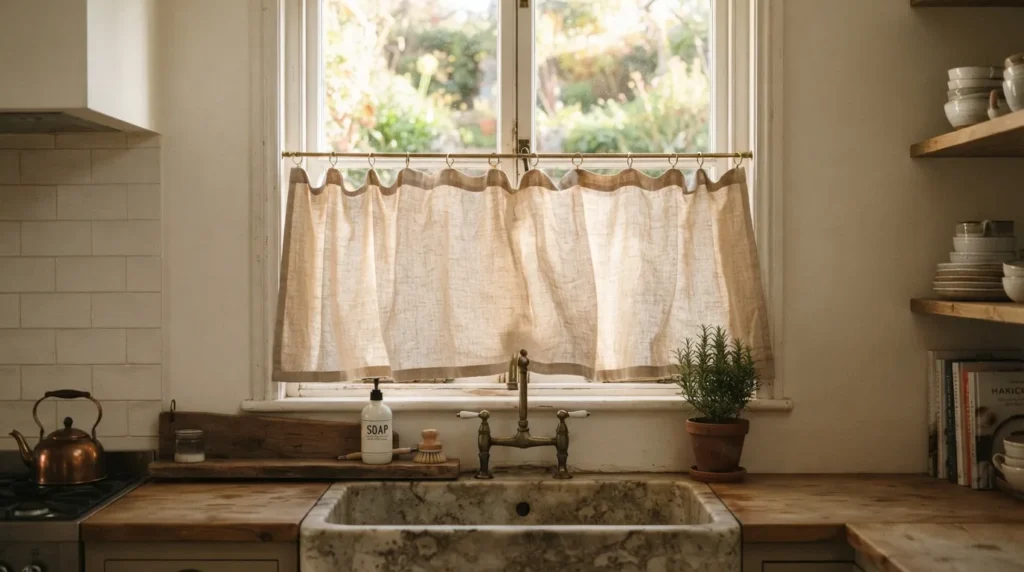
Quick Benefits
- Adds softness to hard kitchen surfaces like tile and stone
- Provides privacy without blocking natural light entirely
- Brings in natural texture through woven or linen fabric
- Inexpensive compared to full kitchen window treatments
- Easy to change seasonally or refresh over time
Why It Works Cafe curtains, mounted to cover only the lower half of a window, are a classic detail in traditional French kitchens, offering privacy at counter height while still allowing light to pour in through the top of the window. I’ve noticed that kitchens without any soft textile elements can start to feel visually flat, especially with the amount of hard surfaces, tile, stone, wood, already present. A simple woven or linen cafe curtain solves that without the bulk or dust concerns of full-length drapery in a cooking space.
How To Style It Choose a lightweight linen or loosely woven cotton fabric in a soft neutral tone, ecru, soft white, or pale blue work particularly well against most French kitchen palettes. Mount the curtain rod at the window’s midpoint using a simple brass or wrought iron rod, and hem the fabric so it just grazes the sill for a tailored look. Avoid heavily patterned or busy fabric, since the simplicity of the curtain is part of what keeps it feeling timeless rather than trend-driven. Pair with a simple pinch-pleat or rod-pocket header rather than elaborate curtain hardware, keeping the overall look understated.
8. Stone Farmhouse Sink
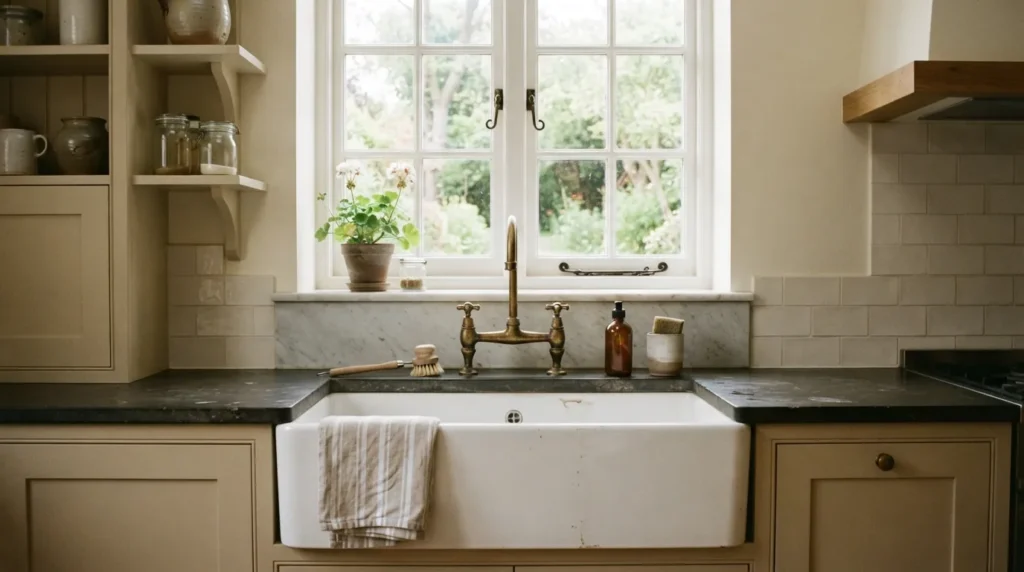
Quick Benefits
- Adds a substantial, functional focal point at the sink area
- Deep basin design suited to real, everyday kitchen use
- Pairs naturally with both traditional and modern French kitchens
- Ages with a soft patina rather than looking worn out
- Reinforces the kitchen’s overall material honesty
Why It Works A deep, apron-front stone or fireclay sink has been a staple of French kitchen design for generations, valued as much for its practicality, ample space for washing large pots and produce, as for its visual weight. A mistake many homeowners make is choosing an undersized or purely decorative sink that doesn’t hold up to actual daily kitchen use. The farmhouse sink solves that by being both a genuinely useful workhorse and a strong design statement, exactly the balance that defines good French kitchen design overall.
How To Style It Choose a fireclay or natural stone apron-front sink in a classic white or soft cream tone, sized generously, 30 to 36 inches is typical, to accommodate real cooking and cleanup needs. Pair it with a simple brass or unlacquered bridge faucet for a period-appropriate look, avoiding overly modern single-lever fixtures that can clash with the sink’s traditional profile. Frame the sink with open shelving or a small window above it if possible, since a view or display space above the sink has long been a hallmark of French kitchen layouts. Keep the surrounding counter minimal, a bar of soap in a simple dish and a folded linen towel are enough.
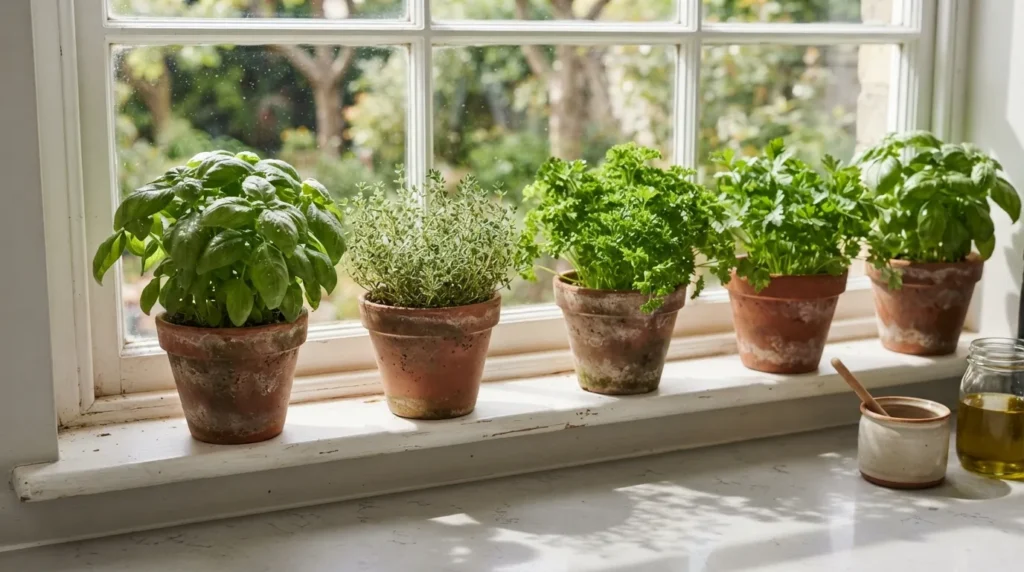
9. Herb Garden Windowsill
Quick Benefits
- Brings fresh greenery directly into daily cooking
- Adds a small, functional detail rather than purely decorative one
- Works in kitchens of any size, even small apartment layouts
- Inexpensive and easy to maintain with basic care
- Reinforces the kitchen’s connection to real, seasonal cooking
Why It Works French kitchen design has always leaned heavily on the idea that a kitchen should feel connected to real cooking and real ingredients, not just look good in photographs. A windowsill herb garden reinforces that connection directly, giving you fresh basil, thyme, or parsley within arm’s reach while you cook. In my experience, small functional details like this do more to make a kitchen feel authentic than almost any purely decorative choice, since they show the kitchen is actually used the way it’s designed to be.
How To Style It Choose a windowsill with good natural light, south or west-facing windows work best for most culinary herbs. Use simple terracotta or ceramic pots in a consistent style, three to five pots is usually enough for a functional rotation of basil, thyme, rosemary, and parsley. Add a shallow tray or drip dish beneath the pots to protect the sill from water damage. Trim herbs regularly, both for use in cooking and to keep the plants full and healthy rather than leggy, which keeps the display looking intentional rather than neglected.
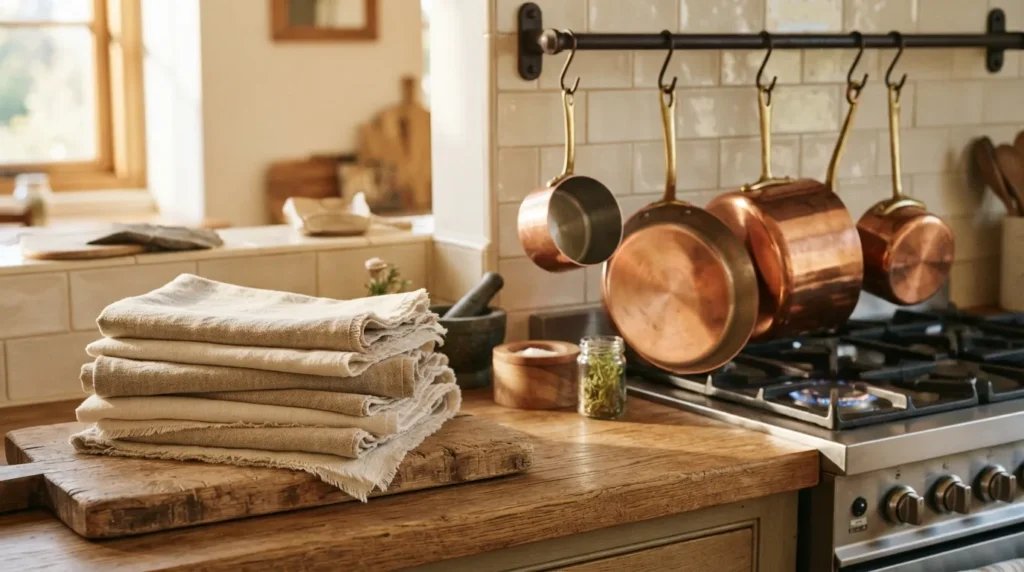
10. Linen and Copper Accents
Quick Benefits
- Adds softness and warmth through natural textile layering
- Copper introduces a second warm metal tone for depth
- Small, affordable details that finish the overall look
- Easy to rotate or update without a major renovation
- Ties together hardware, lighting, and textile choices cohesively
Why It Works The final layer of a timeless French kitchen often comes down to small textile and metal details rather than large structural choices. Linen tea towels, table runners, and napkins add a soft, natural texture that balances the hard surfaces of stone, tile, and wood already present in the room. Copper pots, pans, or small accent pieces introduce a second warm metal tone that pairs beautifully with brass hardware rather than competing with it. That’s why many designers recommend finishing a French kitchen with these smaller details last, once the larger material choices are settled, since they’re what actually make the room feel complete and personal.
How To Style It Choose linen textiles in soft, muted tones, natural, white, or pale blue-gray, and keep patterns minimal or absent entirely for a timeless look. Hang a few copper pots or pans on a simple wall-mounted rail near the range, both for visual warmth and genuine kitchen function. Add small copper accents elsewhere, a utensil crock, a small pitcher, or canisters, in moderation so the metal reads as an intentional accent rather than an overwhelming theme. Rotate linens seasonally to keep the kitchen feeling fresh without requiring any structural changes to the space.
Common Questions About French Style Kitchens
What makes a kitchen look French rather than just farmhouse? French style leans on refined proportions, softer color palettes, and materials like zellige tile, limewash, and unlacquered brass, while farmhouse style often leans more rustic and heavily wood-based. The two overlap, but French kitchens typically feel a bit more polished and layered rather than purely rustic.
Is a French style kitchen expensive to achieve? Not necessarily. Elements like linen textiles, herb windowsills, and hardware swaps are inexpensive, while larger investments like zellige tile or a stone sink can be phased in over time. The style is more about material choice and restraint than sheer budget.
Related Articles
- Cozy Farmhouse Kitchen Ideas
- Modern Kitchen Cabinet Colors
- Small Kitchen Layout Solutions
- Timeless Bathroom Design Ideas
- Vintage-Inspired Home Decor Tips
Frequently Asked Questions
What colors are typical in a French style kitchen? Soft, muted tones dominate French kitchen palettes: warm white, sage green, soft putty, pale blue, and cream are all classic choices. These colors work well because they age gracefully and pair naturally with the warm metals and natural materials central to the style.
Do I need to renovate fully to get a French kitchen look? No, many elements can be added incrementally. Swapping hardware to unlacquered brass, adding linen textiles, styling open shelving, or adding a windowsill herb garden all bring French character to a kitchen without a full renovation or major budget.
Is zellige tile difficult to maintain? Zellige requires a bit more care than standard ceramic tile, since it’s more porous and benefits from a quality sealant applied during installation and reapplied periodically. With proper sealing, it holds up well in a kitchen environment, including near the stove and sink.
What’s the difference between French country and French style kitchens? French country leans more rustic, with heavier wood tones, more pattern, and a cozier, farmhouse-adjacent feel. A broader French style kitchen can lean more refined and pared back, focusing on proportion, natural materials, and quiet detail rather than heavier rustic elements.
Can a small kitchen still achieve a French style look? Yes, in fact several elements on this list, open shelving, a herb windowsill, cafe curtains, and hardware swaps, work especially well in small kitchens since they don’t require major structural changes and can make a compact space feel considered and complete.
What kind of lighting works best in a French style kitchen? Warm-toned lighting in brass or wrought iron fixtures fits the style well, including simple pendant lights over an island or a small chandelier over a kitchen table. Avoid cool white or overly modern fixtures, which can clash with the room’s warmer material palette.
How do I keep a French style kitchen from looking outdated? Focus on restraint and quality materials rather than heavy ornamentation or trend-driven details. Simple door profiles, muted colors, and honest materials like stone, wood, and brass are what keep the style timeless, while overly ornate or trend-specific details are what tend to date a kitchen over time.
Final Thoughts
A timeless French style kitchen comes down to a handful of consistent principles: natural materials, soft and muted color, warm metals, and a genuine connection to everyday cooking. Start with one or two elements, maybe a hardware swap and a windowsill herb garden, and build toward larger investments like tile or a stone sink as your budget and renovation timeline allow.
The kitchens that hold up best over the years are rarely the ones that chased every trend at once. They’re the ones built slowly and intentionally around materials and details that genuinely mean something to the people using the space every day.