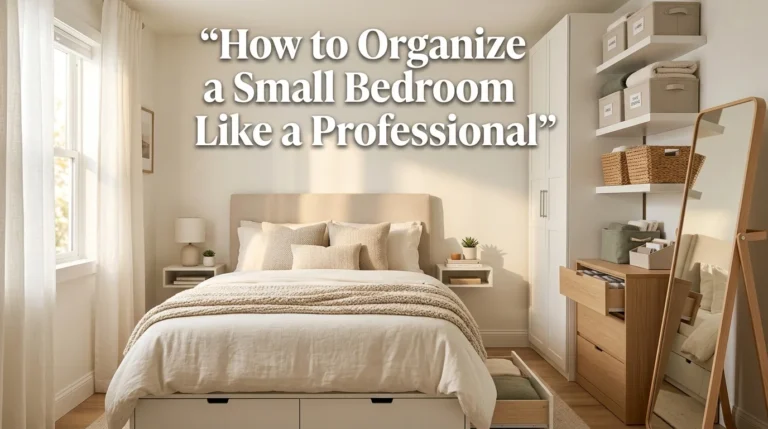

How to Declutter Your Home Fast and Easily
Decluttering your home can feel overwhelming when every room seems to need attention at the same time. The good news is that you don’t need to spend an entire weekend emptying every cabinet or completely reorganizing your house.
A faster approach is to work strategically. Instead of trying to make everything perfect, focus on removing obvious clutter, creating simple categories, and making decisions one area at a time.
In my experience, the biggest mistake people make is starting with an emotionally difficult space. Beginning with an easy drawer, countertop, entryway, or bathroom shelf creates quick progress and builds momentum.
Decluttering is also easier when you separate the process from organizing. First decide what should stay, go, be donated, or be relocated. Then organize what remains.
You don’t need expensive storage containers to create a more organized home. Often, removing unnecessary items is more effective than buying additional storage.
The following steps are designed to help you declutter efficiently without turning the process into an exhausting whole-house project. Whether you’re preparing for guests, moving, refreshing your home, or simply craving more breathing room, these practical strategies can help you make noticeable progress quickly.
Table of Contents
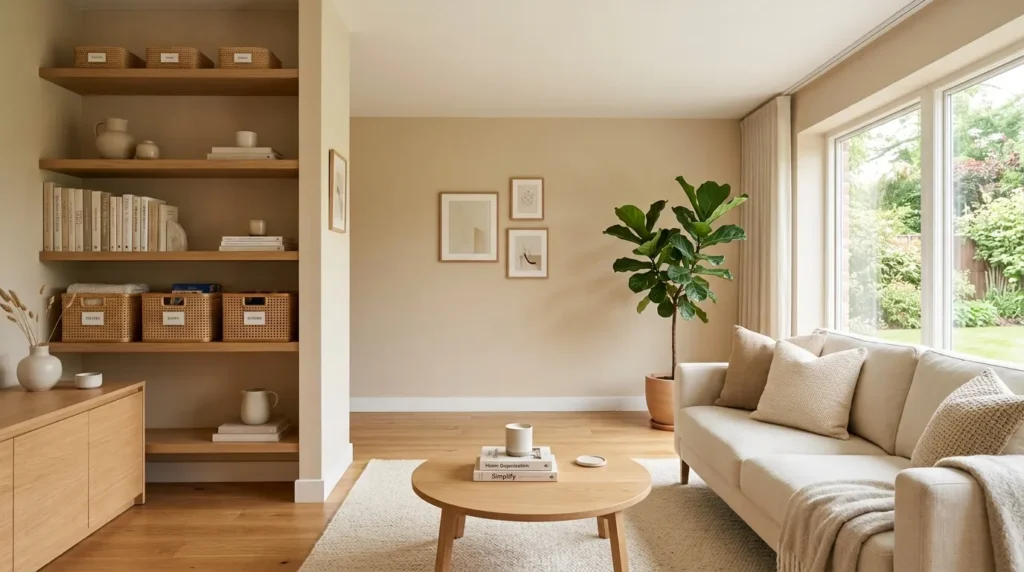
- Start With One Small Area
- Use the Four-Category Method
- Clear Visible Surfaces
- Remove Duplicate Items
- Create a Donation Box
- Declutter Clothes Quickly
- Simplify Kitchen Cabinets
- Organize Bathroom Storage
- Set a Daily Decluttering Timer
- Create a Clutter-Free Routine
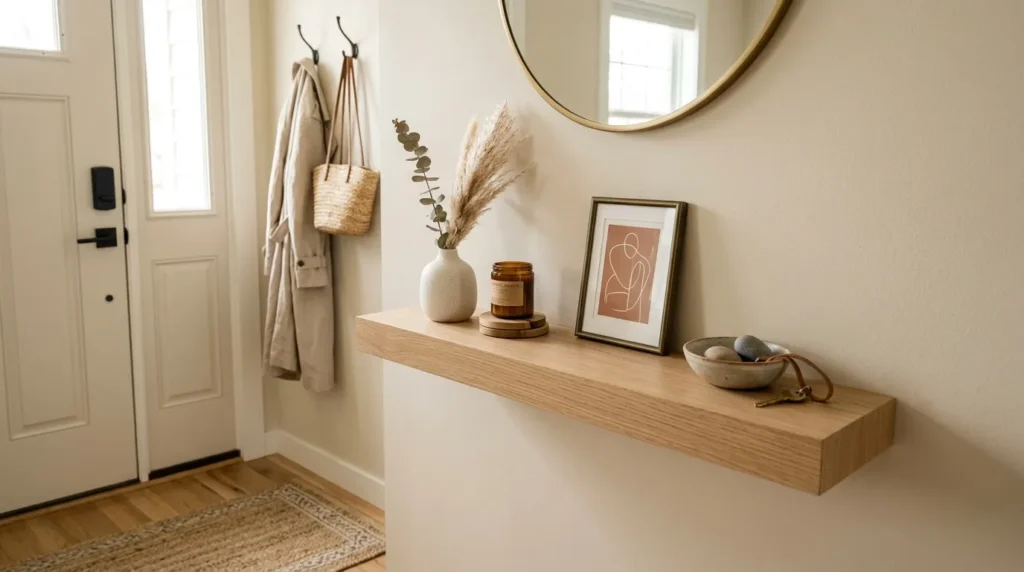
1. Start With One Small Area
Quick Benefits
- Prevents overwhelm
- Creates quick progress
- Makes decisions easier
- Builds momentum
- Requires little time
Why It Works
Trying to declutter an entire home simultaneously can make the process feel impossible. Starting with one small area creates a clear finish line and gives you a visible result quickly.
A drawer, nightstand, shelf, countertop section, or entryway basket can be enough for your first project.
I’ve found that completing a small area often provides the motivation needed to continue with another.
How To Style It
Choose an area you use frequently but that doesn’t contain many sentimental items. Remove everything, sort it, clean the surface, and return only what belongs there.
Once finished, move to another clearly defined area rather than expanding randomly.
2. Use the Four-Category Method
Quick Benefits
- Simplifies decisions
- Speeds up sorting
- Reduces hesitation
- Keeps items organized
- Works in every room
Why It Works
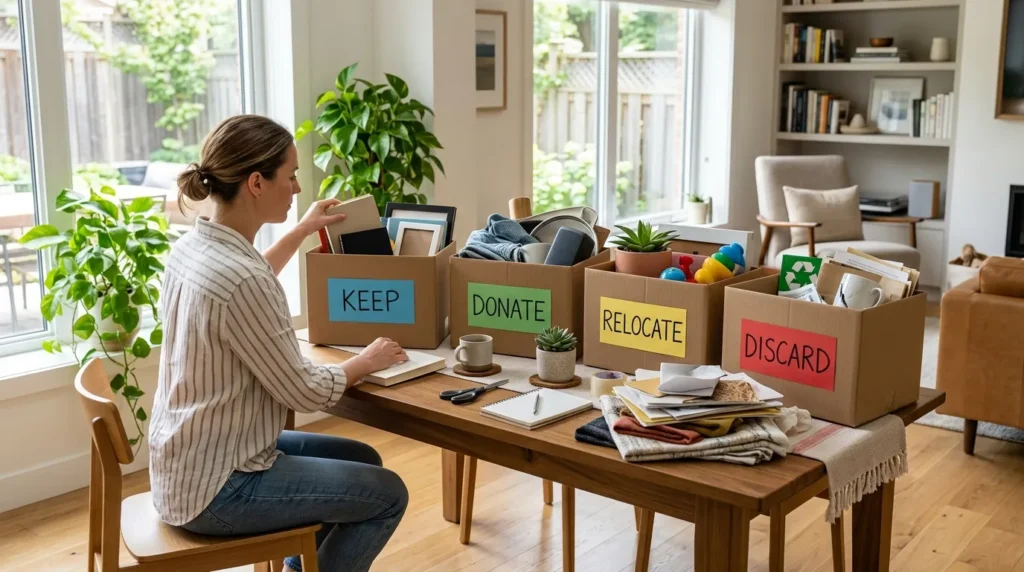
A simple sorting system can make decluttering much faster. Create four categories: Keep, Donate, Relocate, and Discard.
Every item should have a clear destination. This prevents the common problem of creating one large pile that still needs to be sorted later.
I’ve found that assigning every item immediately keeps the process moving.
How To Style It
Use separate bags, boxes, or clearly marked areas for each category.
When you’re finished, immediately remove donations and trash from the room so they don’t become part of the clutter again.
3. Clear Visible Surfaces
Quick Benefits
- Creates instant impact
- Makes rooms feel calmer
- Improves visual flow
- Takes little time
- Makes cleaning easier
Why It Works
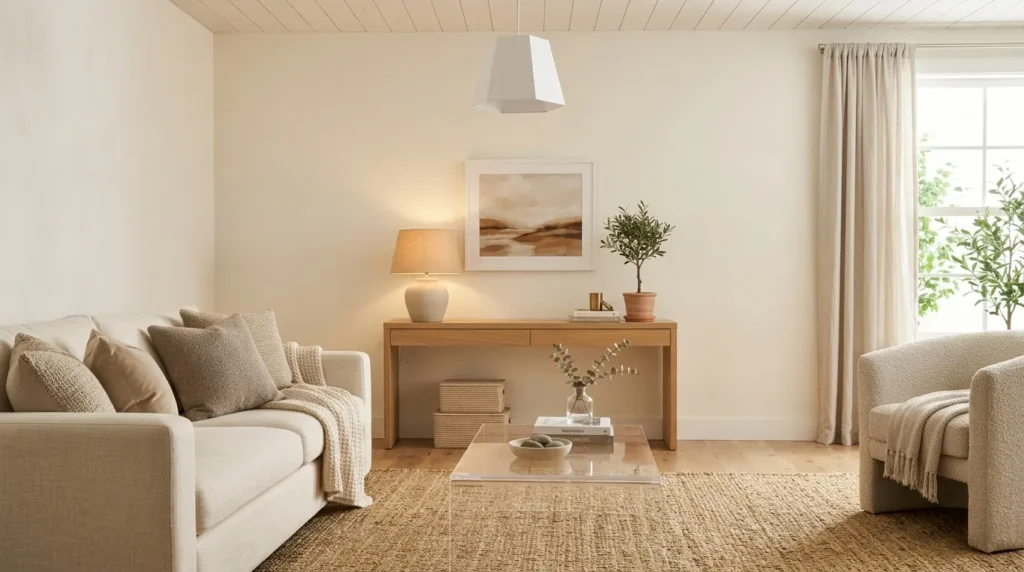
Visible clutter has a strong effect on how a room feels. Clearing countertops, tables, consoles, nightstands, and other exposed surfaces can make the entire space appear more organized almost immediately.
This is one of the fastest ways to see a noticeable difference.
I’ve found that empty space is often just as important as decorative objects.
How To Style It
Remove everything from one surface and sort the items before putting anything back.
Return only useful or intentionally decorative pieces. Leave some empty space so the surface doesn’t immediately become cluttered again.
4. Remove Duplicate Items
Quick Benefits
- Frees storage
- Reduces clutter
- Makes organizing easier
- Saves space
- Simplifies daily routines
Why It Works
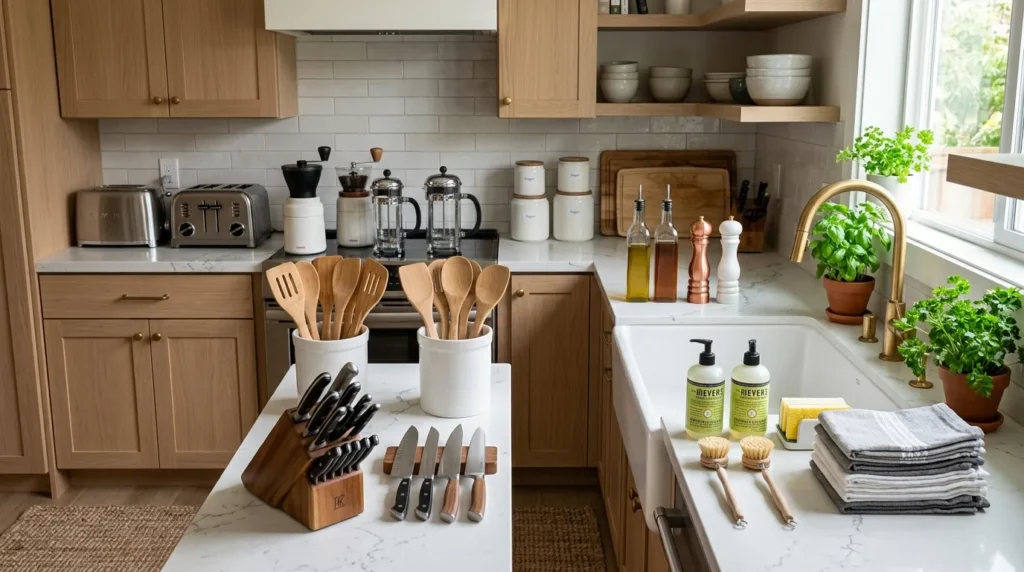
Many homes accumulate duplicates without realizing it. Multiple water bottles, kitchen utensils, cleaning supplies, linens, chargers, containers, or similar items can occupy valuable storage space.
Keeping only the number you realistically use makes organization much easier.
I’ve found that duplicates are often among the easiest items to let go of because you already have another version available.
How To Style It
Group similar items together so you can see exactly how many you own.
Choose the best-quality or most frequently used pieces and decide whether the extras can be donated or discarded appropriately.
5. Create a Donation Box
Quick Benefits
- Makes donating easier
- Prevents clutter from returning
- Encourages regular decluttering
- Saves decision time
- Creates an ongoing system
Why It Works
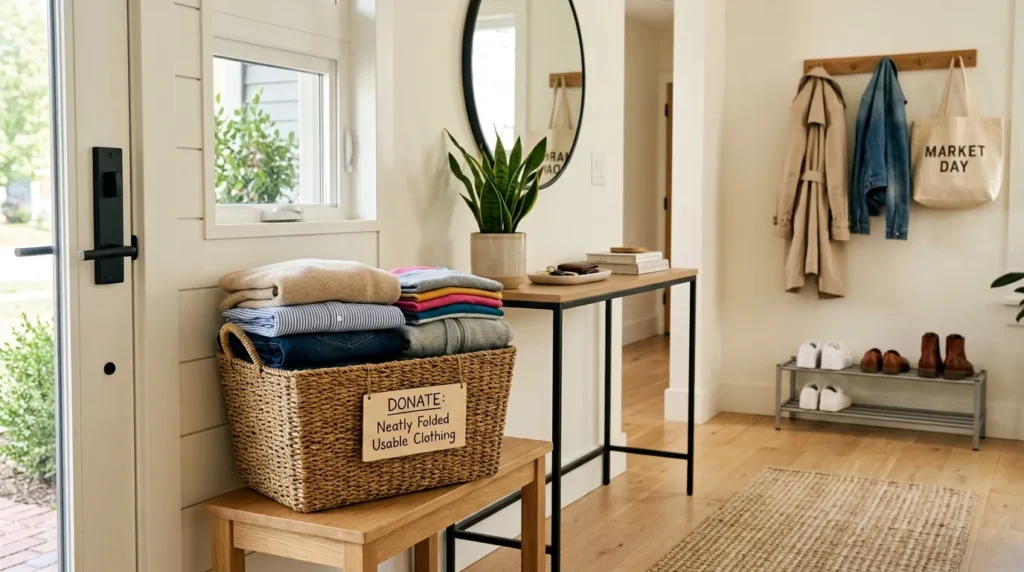
A dedicated donation box creates a simple place for items you no longer need. Instead of waiting for a major decluttering session, you can add unwanted but usable items as you notice them.
This turns decluttering into an ongoing habit rather than a large occasional task.
I’ve found that having the box readily accessible makes it much easier to act on small decisions.
How To Style It
Keep a sturdy box or reusable bag in a convenient storage area.
When it becomes full, schedule a donation drop-off or another appropriate way to pass the items along.
6. Declutter Clothes Quickly
Quick Benefits
- Frees closet space
- Makes mornings easier
- Reduces visual clutter
- Simplifies outfit choices
- Improves organization
Why It Works
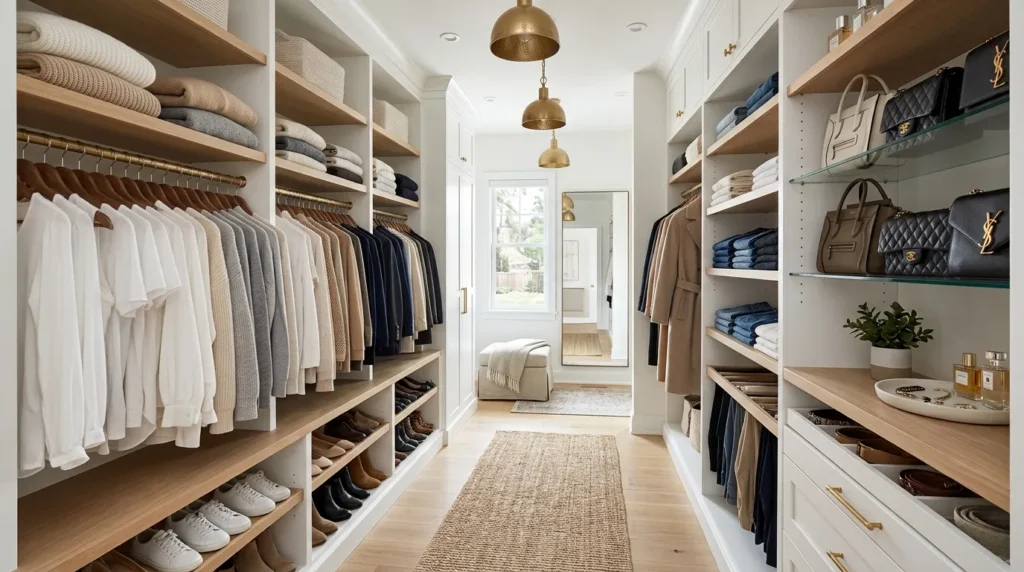
Clothing can quickly become one of the biggest sources of household clutter because closets often contain items we rarely wear.
Instead of evaluating every piece emotionally, focus on practical questions: Does it fit? Do you wear it? Is it comfortable? Is it in good condition? Would you choose it today?
I’ve found that grouping clothing by type makes it much easier to see where you have excess.
How To Style It
Remove damaged, uncomfortable, outdated, or consistently unworn pieces first.
Then organize what remains by category, such as tops, pants, dresses, jackets, and seasonal clothing. Keep frequently worn pieces easiest to access.
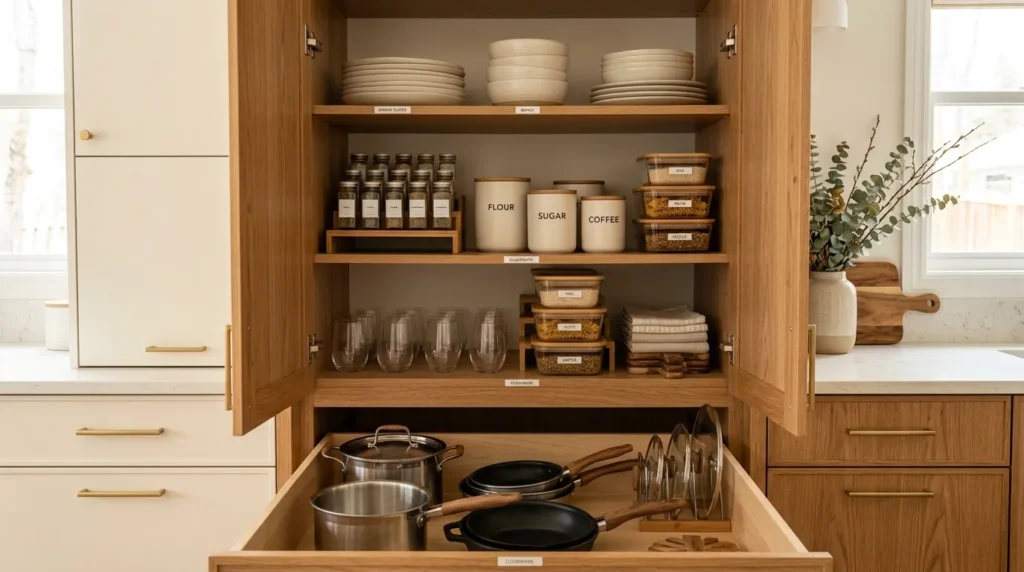
7. Simplify Kitchen Cabinets
Quick Benefits
- Creates usable space
- Makes cooking easier
- Reduces duplicates
- Improves accessibility
- Simplifies cleaning
Why It Works
Kitchen cabinets can become cluttered because they collect appliances, containers, utensils, serving pieces, and pantry supplies over time.
Grouping similar items together reveals duplicates and makes it easier to identify what you actually use.
I’ve found that kitchen organization improves significantly once rarely used items are removed from prime storage areas.
How To Style It
Start with one cabinet or drawer rather than emptying the entire kitchen.
Remove everything, wipe the space, group similar items, and return the most frequently used pieces where they are easiest to reach.
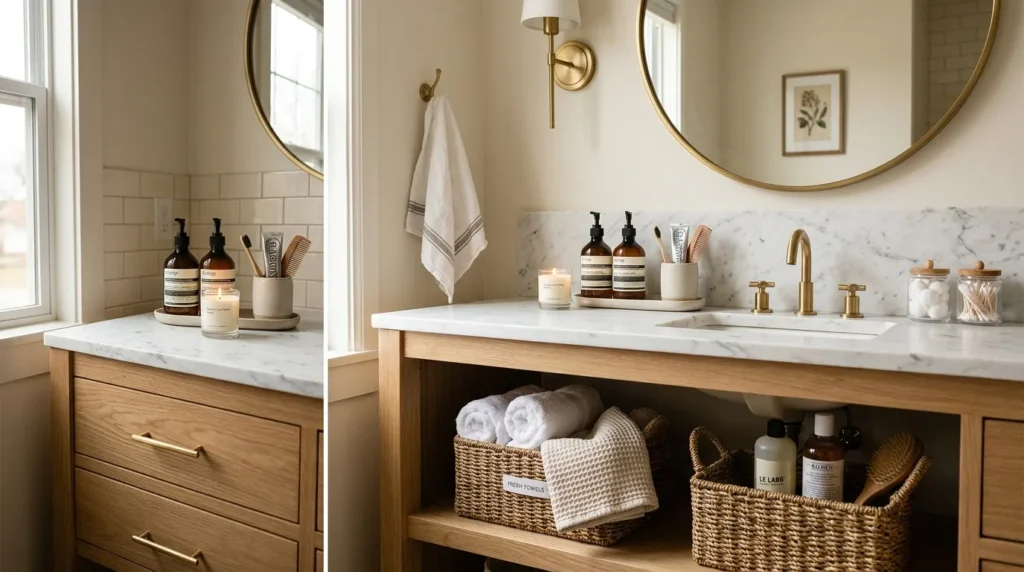
8. Organize Bathroom Storage
Quick Benefits
- Removes expired products
- Frees cabinet space
- Improves routines
- Makes cleaning easier
- Reduces visual clutter
Why It Works
Bathrooms often collect partially used products, duplicates, empty containers, and items that are no longer needed.
A quick review can create surprisingly much storage space.
I’ve found that organizing bathroom items according to daily routines is more useful than simply arranging everything by appearance.
How To Style It
Check products according to their labels and manufacturer guidance, and dispose of unwanted items appropriately.
Group everyday essentials together and place occasional-use products in less accessible storage.
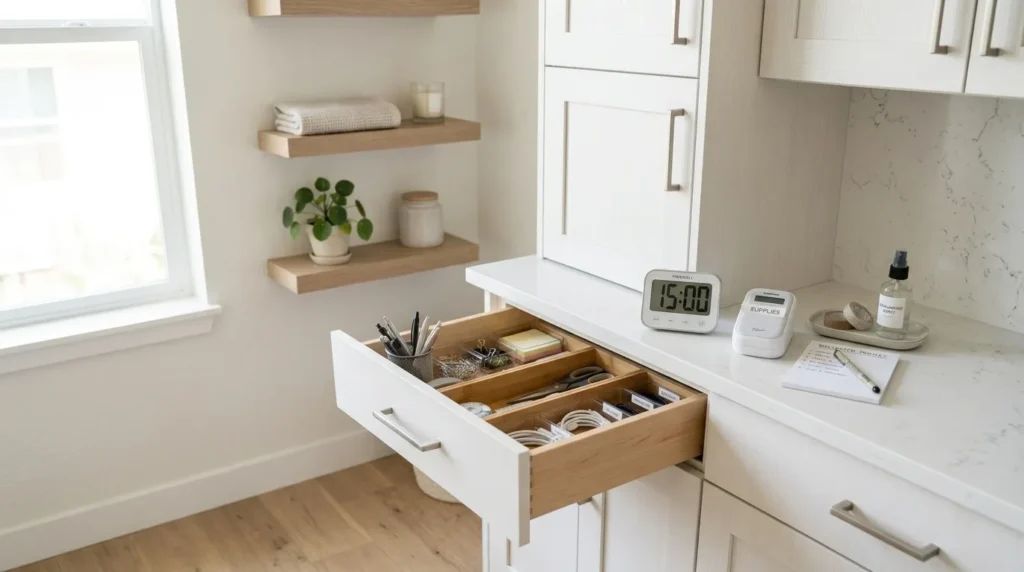
9. Set a Daily Decluttering Timer
Quick Benefits
- Prevents burnout
- Builds consistency
- Makes progress manageable
- Fits busy schedules
- Reduces procrastination
Why It Works
Decluttering doesn’t need to happen in long sessions. A short, focused period can be enough to clear a drawer, shelf, or small section of a room.
A timer creates a clear beginning and end, making the task feel more manageable.
I’ve found that short sessions are easier to maintain than waiting for the perfect free weekend.
How To Style It
Choose a realistic amount of time and focus only on one defined area.
When the timer ends, stop or continue only if you genuinely want to. Consistency matters more than completing everything at once.
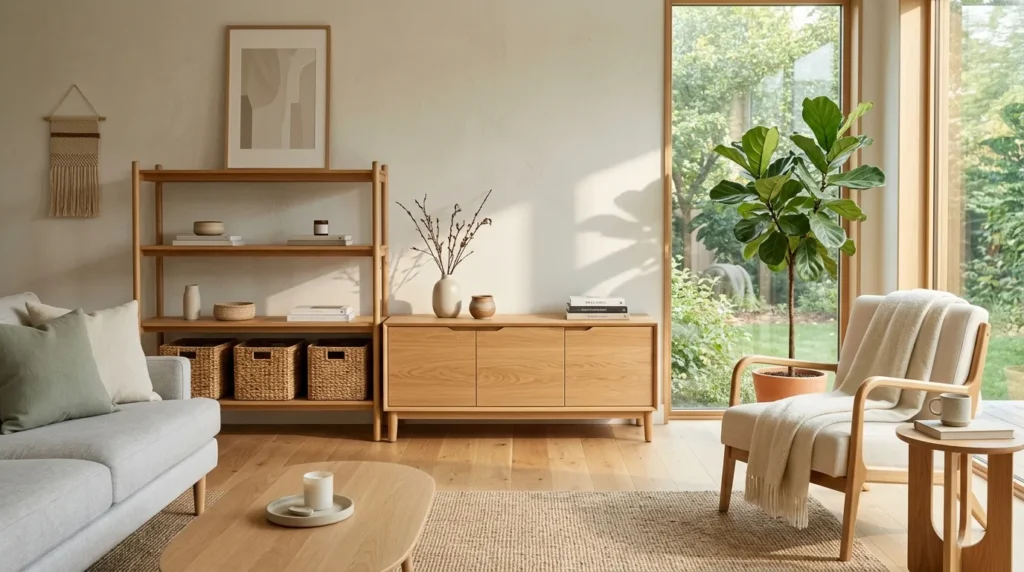
10. Create a Clutter-Free Routine
Quick Benefits
- Maintains progress
- Prevents buildup
- Reduces future work
- Keeps rooms calmer
- Creates sustainable habits
Why It Works
Decluttering works best when it becomes an ongoing household habit rather than a one-time event.
Small daily actions can prevent countertops, drawers, closets, and entryways from gradually filling again.
I’ve found that simple routines are more sustainable than complicated organization systems.
How To Style It
Create a few easy habits, such as returning items after use, handling mail immediately, completing a quick evening reset, and regularly reviewing donation items.
Give frequently cluttered areas a short weekly check so small problems don’t become large projects.
Frequently Asked Questions
What is the fastest way to declutter a house?
Start with visible clutter and small, easy areas. Use clear categories such as keep, donate, relocate, and discard, and remove unwanted items from the home as soon as possible.
How can I declutter without feeling overwhelmed?
Work on one small area at a time. Avoid pulling everything out of multiple rooms simultaneously, and focus on completing one clearly defined task.
What should I declutter first?
Start with easy categories such as trash, duplicates, expired items, broken objects, and things you already know you don’t use.
How do I declutter when I have very little time?
Use short timed sessions. Even a focused session can clear a drawer, countertop, shelf, or small closet section.
Should I organize or declutter first?
Declutter first. Removing unnecessary items reduces the amount of stuff you need to organize and makes storage systems more effective.
How do I stop my home from becoming cluttered again?
Create simple routines for returning items, handling incoming belongings, reviewing problem areas, and regularly removing things you no longer need.
Conclusion
Decluttering your home doesn’t have to become an exhausting all-day project. By focusing on one small area, making quick decisions, and removing obvious excess, you can create meaningful results without feeling overwhelmed.
Start with visible surfaces or easy categories before moving into more challenging spaces. Once unnecessary items are gone, organizing what remains becomes much simpler.
The most effective approach is also the most sustainable. A few minutes of regular maintenance can prevent clutter from rebuilding and reduce the need for major decluttering sessions.
Your goal doesn’t have to be a perfectly minimal home. Instead, create a home where the things you own are useful, meaningful, or genuinely enjoyable to have around.