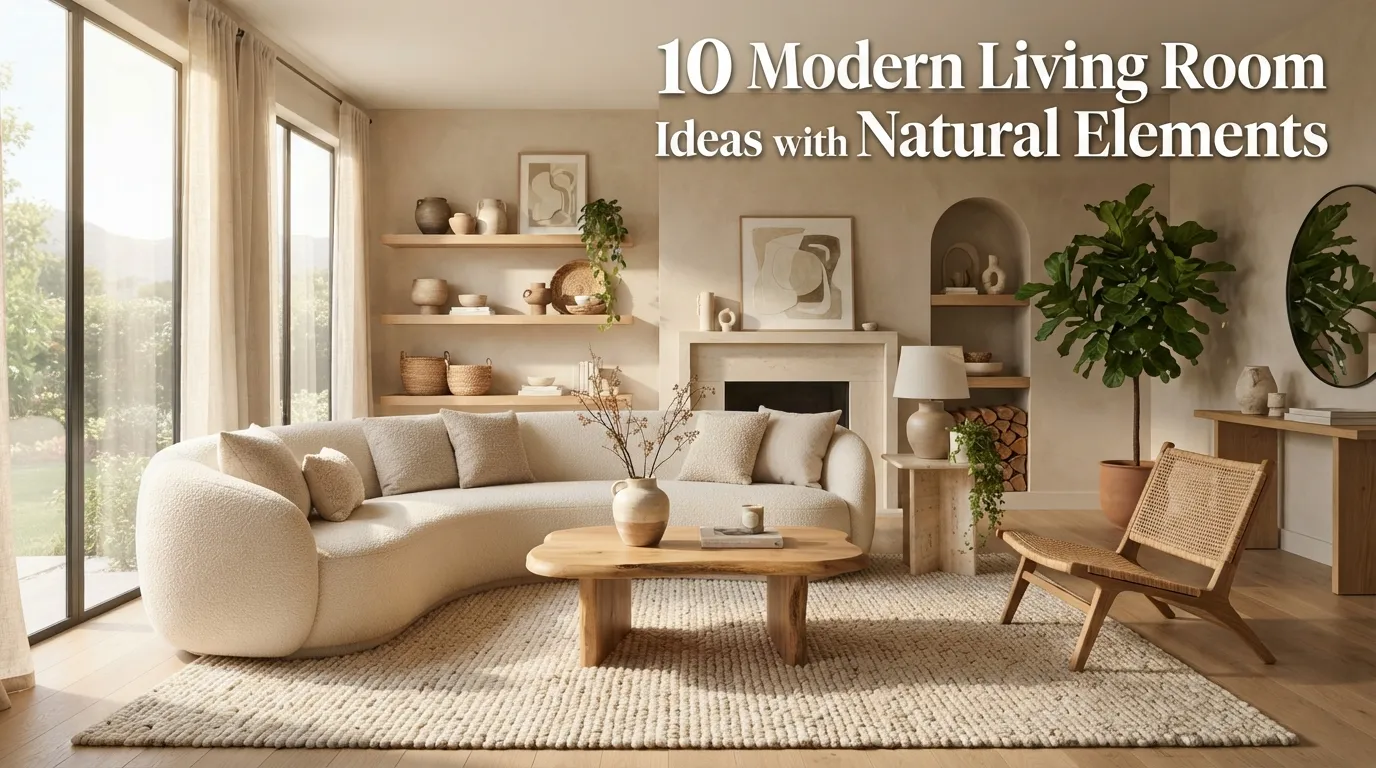
10 Modern Living Room Ideas with Natural Elements
There’s a specific kind of calm that settles over a room built from natural materials — wood that still shows its grain, stone with texture you can feel, linen that softens with every wash. In my experience, most modern living rooms that feel cold or sterile aren’t missing style; they’re missing warmth, and warmth almost always comes from natural elements rather than sleek, uniform surfaces.
I’ve noticed that the living rooms people save most on Pinterest under “modern natural” or “organic modern” aren’t stripped-down or minimalist in a harsh sense. They’re layered with wood, stone, plants, and woven texture, all working within a clean, contemporary shape. That combination — modern lines softened by organic material — is what makes a room feel both current and genuinely comfortable to spend time in.
This guide walks through ten ideas that bring natural elements into a modern living room without tipping into rustic or cluttered territory. A mistake many homeowners make is treating “natural” and “modern” as opposing styles, when in reality the two balance each other perfectly — clean architectural lines keep organic materials from feeling busy, while natural texture keeps modern design from feeling cold.
Whether you’re furnishing a living room from scratch or updating pieces one at a time, these ideas are meant to be realistic. Several can be introduced gradually, swapping one element at a time rather than requiring a full furniture overhaul. You’ll find the reasoning behind each choice along with enough styling detail to actually bring it into your own space.
By the end of this article, you’ll have a clear list of natural, grounding elements that turn a modern living room from simply stylish into a space that genuinely feels good to be in.
Table of Contents
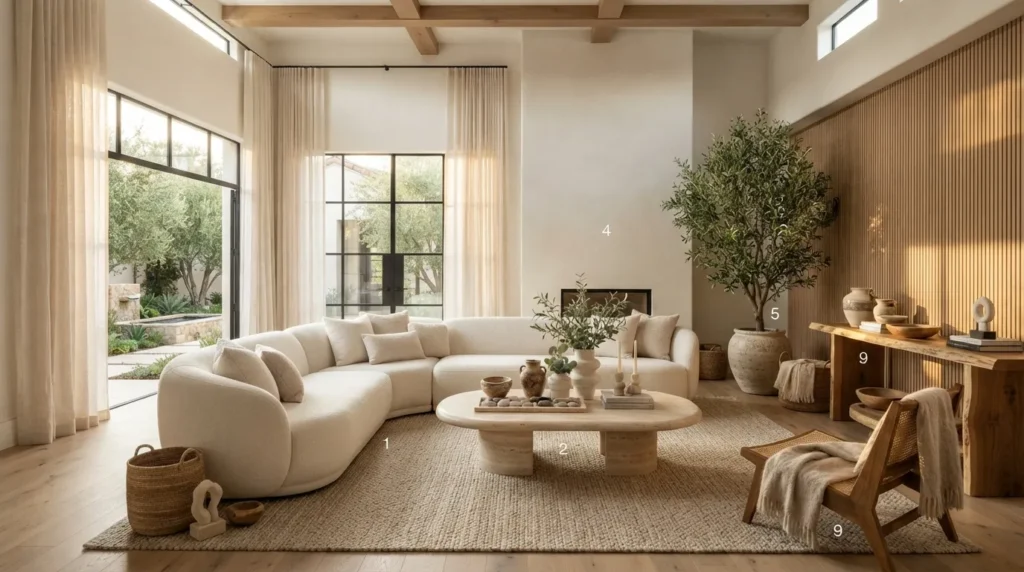
- Reclaimed Wood Accents — Bringing history and warmth into modern furniture and shelving.
- Organic Stone Textures — Adding weight and grounding through natural stone surfaces.
- Layered Woven Textiles — Building tactile depth through baskets, throws, and natural fiber rugs.
- Statement Indoor Plants — Using greenery as a living, architectural design element.
- Natural Light Maximization — Letting daylight become the room’s most valuable material.
- Earthy Neutral Palette — A grounded color story pulled directly from nature.
- Rattan Furniture Pieces — Adding lightness and texture through woven furniture.
- Live-Edge Coffee Table — A functional centerpiece that celebrates raw wood grain.
- Linen Upholstered Seating — Soft, breathable fabric that ages beautifully over time.
- Botanical Wall Art — Bringing nature onto the walls without literal greenery.
1. Reclaimed Wood Accents
Quick Benefits
- Adds warmth and history to a modern space
- Introduces natural texture without overwhelming clean lines
- Works on shelving, furniture, or accent walls
- Often more sustainable than new-cut lumber
- Pairs beautifully with metal and stone accents
Why It Works
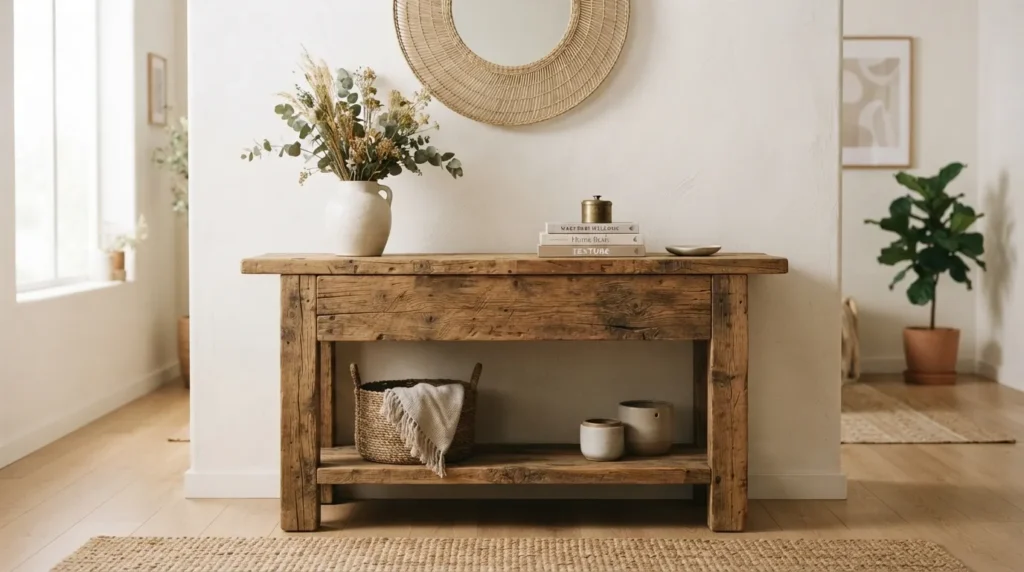
Reclaimed wood carries a sense of history that new materials simply can’t replicate — visible grain, old nail holes, uneven tone — and that imperfection is exactly what keeps a modern room from feeling too polished or showroom-like. A mistake many homeowners make is pairing too much reclaimed wood with other busy materials; used as one intentional accent, like a shelf or console, it reads as considered rather than overwhelming.
How To Style It
Introduce reclaimed wood through a floating shelf, a console table, or a single accent wall behind a sofa or media unit, keeping the surrounding furniture in clean, simple silhouettes so the wood’s texture stands out. Pair it with black or brushed metal hardware and fixtures for contrast, since the combination of raw wood and cool metal is a hallmark of modern-organic design. If true reclaimed wood isn’t accessible, a reclaimed-look veneer or lightly distressed new wood can achieve a similar warmth at a lower cost.
2. Organic Stone Textures
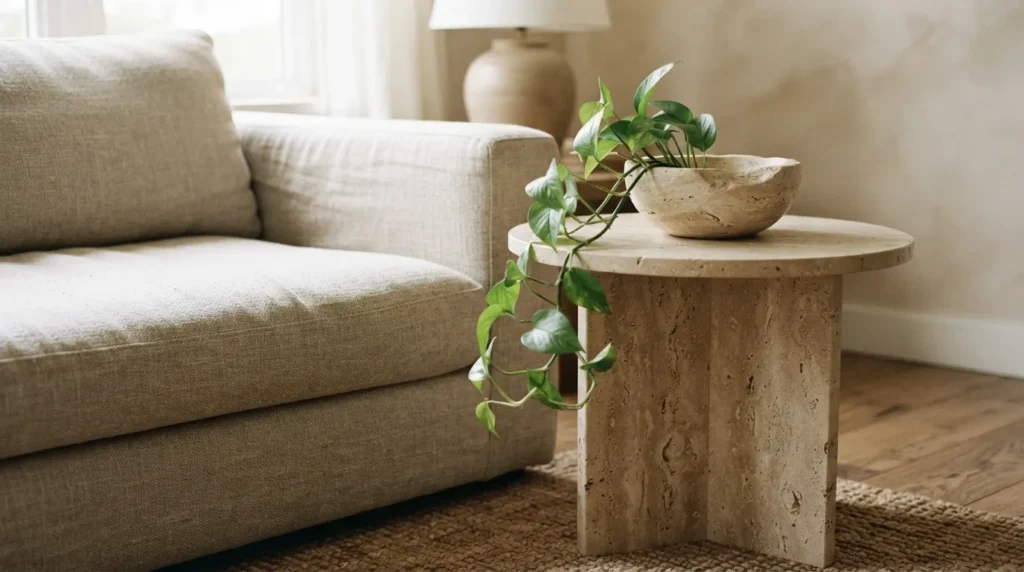
Quick Benefits
- Adds weight, permanence, and grounding to the room
- Introduces natural variation and color depth
- Works on coffee tables, side tables, and fireplaces
- Pairs beautifully with wood and woven textiles
- Elevates the room’s overall material quality
Why It Works
Stone brings a sense of permanence and grounding that softer materials can’t match, and its natural variation — no two pieces identical — adds visual richness without requiring a bold color or pattern. One thing that works especially well is choosing a stone with a honed or lightly textured finish rather than high polish, since a matte surface feels more organic and less formal.
How To Style It
Introduce stone through a side table, a stone-topped coffee table, or a fireplace surround, choosing warm-toned stones like travertine or limestone for a softer, more approachable modern-organic feel than cooler marbles. Balance one larger stone piece with smaller stone accessories, like a bowl or a set of coasters, so the material feels intentional throughout the room rather than isolated to a single furniture piece. Keep surrounding textiles soft and warm to offset stone’s naturally cool, solid presence.
3. Layered Woven Textiles
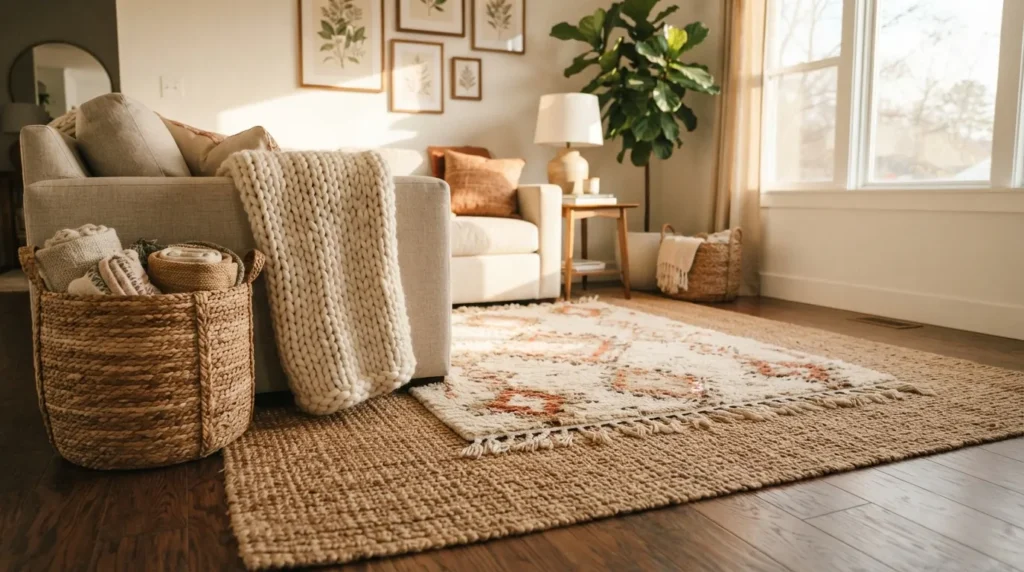
Quick Benefits
- Adds tactile depth and visual warmth
- Softens hard furniture lines and surfaces
- Inexpensive way to test new textures and tones
- Easy to swap seasonally without big investment
- Works on rugs, throws, baskets, and pillows
Why It Works
Texture is often what separates a modern-organic living room from one that just looks modern, and woven textiles — jute rugs, chunky knit throws, woven baskets — are the fastest way to introduce that texture without committing to new furniture. That’s why many designers recommend starting a natural-element refresh with textiles first; they’re low-risk, easy to change, and immediately noticeable.
How To Style It
Layer a natural fiber rug, like jute or sisal, beneath a smaller patterned or textured accent rug for visual depth underfoot. Add a woven basket beside the sofa for functional storage that doubles as texture, and drape a chunky knit or linen throw over an armchair or sofa arm. Keep the color palette within the same warm neutral family so the varied textures feel cohesive rather than randomly assembled.
4. Statement Indoor Plants
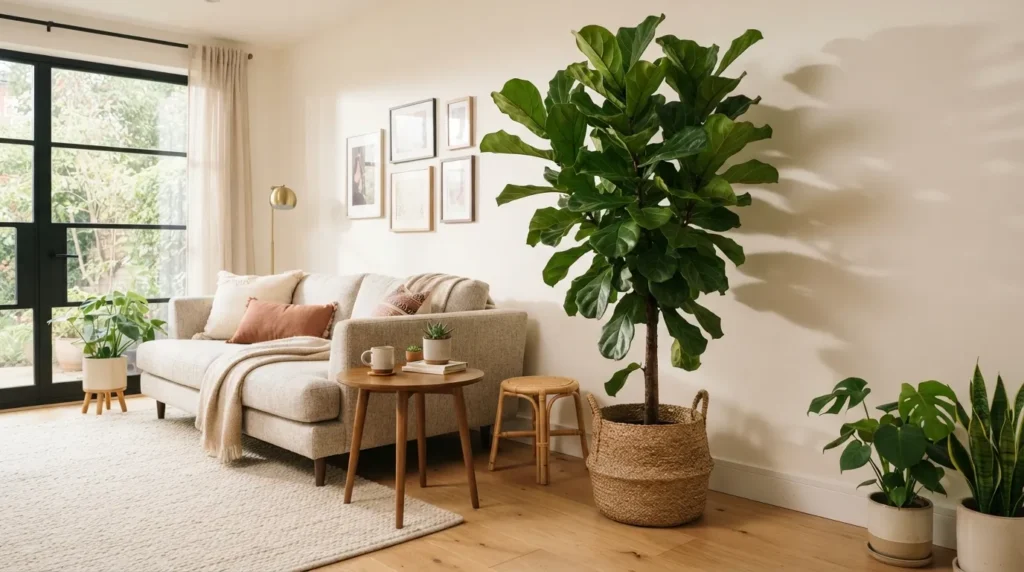
Quick Benefits
- Adds living color and softness to the room
- Fills empty corners with organic shape
- Improves air quality and overall room atmosphere
- Works at nearly any budget with the right species
- Creates a genuine connection to the outdoors indoors
Why It Works
A modern living room without any greenery often feels slightly incomplete, no matter how well the furniture and materials are chosen — plants bring movement, color, and life that static objects can’t replicate. I’ve seen this idea transform a stiff, overly formal room into something that feels lived-in and cared for, often with just one or two well-placed additions.
How To Style It
Choose one large architectural plant, like a fiddle leaf fig or bird of paradise, to fill an empty corner and anchor the room’s greenery, then add one or two smaller trailing plants, like pothos, on a shelf or side table for variety in height and shape. Use simple, natural-toned planters — woven, ceramic, or concrete — rather than bright or patterned pots, so the plant’s form stays the visual focus. Low-light varieties like snake plants or ZZ plants work well in rooms without abundant direct sun.
5. Natural Light Maximization
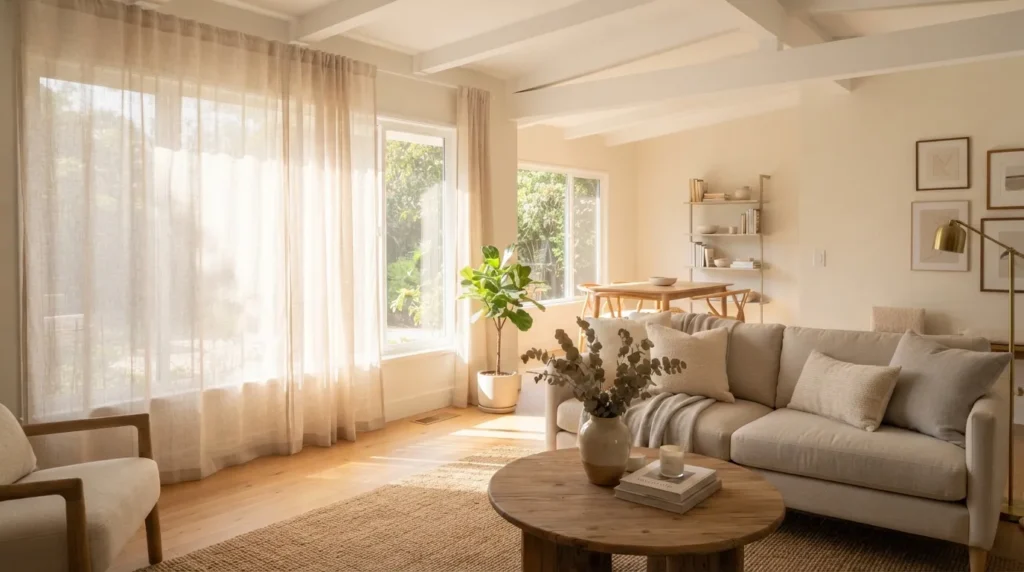
Quick Benefits
- Enhances every other natural element in the room
- Reduces reliance on artificial lighting during the day
- Makes materials like wood and stone look their best
- Costs little to nothing to implement
- Improves overall mood and room warmth
Why It Works
Natural elements are meant to be seen in natural light — wood grain, stone texture, and woven fiber all look richer and more dimensional in daylight than under artificial bulbs. A mistake many homeowners make is layering in beautiful natural materials while still blocking most of the room’s daylight with heavy drapery or poorly placed furniture, which undercuts the entire effect.
How To Style It
Swap heavy, dark drapery for lighter linen panels that filter rather than fully block daylight, and keep furniture, especially tall pieces, away from window sightlines wherever possible. Add a few strategically placed mirrors opposite windows to bounce additional daylight deeper into the room. In the evening, layer in warm-toned lighting at multiple heights — a floor lamp, a table lamp, and any overhead fixtures dimmed low — to keep the same warm, natural mood after the sun goes down.
6. Earthy Neutral Palette
Quick Benefits
- Creates a grounded, cohesive backdrop for natural materials
- Timeless rather than tied to a passing color trend
- Makes texture, not color, the room’s main interest
- Works well with wood, stone, and woven accents
- Easier to style consistently than a busy palette
Why It Works
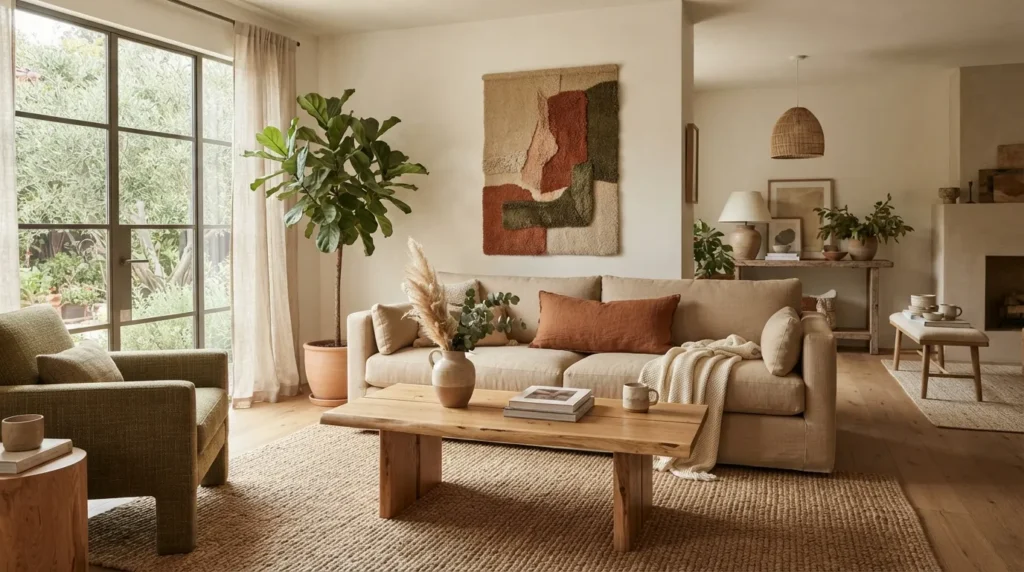
An earthy palette — warm whites, sand, clay, sage, and deep browns — mirrors the tones already present in wood, stone, and natural fiber, which is exactly why it pairs so seamlessly with the other ideas in this list. In my experience, this kind of palette also ages better than trend-driven colors, since it’s pulled directly from materials that have always been part of interior design rather than a passing seasonal shade.
How To Style It
Choose a warm white or sand tone for walls and larger furniture pieces, then layer in deeper earthy accents — clay, olive, or espresso — through pillows, throws, and smaller furniture. Keep any bolder color to a single accent, like one piece of art or a single accent chair, so the palette stays grounded rather than busy. This restraint is what allows the textures from wood, stone, and woven textiles to carry the room’s visual interest instead of competing with color.
7. Rattan Furniture Pieces
Quick Benefits
- Adds lightness and texture without visual bulk
- Works well in both large and small living rooms
- Pairs beautifully with linen and wood tones
- Brings an organic, slightly relaxed feel to modern spaces
- Available at a wide range of price points
Why It Works
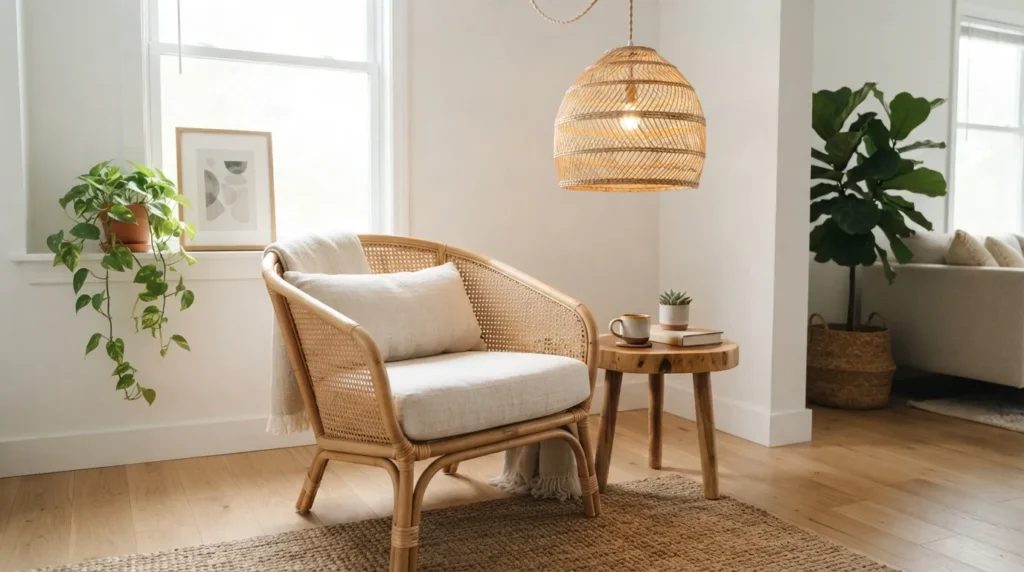
Rattan and woven furniture add texture and a sense of lightness that solid upholstered or wood pieces can’t replicate on their own, since the open weave lets light and sightlines pass through rather than blocking them. One simple trick I always suggest is using rattan for one or two supporting pieces — an accent chair, a pendant shade, a media console — rather than filling the whole room, so it reads as a considered accent rather than a themed choice.
How To Style It
Introduce a rattan accent chair paired with a linen cushion, or a rattan pendant light above a seating area, to bring in the material’s texture without overwhelming the room’s other furniture. Choose a natural, unstained rattan tone for the most organic, modern-friendly look, avoiding heavily lacquered or dark-stained versions that can feel more traditional than contemporary. Balance rattan’s open, airy texture with one or two solid, grounded pieces nearby, like a stone side table, for contrast.
8. Live-Edge Coffee Table
Quick Benefits
- Celebrates the wood’s natural, uncut edge and grain
- Serves as a genuine conversation-starting centerpiece
- Adds organic shape to an otherwise geometric room
- Available in a range of wood types and finishes
- Pairs beautifully with modern metal-legged furniture
Why It Works
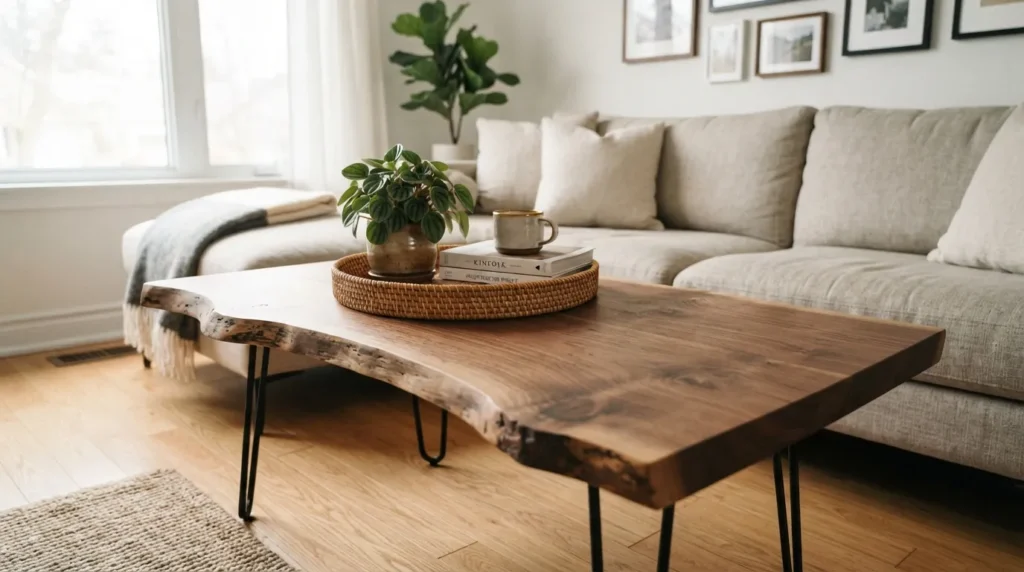
A live-edge table — one that preserves the natural, uneven edge of the wood slab rather than cutting it straight — is one of the clearest ways to bring an authentic piece of nature directly into a modern living room. A mistake many homeowners make is pairing a live-edge table with an equally rustic base; modern metal hairpin or blackened steel legs create the contrast that keeps the piece feeling current rather than purely rustic.
How To Style It
Choose a single-slab live-edge coffee table in a warm wood tone like walnut or acacia, paired with slim black or brushed metal legs for a clean, modern base. Keep styling on top minimal — a woven tray, a single plant, a stack of books — so the table’s natural shape and grain remain the visual focus. If a full coffee table isn’t practical, a smaller live-edge side table or a floating live-edge shelf can introduce the same material in a smaller dose.
9. Linen Upholstered Seating
Quick Benefits
- Softens the room with a breathable, natural fabric
- Ages beautifully rather than looking worn out
- Works in warm neutral or muted color tones
- Pairs naturally with wood, stone, and woven accents
- A timeless alternative to synthetic upholstery fabrics
Why It Works
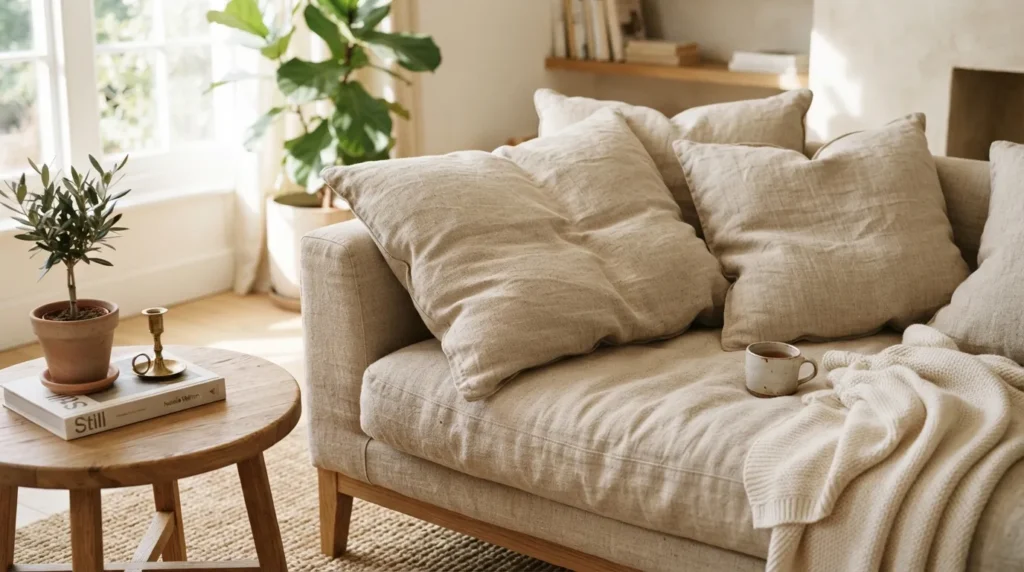
Linen has a slightly rumpled, relaxed texture that synthetic fabrics rarely achieve, and that imperfection is part of what makes it feel so at home in a modern-organic living room. In my experience, linen upholstery also tends to soften and improve with light wear, which suits the lived-in, natural feeling this whole style is built around, rather than needing to look pristine at all times.
How To Style It
Choose a linen or linen-blend sofa and accent chairs in a warm neutral tone — oatmeal, sand, or soft taupe — so the fabric’s texture, rather than its color, becomes the visual interest. Pair linen seating with wood or metal furniture legs rather than heavy, fully upholstered bases, keeping the overall silhouette light and modern. A linen slipcover is a lower-cost way to bring this texture to an existing sofa without a full furniture replacement.
10. Botanical Wall Art
Quick Benefits
- Brings nature onto the walls without live plants
- Reinforces the room’s earthy, organic palette
- Works well above sofas, consoles, or shelving
- Available at a wide range of price points
- Adds a finished, intentional focal point
Why It Works
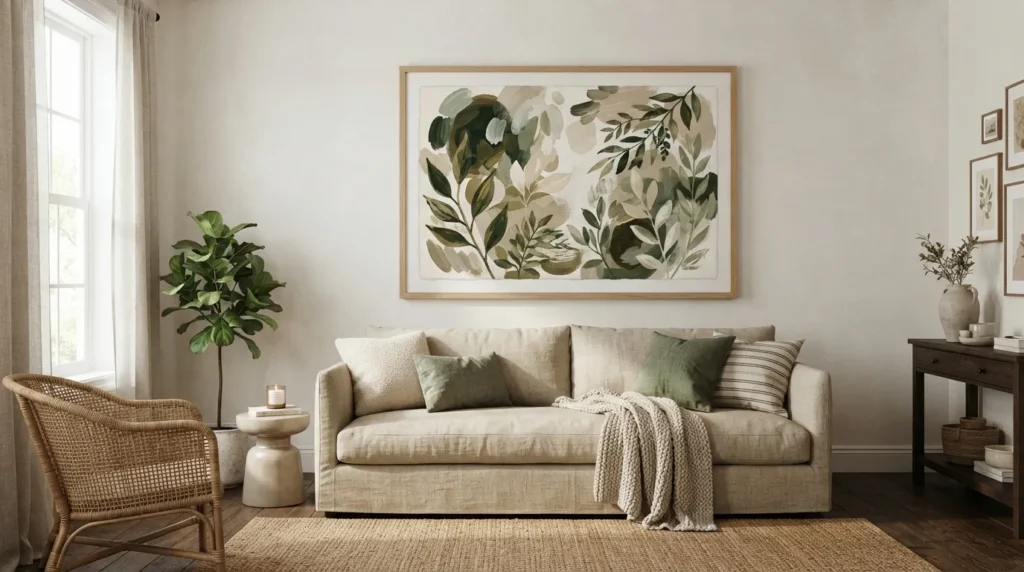
Not every natural element needs to be a physical material — botanical art, whether a large-scale leaf print, a pressed-flower frame, or an abstract landscape in earthy tones, reinforces the room’s organic theme visually without adding another surface to maintain. That’s why many designers recommend rounding out a natural-element living room with at least one piece of botanical or nature-inspired art, tying the whole palette together on the walls.
How To Style It
Choose one larger piece for above the sofa, sized to roughly two-thirds the width of the furniture below it, in tones that echo the room’s earthy palette rather than introducing bright or unrelated colors. Botanical line drawings, abstract landscapes, and framed pressed botanicals all work well; the key is choosing art with a natural, organic subject rather than anything highly graphic or synthetic-feeling. If layering multiple pieces, keep frames in a consistent natural wood or matte black tone so the gallery feels curated rather than mismatched.
Frequently Asked Questions
What makes a living room feel “modern organic”? A combination of clean, contemporary furniture shapes with natural materials — wood, stone, linen, and woven fiber — layered in an earthy, neutral color palette. The balance between modern lines and organic texture is what defines the style.
How do I add natural elements without making my living room look rustic? Pair natural materials with modern silhouettes and finishes, like a live-edge table on slim metal legs or a rattan chair with a clean linen cushion. Limiting rustic materials to one or two accents, rather than filling the whole room, also keeps the look modern.
What plants work best for a modern living room? Architectural plants like fiddle leaf figs or birds of paradise add strong visual shape, while smaller trailing plants like pothos add softness on shelves and tables. Low-light varieties like snake plants work well in rooms without much direct sun.
Is linen upholstery hard to maintain? Linen is generally durable and breathable, though it can wrinkle more visibly than synthetic fabrics and may need occasional professional cleaning depending on the blend. Many people find its relaxed, slightly textured look part of its appeal rather than a downside.
Can I achieve this look on a budget? Yes — textiles, plants, and smaller accents like a woven basket or a stone bowl are some of the most affordable ways to introduce natural elements, and they can be added gradually alongside larger furniture pieces over time.
What colors pair best with natural materials in a living room? Warm neutrals like sand, warm white, clay, and soft sage tend to pair most naturally with wood, stone, and woven textures, since these tones already echo colors found in the materials themselves.
Do natural materials work well in small living rooms? Yes, especially when used selectively — one live-edge side table, one rattan chair, or a few well-placed plants can bring in natural texture without overwhelming a smaller space. Lighter wood and stone tones also help keep compact rooms feeling open.
Final Thoughts
A modern living room built around natural elements doesn’t require abandoning clean, contemporary style — it requires balancing it with warmth, texture, and organic material. Start with one or two ideas, like a woven rug and a statement plant, and layer in the rest as your space and budget allow.
Each addition supports the next: an earthy palette lets wood and stone tones shine, natural light makes every material look richer, and linen upholstery softens the clean lines that modern furniture brings to the room. Start with one or two ideas and gradually build a living room that reflects your style and feels as good to relax in as it looks.
Related Articles
- Cozy Living Room Layout Ideas
- Neutral Home Styling Tips
- Small Living Room Furniture Solutions
- Layered Lighting Ideas for Every Room
- Indoor Plant Styling for Beginners