

Should a Nightstand Be Higher, Lower, or Level with the Mattress?
Deciding whether a nightstand should be higher, lower, or level with the mattress is a common dilemma in bedroom layout. Most interior designers agree that the ideal placement is level with the top of your mattress, usually within a range of two inches. This alignment ensures that you can reach your phone, lamp, or glass of water without straining your arm or body while lying down.
When you consider whether a nightstand should be higher, lower, or level with the mattress, prioritize ergonomics over rigid aesthetic trends. This approach transforms your bedroom into a functional space that supports your nightly routine rather than just looking like a showroom.
The Ideal Height for Accessibility

The primary rule of thumb for bedroom furniture placement is that your nightstand should sit at the same height as the top of your mattress. When a piece of furniture aligns perfectly with your bed, you create a seamless transition for reaching items. This level surface prevents the need to reach up or down, which can be disruptive when you are trying to relax or wake up.
Most standard mattresses sit between 22 and 26 inches off the ground, including the frame and box spring. Aiming for a nightstand that matches this measurement ensures that your necessities remain within easy reach.
If your nightstand is significantly higher than the mattress, you might find yourself bumping your elbow or feeling like the furniture is looming over you. Conversely, a nightstand that sits much lower forces you to reach down, which can be awkward if you are half-asleep. Imagine trying to grab a glass of water in the dark; if the surface is at the correct level, your hand finds it instinctively.
If it is too low, you risk knocking items over as you grope for them. Keeping the surface level creates a visual line that anchors the bed in the room.
Accounting for Bed Height Variations

Not all beds are created equal, so you must measure your specific setup before buying furniture. Platform beds often sit much lower to the ground than traditional beds with box springs and thick pillow-top mattresses. If you have a low-profile platform bed, a standard 28-inch nightstand will feel far too tall and disproportionate.
You should look for shorter options or even floating shelves that can be mounted at your preferred height. Measuring from the floor to the top of your mattress is the only way to get this right.
You should also account for the thickness of any mattress toppers or protectors you use. A thick memory foam topper can add several inches to the height of your bed, potentially making your existing furniture feel too short. Always measure with the bedding already in place to get an accurate reading.
If you are shopping for a new bed, check the specifications for the height from the floor to the top of the frame. This simple step saves you from the frustration of returning heavy furniture that doesn’t fit your bedroom layout.
Visual Balance and Bedroom Aesthetics
While ergonomics are crucial, the visual impact of your nightstand height cannot be ignored. A nightstand that is level with the mattress creates a clean, horizontal flow that makes the bedroom feel balanced. If you have a very tall headboard, a taller nightstand can help ground the space and prevent the headboard from looking like it is floating.
However, if your room is small, keeping the nightstands at or slightly below the mattress height can make the room feel more open. Large, bulky pieces can quickly overwhelm a small bedroom.
Consider the other pieces of furniture in the room when deciding on heights. If you have a dresser or a mirror nearby, look at how the lines of the room intersect. You want the furniture to feel cohesive rather than scattered.
If you prefer a more eclectic look, you might choose mismatched nightstands, but try to keep their heights consistent with the mattress. This maintains the functional benefit while allowing you to play with different styles, colors, and materials.
Comparing Nightstand Configurations
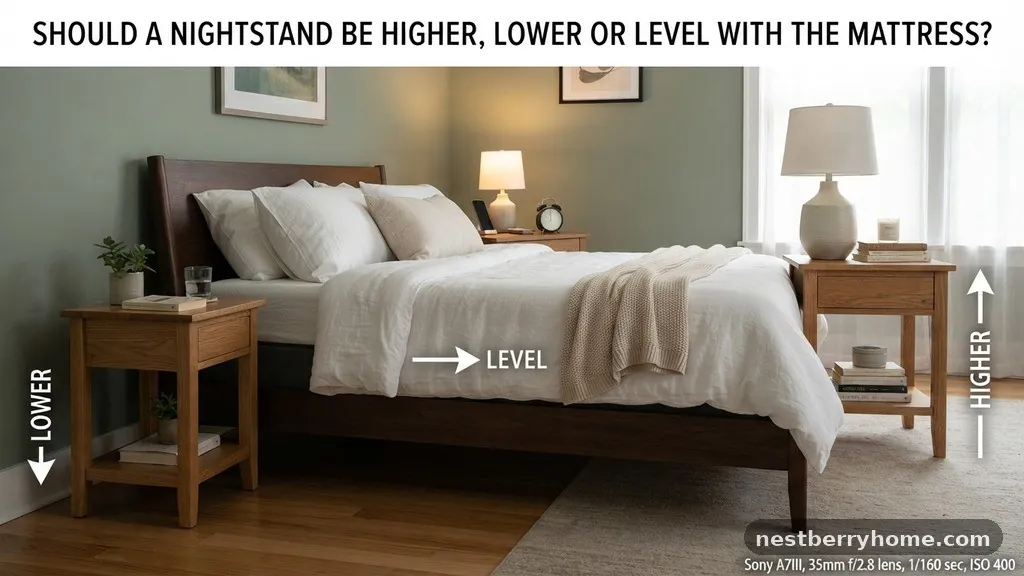
To help you decide, consider the following table which breaks down the pros and cons of different height alignments for your bedside furniture.
| Height Configuration | Ergonomic Benefit | Visual Effect |
|---|---|---|
| Level with Mattress | High: Easy reach for items | Balanced and clean |
| Higher than Mattress | Medium: Good for tall beds | Dramatic, can feel bulky |
| Lower than Mattress | Low: Requires reaching down | Sleek, modern, minimalist |
Ergonomic Considerations for Nighttime Habits
Your nighttime routine dictates how much you rely on your nightstand. If you keep a lamp, a book, and medication on your surface, you need that space to be easily accessible. A height discrepancy of more than three or four inches can lead to repetitive strain if you are constantly reaching for items.
Think about the motion you make when turning off a lamp or grabbing your phone. You want the movement to be as fluid as possible to avoid jolting yourself back to full wakefulness.
People with mobility issues should be particularly mindful of these measurements. A nightstand that is too low can be difficult to access from a seated position on the edge of the bed. If you need to lean over to reach your items, you increase the risk of losing your balance.
Selecting a piece that is perfectly level with your mattress supports your physical health and provides a sense of security. Always test the height by sitting on your bed before making a final purchase.
Choosing the Right Materials and Style

Once you have determined the correct height, you can focus on the material and style of your nightstands. Wood is a classic choice that adds warmth to a bedroom, but you might prefer metal or glass for a modern look. Consider how the color of the wood or finish complements your bed frame.
If you have a dark brown bed frame, a matching wood nightstand can look sophisticated, but don’t be afraid to mix textures. The key is to ensure the pieces feel like they belong together.
Think about the width and depth of the nightstand as well. A massive, deep table might look great in a large room but can be a nuisance in a small space. Ensure there is enough clearance to walk around the bed without bumping into corners.
If your bedroom is tight, wall-mounted nightstands are a great solution because they save floor space. They also allow you to control the exact height, ensuring they are perfectly level with your mattress every time.
When to Break the Rules
There are times when breaking the design rules actually works in your favor. If you have a very modern, minimalist aesthetic, a lower nightstand can look intentional and stylish. It creates a low-slung, lounge-like vibe that is popular in contemporary interior design.
If you choose this route, be prepared for the minor inconvenience of reaching down to grab your things. It is a trade-off between form and function that some people are willing to make for the sake of style.
Conversely, a taller nightstand can be useful if you have a very tall bed or if you use the nightstand for storage. Some people prefer a taller piece to act as a secondary dresser. If you go this route, ensure that the surface is still within a comfortable reach.
You might also consider a tiered nightstand where the top surface is higher, but there is a lower shelf that sits level with your mattress. This gives you the best of both worlds.
Key Factors to Consider Before Buying

Before you commit to a specific piece of furniture, keep these essential factors in mind to ensure you get the best fit for your space.
- Measure the height from the floor to the top of your mattress.
- Consider the depth of your pillow-top or memory foam topper.
- Ensure there is enough walking space between the nightstand and other furniture.
- Look for drawers or shelves if you need hidden storage for books or gadgets.
- Think about the lighting; a tall lamp on a tall nightstand might be too bright.
- Check the width to ensure it doesn’t crowd your headboard area.
Common Mistakes to Avoid
Many people make the mistake of buying furniture based on how it looks in the store rather than how it works in their home. A nightstand might look perfect in a large showroom but feel completely out of place in your bedroom. Always measure your space and your bed before you shop.
Another common mistake is ignoring the clearance needed for doors or drawers to open. If your nightstand is too close to a closet door, you will regret the purchase every time you try to get dressed.
Don’t overlook the importance of cable management. If you plan to keep your phone charger or a lamp on the nightstand, look for furniture that has built-in ports or holes for cords. A cluttered surface can make even the most beautiful nightstand look messy.
Keeping your bedside organized is easier when your furniture is designed for the modern lifestyle. You can find more information on organizing your living space through resources like the Architectural Digest design archives to help refine your vision.
Frequently Asked Questions
Is it okay if my nightstand is slightly lower than my mattress?
Yes, it is perfectly fine for your nightstand to be slightly lower than your mattress. Many designers prefer a lower profile for a sleek, modern look. As long as the difference is only a few inches, you will likely find it easy to reach your items without any significant discomfort.
What should I do if my bed is much taller than standard nightstands?
If you have a tall bed, look for “tall nightstands” or chest-style nightstands that are specifically designed for higher mattresses. You can also consider using a small accent table or a console that fits the height requirement. Alternatively, you can place your nightstand on a stable riser if the style allows.
Does a nightstand need to be the same height on both sides of the bed?
While symmetry is common, it is not a strict requirement. You can use different nightstands if you prefer a more eclectic or personalized style. However, keeping them at similar heights helps maintain visual balance and ensures that both people in the bed have easy access to their respective surfaces.
How much space should be between the bed and the nightstand?
A small gap of one to three inches is usually sufficient to prevent the furniture from scratching your bed frame. If your bedroom is large, you can increase this gap, but keep in mind the ease of reaching your items. The goal is to keep everything within arm’s reach while maintaining a clean look.
Are wall-mounted nightstands a good choice for small rooms?
Wall-mounted nightstands are an excellent choice for small bedrooms because they keep the floor clear. This creates an illusion of more space and makes cleaning easier. Because you install them yourself, you have total control over the height, ensuring they are perfectly level with your mattress.
Final Thoughts on Bedroom Furniture Layout
Determining whether a nightstand should be higher, lower, or level with the mattress is all about balancing your personal comfort with the overall design of your room. While the standard advice is to keep it level, your specific bed height and lifestyle habits are the most important factors.
Take the time to measure your setup accurately before making a purchase. Whether you choose a sleek, low-profile table or a sturdy, tall cabinet, ensure it serves its primary purpose of making your life easier.
Your bedroom should be a sanctuary that supports your rest and recovery. By carefully selecting furniture that aligns with your mattress, you remove small, daily frustrations that can accumulate over time. Use these tips to evaluate your current space and make adjustments where necessary.
A well-planned bedroom layout is a simple change that makes a significant difference in your daily comfort. If you have any questions about your specific room layout, feel free to experiment with different heights until you find what works best for you.