How to Make a Small Bedroom Feel More Functional
A small bedroom can be comfortable and highly functional when every piece has a clear purpose. The challenge isn’t necessarily the size of the room but how efficiently the available space is being used.
A crowded layout, oversized furniture, poor lighting, and scattered belongings can make a compact bedroom feel much smaller than it actually is. On the other hand, thoughtful furniture placement, vertical storage, and clear pathways can make the same room feel surprisingly comfortable.
In my experience, the best small-bedroom improvements start with the layout rather than the décor. Before buying storage products or decorative accessories, look at how you move through the room and which areas are currently being wasted.
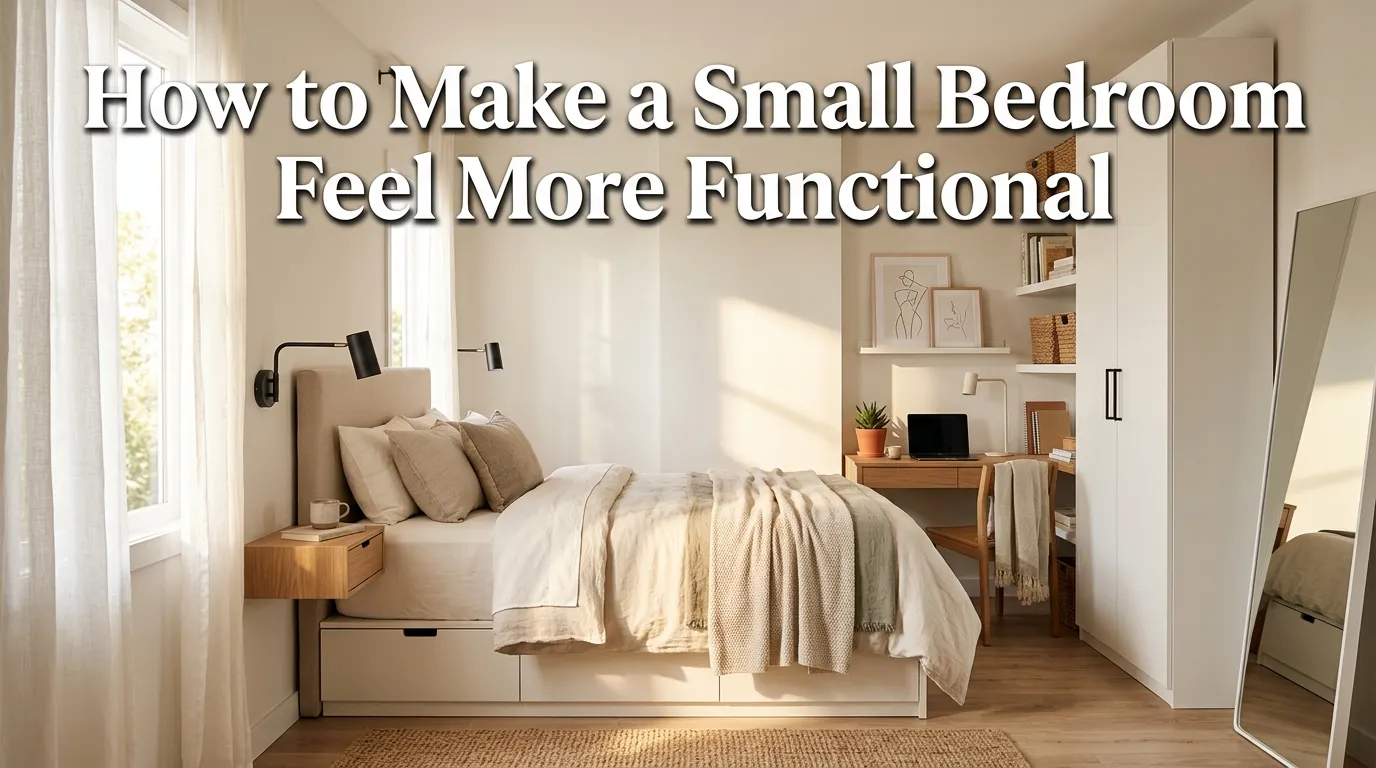
Multifunctional furniture can also make a major difference. A storage bed, wall-mounted desk, narrow nightstand, or bench with hidden storage can provide useful functions without requiring additional furniture.
Lighting and color matter too. Lighter tones can help reflect light, while layered lighting can make the room feel more inviting and practical at different times of day.
The following ideas focus on realistic ways to improve a small bedroom without requiring a major renovation. Whether you’re working with a tiny apartment bedroom or simply want a more efficient layout, these strategies can help you make better use of every available inch.
Table of Contents
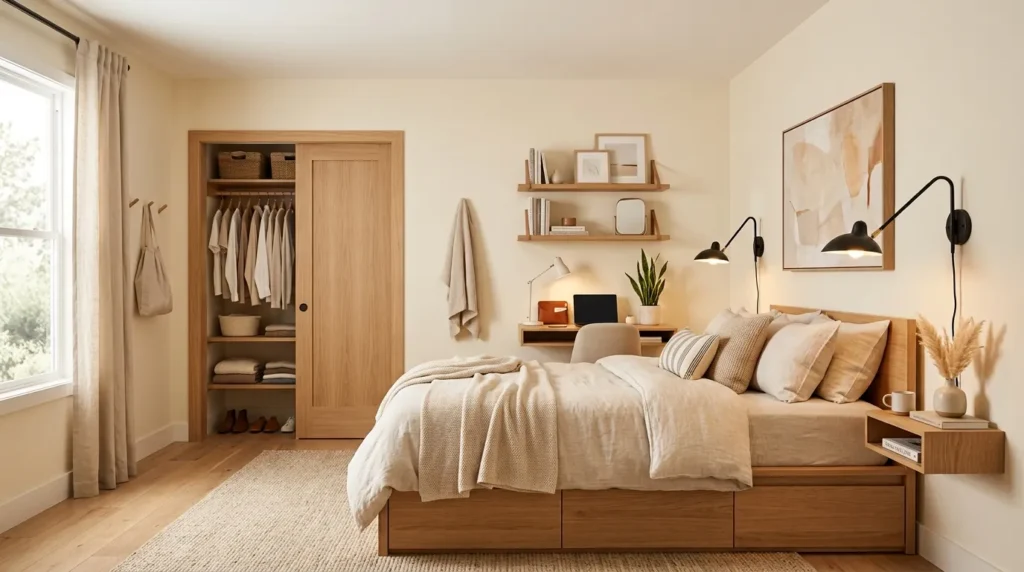
- Start With the Layout
- Choose the Right Bed
- Use Vertical Storage
- Add Multifunctional Furniture
- Create Clear Walking Paths
- Use Wall-Mounted Lighting
- Maximize Closet Space
- Keep the Floor Open
- Create Functional Zones
- Simplify Everyday Storage
1. Start With the Layout
Quick Benefits
- Improves movement
- Reduces crowding
- Makes furniture more useful
- Reveals wasted space
- Creates better flow
Why It Works
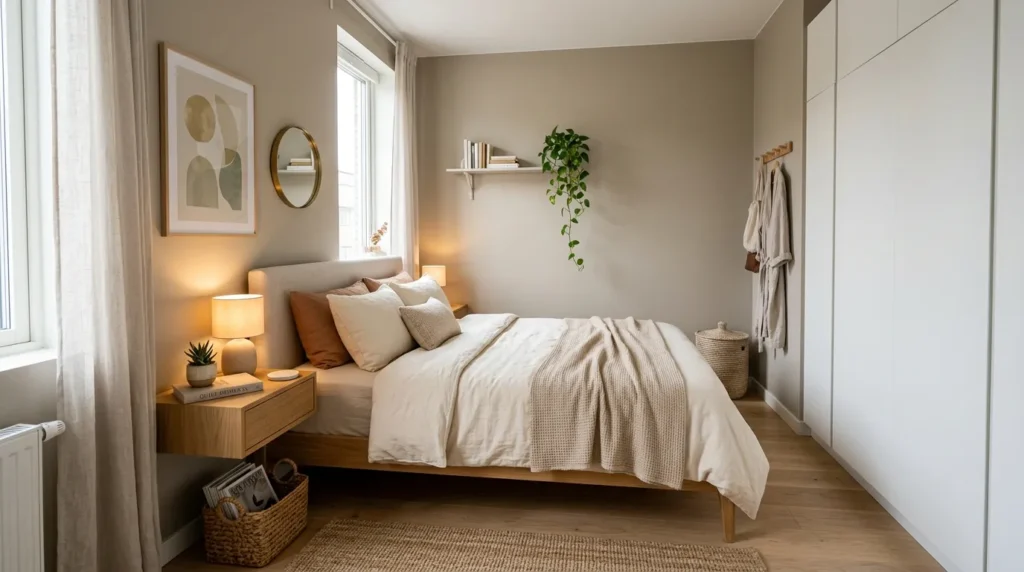
The layout determines how functional a small bedroom feels. Even beautiful furniture can create problems when it blocks pathways or leaves awkward gaps.
Before changing anything, measure the room and note the location of doors, windows, closets, outlets, and heating or cooling equipment.
I’ve found that simply repositioning furniture can sometimes create more usable space without buying anything.
How To Style It
Start with the bed because it usually takes up the most floor area. Position it where access remains comfortable and avoid blocking major pathways.
Then place storage and secondary furniture around the remaining usable zones.
2. Choose the Right Bed
Quick Benefits
- Saves valuable space
- Adds storage opportunities
- Improves room flow
- Creates a strong focal point
- Supports better organization
Why It Works
The bed is usually the largest piece of furniture in a bedroom, so its design has a major effect on functionality.
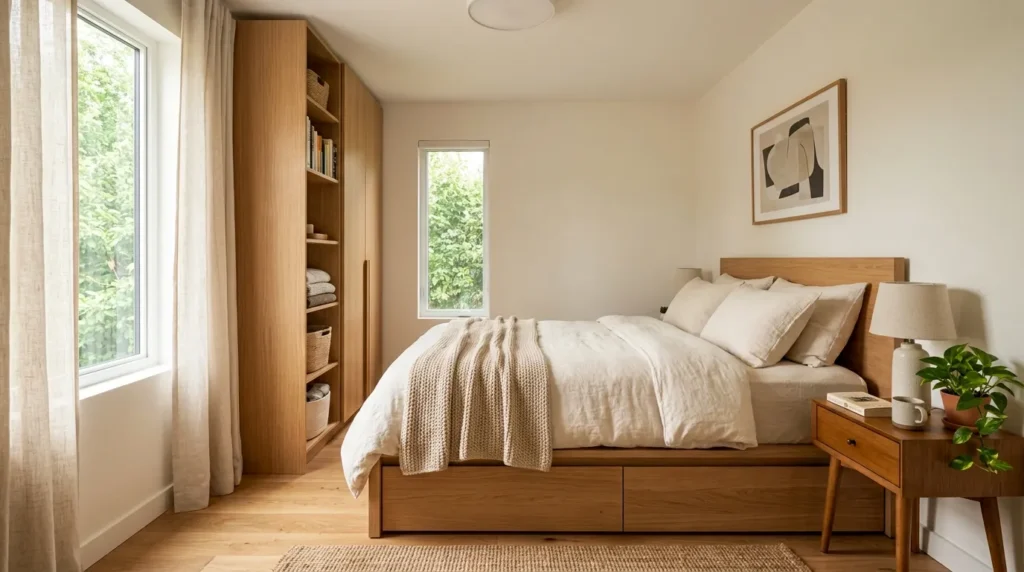
A storage bed can provide hidden space for bedding and seasonal belongings, while a streamlined frame can create a lighter visual appearance.
I’ve found that choosing the bed based on actual storage needs can eliminate the need for additional furniture.
How To Style It
Select the largest comfortable bed size that still leaves adequate circulation.
If storage is a priority, consider drawers or suitable under-bed storage. Keep the surrounding furniture relatively compact.
3. Use Vertical Storage
Quick Benefits
- Saves floor space
- Adds storage
- Uses empty walls
- Keeps belongings accessible
- Makes the room feel taller
Why It Works
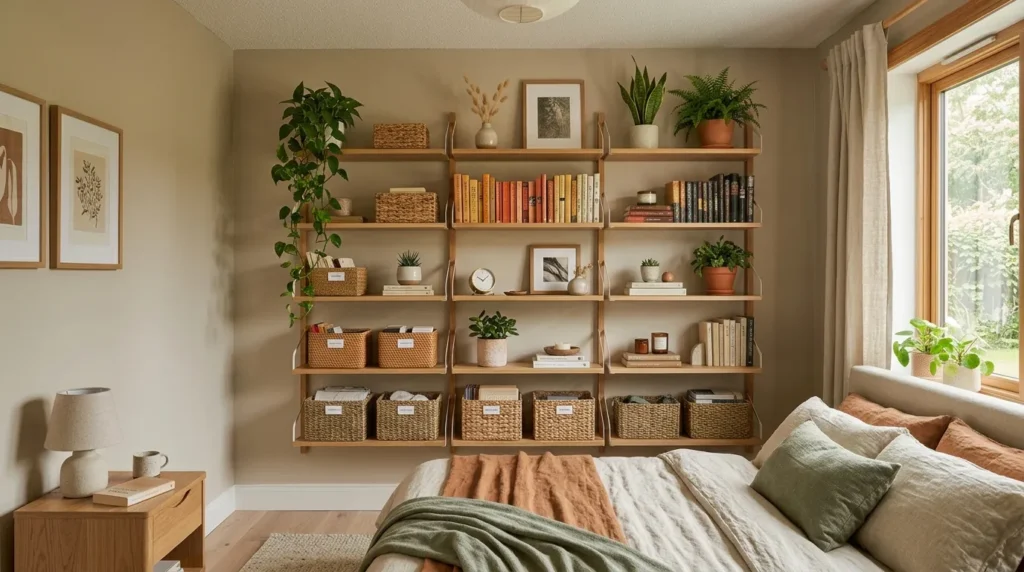
Walls provide valuable storage opportunities in small bedrooms. Shelves, cabinets, hooks, and other appropriate wall-mounted solutions can hold belongings without occupying floor space.
Vertical organization is especially useful for books, accessories, folded clothing, and decorative objects.
I’ve found that taking storage upward is often more effective than adding another floor-standing cabinet.
How To Style It
Use shelves above desks, dressers, or other suitable areas. Add baskets for smaller items to prevent visual clutter.
Leave some open space between storage groups so the wall doesn’t feel overloaded.
4. Add Multifunctional Furniture
Quick Benefits
- Performs multiple functions
- Reduces furniture count
- Saves space
- Improves organization
- Increases flexibility
Why It Works
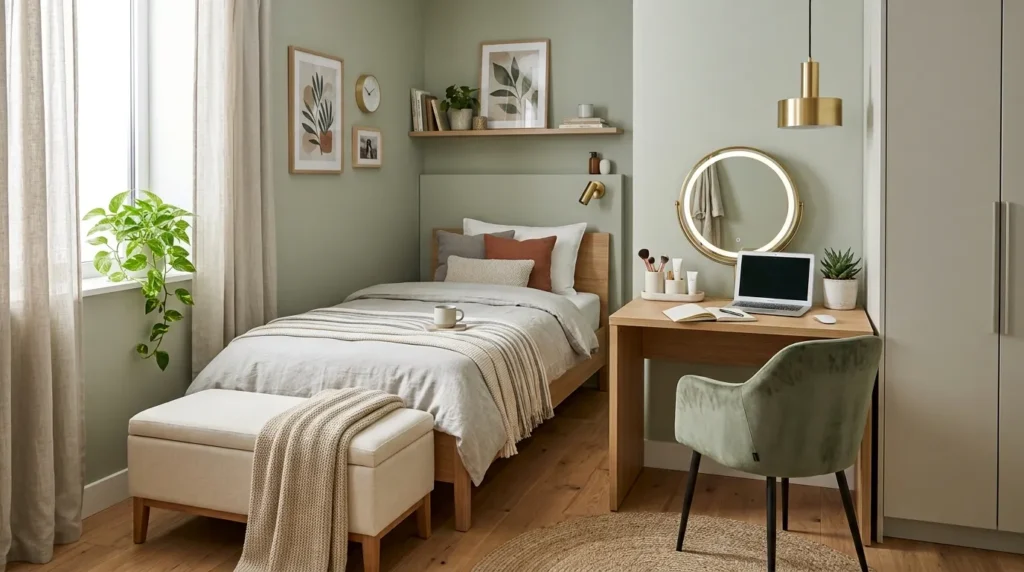
When space is limited, furniture that performs two or more jobs can be extremely valuable.
A desk that doubles as a vanity, a bench with storage, or a nightstand with drawers can reduce the total number of pieces needed.
I’ve found that multifunctional furniture works best when its secondary function is something you genuinely use.
How To Style It
Identify the activities you regularly perform in the bedroom before selecting furniture.
Choose compact pieces that solve specific problems rather than adding furniture simply because it offers storage.
5. Create Clear Walking Paths
Quick Benefits
- Improves circulation
- Makes rooms feel larger
- Increases comfort
- Reduces visual clutter
- Makes cleaning easier
Why It Works
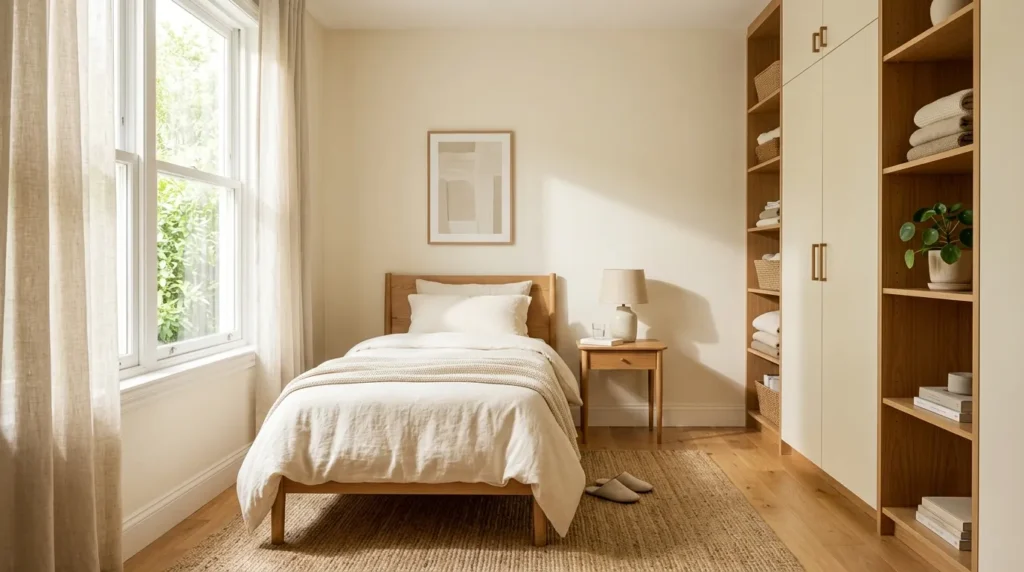
A clear path through a small bedroom can make the room feel significantly more spacious.
Furniture that extends into walkways can make everyday routines frustrating, even when the room technically has enough storage.
I’ve found that open floor space often contributes more to functionality than another storage unit.
How To Style It
Identify the primary routes you use every day, such as the path from the door to the bed or closet.
Keep those routes as open as practical and reposition small furniture if it interferes with movement.
6. Use Wall-Mounted Lighting
Quick Benefits
- Frees nightstand space
- Improves bedside lighting
- Adds style
- Reduces floor clutter
- Works well in narrow rooms
Why It Works
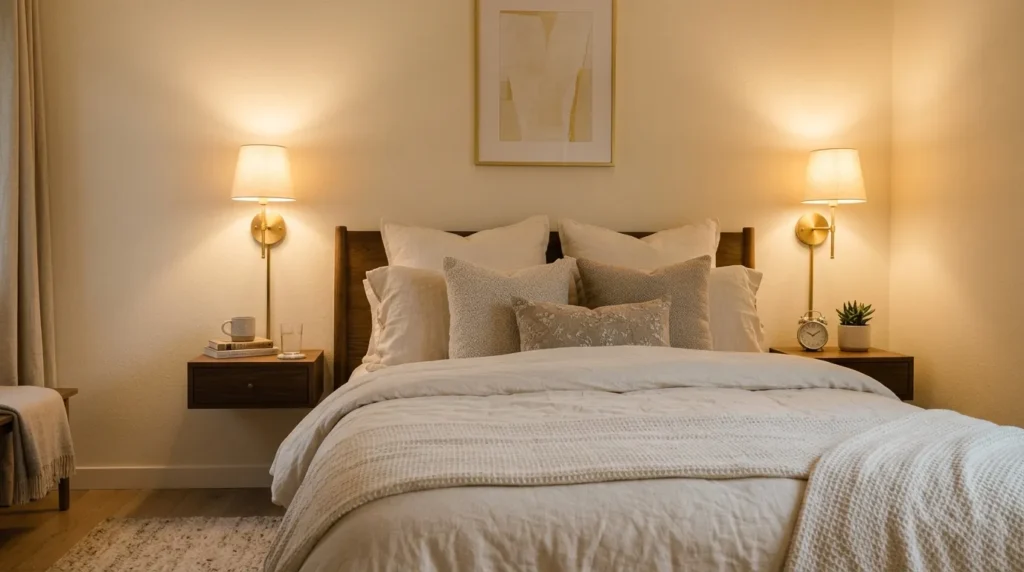
Traditional table lamps can take up valuable surface area in a small bedroom. Wall-mounted sconces or suitable plug-in lights can provide the same function while keeping the nightstand available for other essentials.
This can make a compact bedside area feel much more organized.
I’ve found that lighting mounted above or beside the bed can also create a more finished, intentional appearance.
How To Style It
Choose fixtures that suit the room’s scale and provide appropriate reading or ambient light.
Position them so switches are convenient and cords are safely managed if using plug-in models.
7. Maximize Closet Space
Quick Benefits
- Increases usable storage
- Makes clothing easier to find
- Reduces bedroom clutter
- Improves daily routines
- Keeps floors clearer
Why It Works
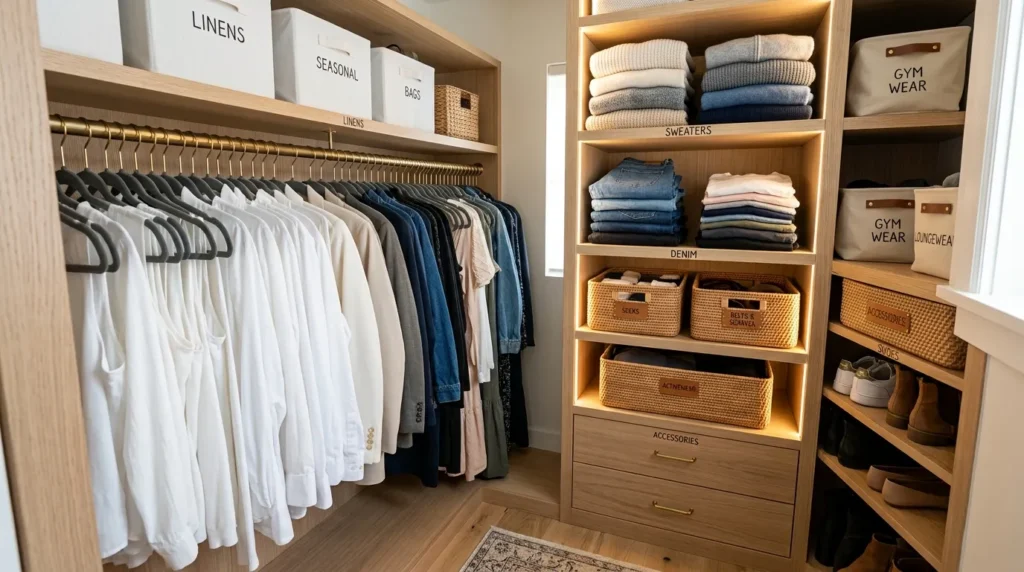
A small bedroom often feels crowded because the closet isn’t being used efficiently. Once clothing is grouped and unnecessary items are removed, vertical space can be used more effectively.
Additional shelving, suitable organizers, and slim hangers can improve capacity without expanding the closet.
I’ve found that keeping everyday clothing within easy reach makes a small bedroom much easier to maintain.
How To Style It
Group clothing by category and use the upper areas for seasonal or less frequently used items.
Keep frequently worn pieces at comfortable reach and use labeled storage where helpful.
8. Keep the Floor Open
Quick Benefits
- Makes the room feel larger
- Improves movement
- Simplifies cleaning
- Reduces visual clutter
- Creates a lighter appearance
Why It Works
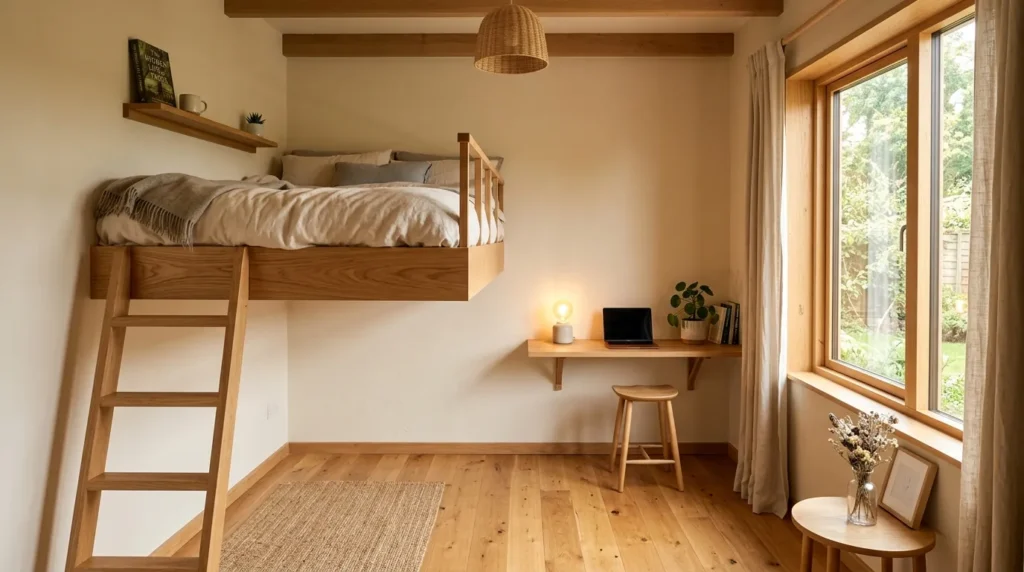
Open floor space is particularly valuable in a compact bedroom. Too many cabinets, baskets, chairs, and decorative pieces can make the room feel crowded even when each item is useful.
Keeping furniture elevated or choosing wall-mounted solutions can help preserve visual openness.
I’ve found that removing just one unnecessary floor-standing piece can sometimes make a noticeable difference.
How To Style It
Prioritize essential furniture and use vertical or hidden storage whenever possible.
Keep baskets, shoes, laundry, and miscellaneous items contained rather than scattered across the floor.
9. Create Functional Zones
Quick Benefits
- Improves organization
- Defines activities
- Makes routines easier
- Uses space intentionally
- Reduces clutter
Why It Works
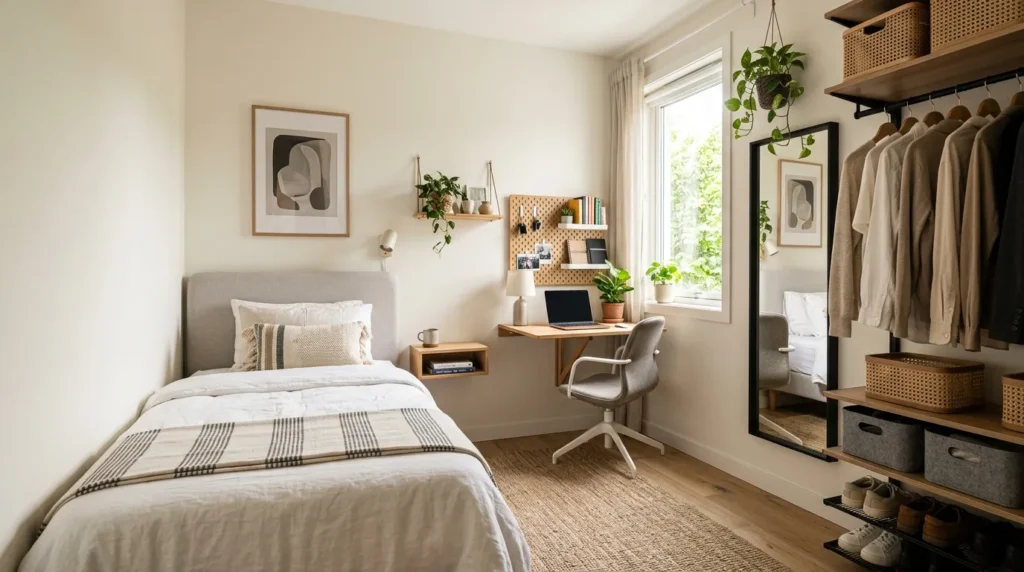
Even a small bedroom can benefit from clearly defined zones. Sleeping, dressing, working, reading, and storage areas don’t need separate rooms; they simply need recognizable locations.
This makes the space easier to use and prevents belongings from spreading throughout the room.
I’ve found that small zones work particularly well when furniture placement naturally separates them.
How To Style It
Place a desk near natural light when practical, keep dressing items near the closet, and create a comfortable bedside zone around the bed.
Use rugs, lighting, shelving, or furniture placement to subtly distinguish areas.
10. Simplify Everyday Storage
Quick Benefits
- Speeds up routines
- Reduces clutter
- Makes belongings accessible
- Improves organization
- Easier to maintain
Why It Works
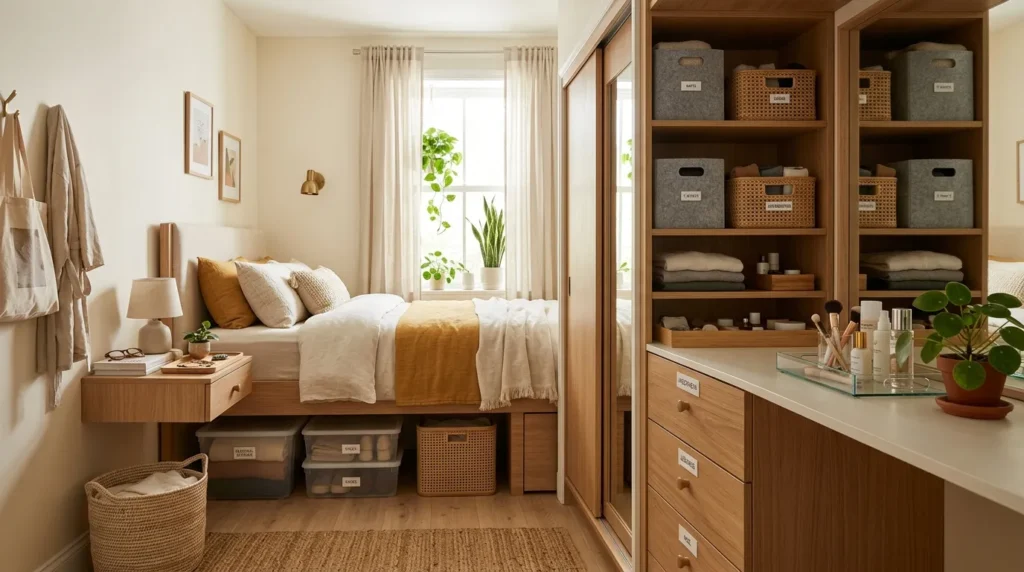
Storage is most functional when everyday items are easy to reach and easy to put away.
If frequently used belongings require several steps to access, they’re more likely to end up on surfaces or floors.
I’ve found that simple storage systems often work better than complicated organizational setups.
How To Style It
Keep daily essentials within convenient reach and move occasional-use items into less accessible storage.
Use baskets, drawers, trays, and small organizers to give categories of belongings a consistent home.
Frequently Asked Questions
How can I make a small bedroom more functional?
Start with the layout, reduce unnecessary furniture, use vertical storage, choose multifunctional pieces, and keep important walking paths open.
What furniture saves the most space in a small bedroom?
Storage beds, narrow nightstands, wall-mounted desks, floating shelves, and multifunctional benches can provide useful functions without taking up excessive floor space.
How can I create more storage without making the bedroom feel crowded?
Use vertical walls, under-bed storage, closet organizers, and wall-mounted solutions instead of adding more large floor-standing furniture.
Should I use a large bed in a small bedroom?
Choose the largest bed that fits your comfort needs while still allowing practical circulation around it. The right size depends on the room dimensions and layout.
How do I make a tiny bedroom feel more spacious?
Keep pathways open, use lighter colors, reduce visual clutter, maximize vertical storage, and avoid unnecessary furniture.
How can I organize a small bedroom without remodeling?
Rearrange furniture, declutter belongings, improve closet organization, add removable storage solutions, use vertical space, and replace bulky pieces with multifunctional alternatives.
Conclusion
Making a small bedroom more functional doesn’t require a major renovation. The biggest improvements often come from using the existing space more intelligently.
Start with the layout and identify what makes everyday movement difficult. Then reduce unnecessary furniture, maximize vertical and hidden storage, and choose pieces that perform more than one function.
Keep the floor as open as possible and create simple zones for sleeping, dressing, working, and relaxing. When frequently used items have convenient homes, maintaining the room becomes much easier.
A functional small bedroom should feel comfortable rather than crowded. With thoughtful furniture choices, efficient storage, and clear pathways, even a compact room can become organized, practical, and inviting.