How to Decorate a Living Room with Modern Style
A modern living room can feel sophisticated, comfortable, and welcoming without looking cold or overly minimal. The secret is finding the right balance between clean lines and inviting details.
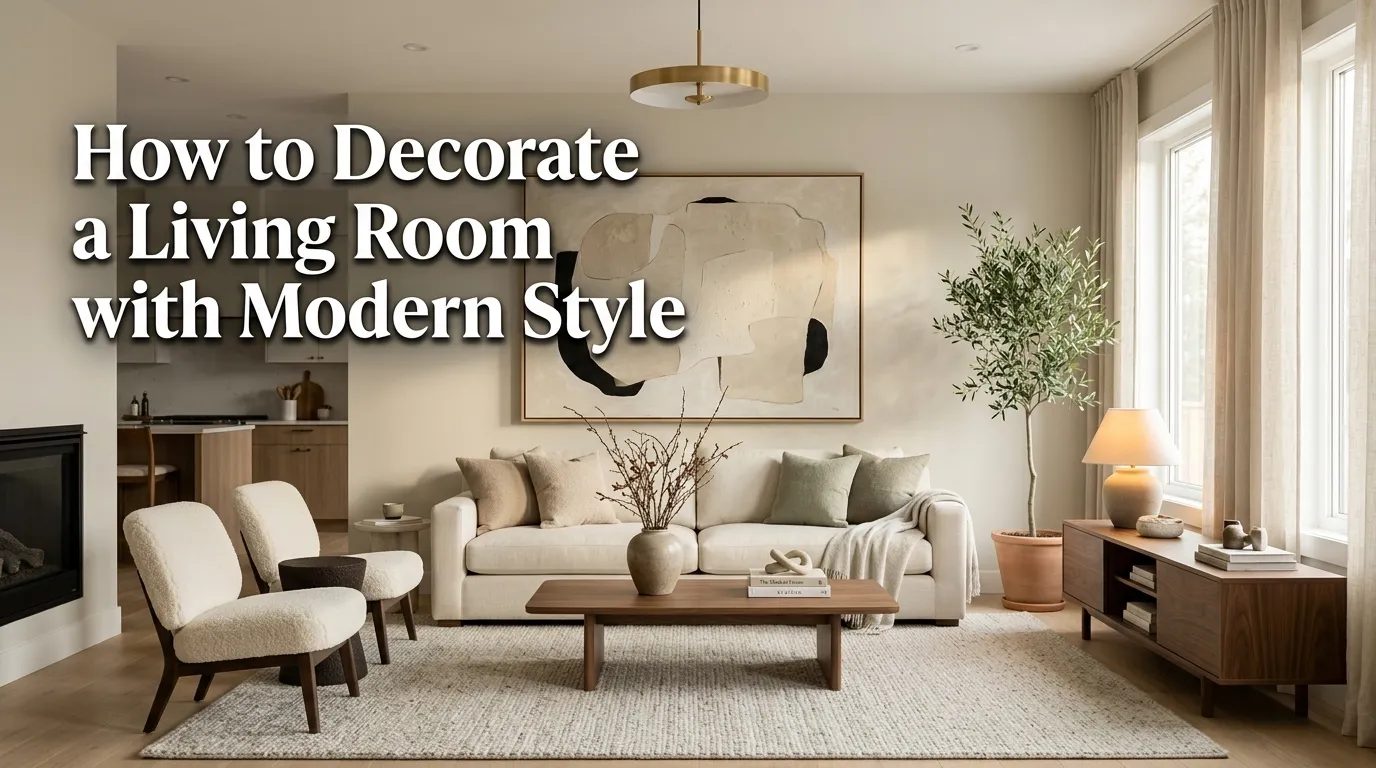
Modern design often emphasizes simplicity, thoughtful proportions, functional furniture, and a restrained color palette. But that doesn’t mean the room needs to feel empty. Natural materials, layered textiles, warm lighting, artwork, and carefully selected accessories can give a modern space plenty of personality.
In my experience, the strongest modern living rooms don’t rely on trends alone. Instead, they begin with a practical layout and a few quality-looking foundational pieces. Once the sofa, rug, coffee table, and lighting are working together, smaller decorative details become much easier to choose.
Color is another important consideration. Warm whites, beige, taupe, charcoal, soft gray, and natural wood can create a sophisticated foundation. Small amounts of black or muted accent colors can add definition without overwhelming the space.
Whether you’re refreshing an existing living room or starting from scratch, these ideas can help you create a modern space that feels polished while remaining comfortable enough for everyday life.
Table of Contents
- Start With a Neutral Palette
- Choose Clean-Lined Furniture
- Layer Natural Textures
- Add a Large Area Rug
- Create a Focal Point
- Use Modern Lighting
- Mix Wood and Metal
- Keep Décor Intentional
- Add Statement Artwork
- Balance Comfort and Style
1. Start With a Neutral Palette
Quick Benefits
- Creates visual calm
- Makes rooms feel sophisticated
- Provides flexibility
- Highlights architectural details
- Works with many accents
Why It Works
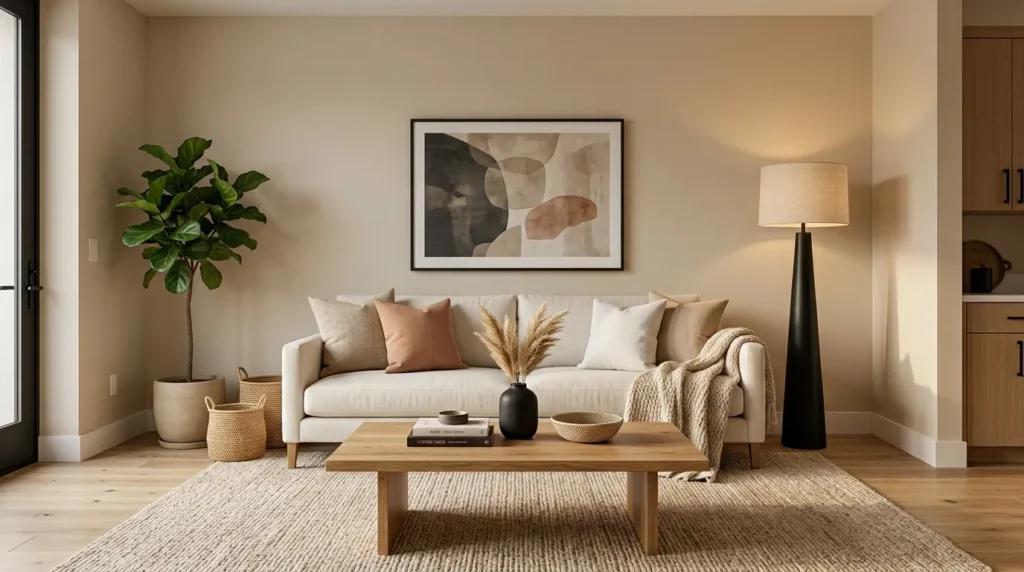
Neutral colors provide a strong foundation for modern living rooms. Shades such as warm white, beige, taupe, soft gray, and charcoal can create a cohesive backdrop without competing with furniture or artwork.
Warm neutrals are especially useful if you want modern décor to feel inviting rather than stark.
I’ve found that using several shades of one color family creates more depth than relying on a single flat neutral.
How To Style It
Start with one dominant neutral for the walls and larger furniture. Introduce one or two complementary shades through rugs, cushions, curtains, and accessories.
Use darker accents sparingly to create definition.
2. Choose Clean-Lined Furniture
Quick Benefits
- Creates a polished look
- Improves visual flow
- Feels contemporary
- Makes styling easier
- Works in open layouts
Why It Works
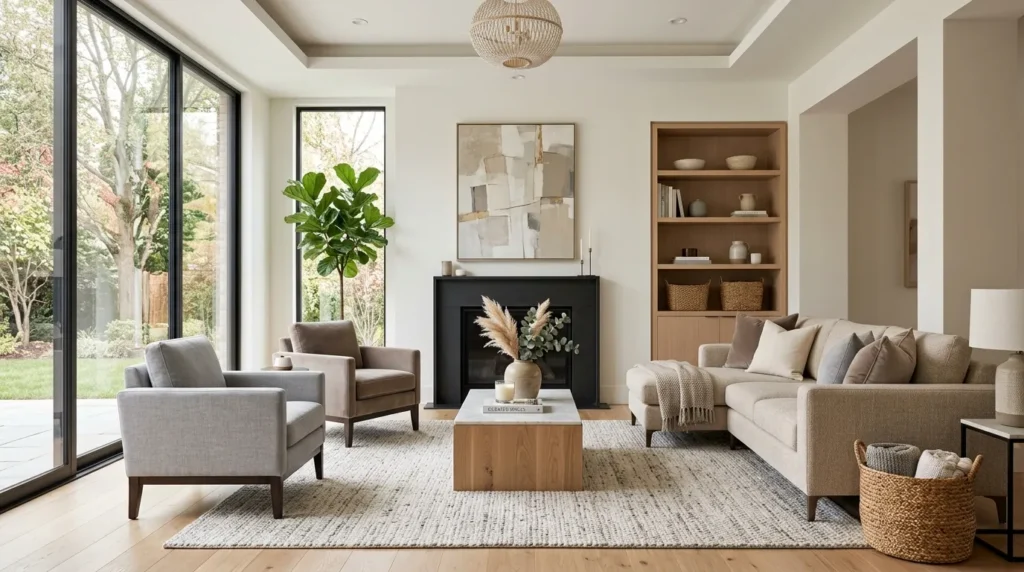
Modern furniture typically relies on simple silhouettes rather than excessive ornamentation. A streamlined sofa, simple coffee table, and uncomplicated media console can immediately establish a modern foundation.
Clean lines also make it easier to layer textures without creating visual clutter.
I’ve found that choosing fewer substantial pieces often creates a more sophisticated appearance than filling the room with smaller furniture.
How To Style It
Select furniture according to the room’s proportions. Avoid pushing every piece against the wall if the layout allows for more intentional grouping.
Keep walkways open and create a comfortable conversation area.
3. Layer Natural Textures
Quick Benefits
- Adds warmth
- Prevents a sterile look
- Creates depth
- Introduces visual interest
- Makes modern spaces inviting
Why It Works
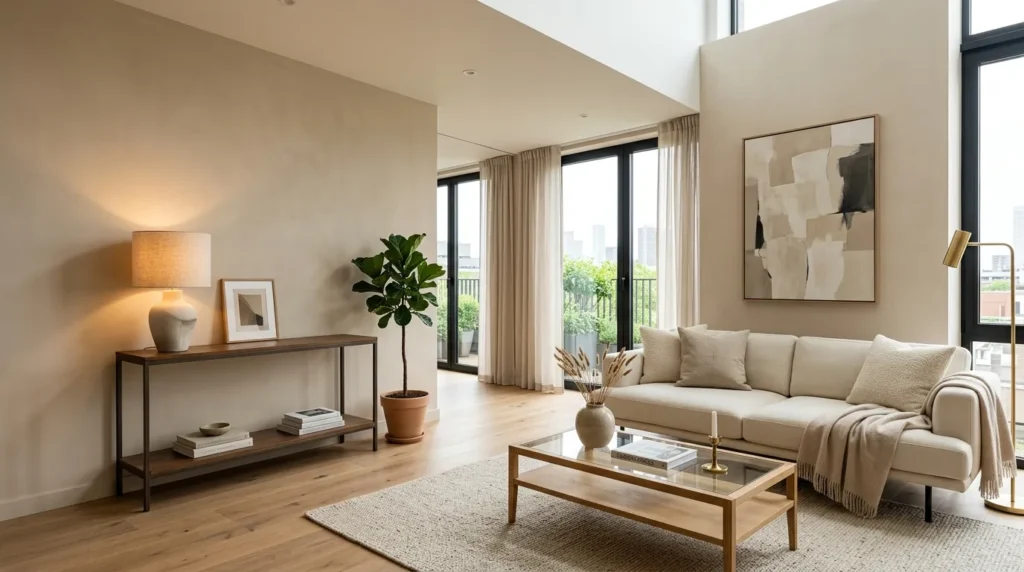
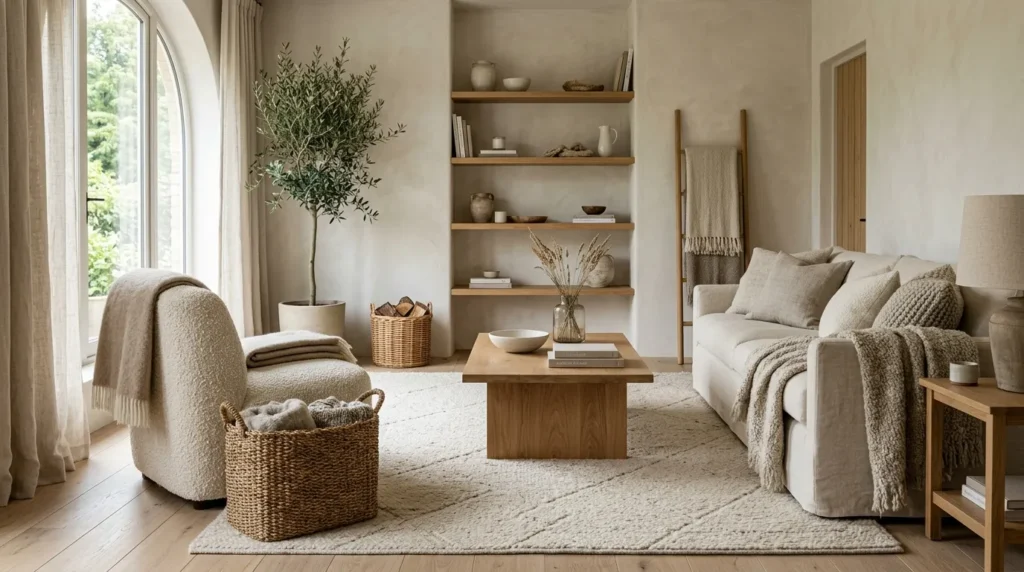
Texture is one of the easiest ways to make a modern room feel comfortable. Linen, boucle, wool, wood, leather, rattan, stone, and woven materials can introduce variation without requiring bold colors.
The contrast between smooth modern furniture and tactile materials creates depth.
I’ve found that texture becomes particularly important when working with an all-neutral palette.
How To Style It
Mix several textures throughout the room rather than concentrating them in one area.
Try linen curtains, a woven basket, a textured rug, wood furniture, and soft cushions to create a layered but cohesive appearance.
4. Add a Large Area Rug
Quick Benefits
- Defines the seating area
- Adds softness
- Connects furniture
- Creates warmth
- Improves visual cohesion
Why It Works
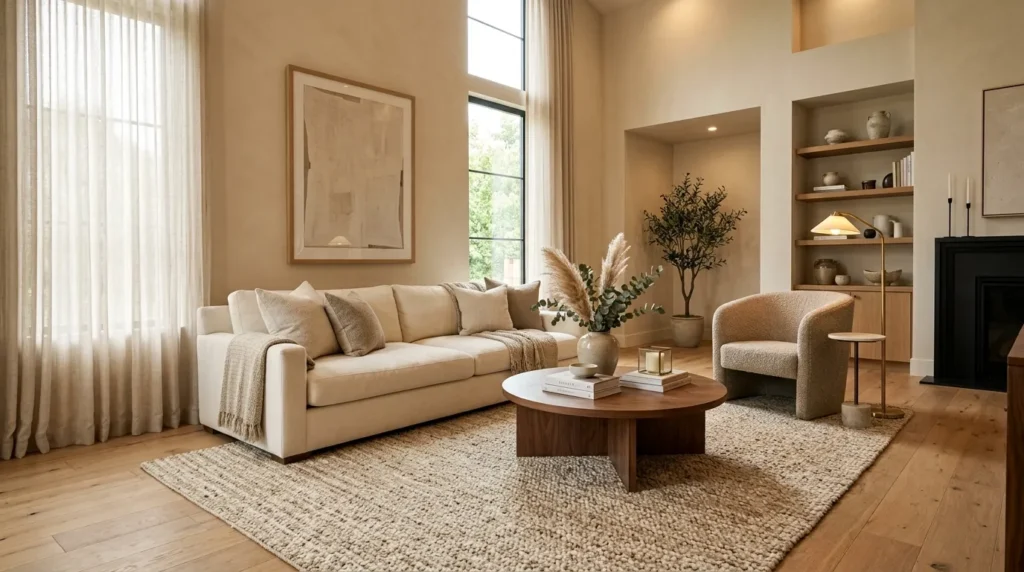
A properly sized area rug can visually anchor a modern living room. It helps connect the sofa, chairs, and coffee table into one cohesive arrangement rather than making each piece feel separate.
I’ve found that rugs that are too small can make even a well-designed room feel disconnected.
How To Style It
Choose a rug large enough for at least the front legs of major seating pieces to sit comfortably on it when practical.
Neutral patterns, subtle geometric designs, and textured rugs work well with modern furniture.
5. Create a Focal Point
Quick Benefits
- Gives the room direction
- Creates visual balance
- Highlights architecture
- Makes decorating easier
- Adds personality
Why It Works
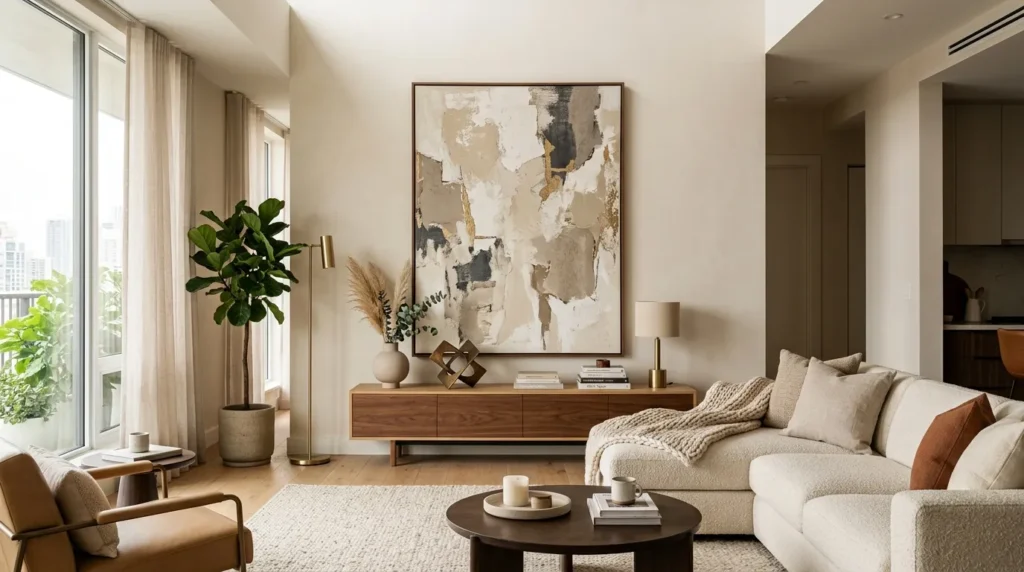
Every living room benefits from a clear visual anchor. This could be a fireplace, large artwork, architectural feature, media wall, or even a beautifully styled console.
Without a focal point, modern rooms can sometimes feel like collections of unrelated furniture.
I’ve found that choosing the focal point early makes the rest of the decorating process much easier.
How To Style It
Identify the strongest feature in the room and arrange furniture so it naturally faces or relates to it.
Avoid creating multiple competing focal points.
6. Use Modern Lighting
Quick Benefits
- Adds ambiance
- Highlights textures
- Creates layers
- Improves functionality
- Adds sculptural detail
Why It Works
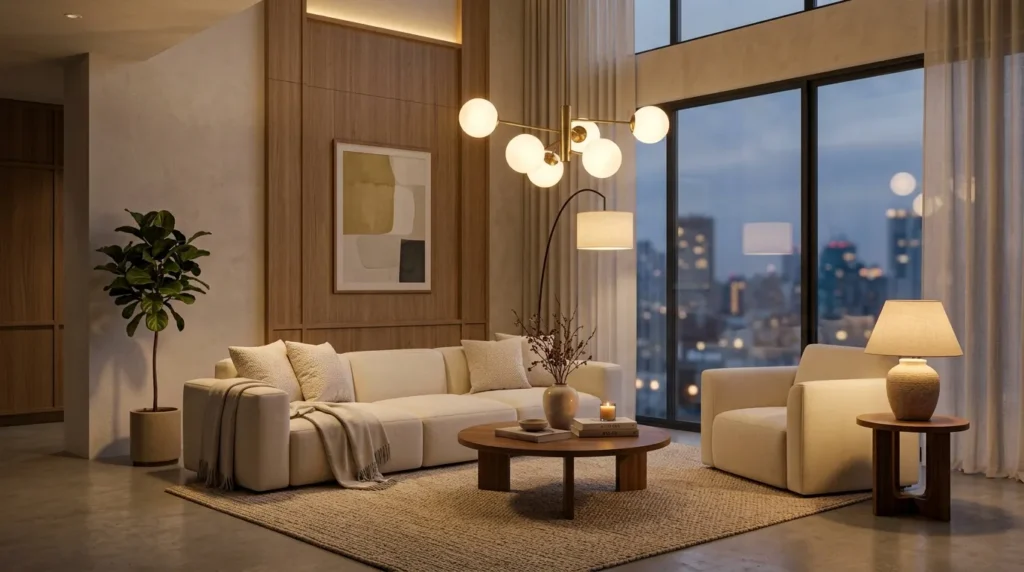
Lighting is an essential part of modern living room design because it can change the mood and appearance of the entire space. Instead of relying on one ceiling fixture, layered lighting creates a more comfortable and sophisticated atmosphere.
Floor lamps, table lamps, sconces, pendants, and recessed lighting can each serve a different purpose.
I’ve found that warm lighting makes neutral modern interiors feel significantly more welcoming in the evening.
How To Style It
Combine ambient lighting with task and accent lighting. Place a floor lamp near a reading chair and smaller lamps near seating or consoles.
Choose fixtures with simple silhouettes and finishes that complement your furniture.
7. Mix Wood and Metal
Quick Benefits
- Adds contrast
- Creates warmth
- Introduces texture
- Feels contemporary
- Prevents a flat appearance
Why It Works
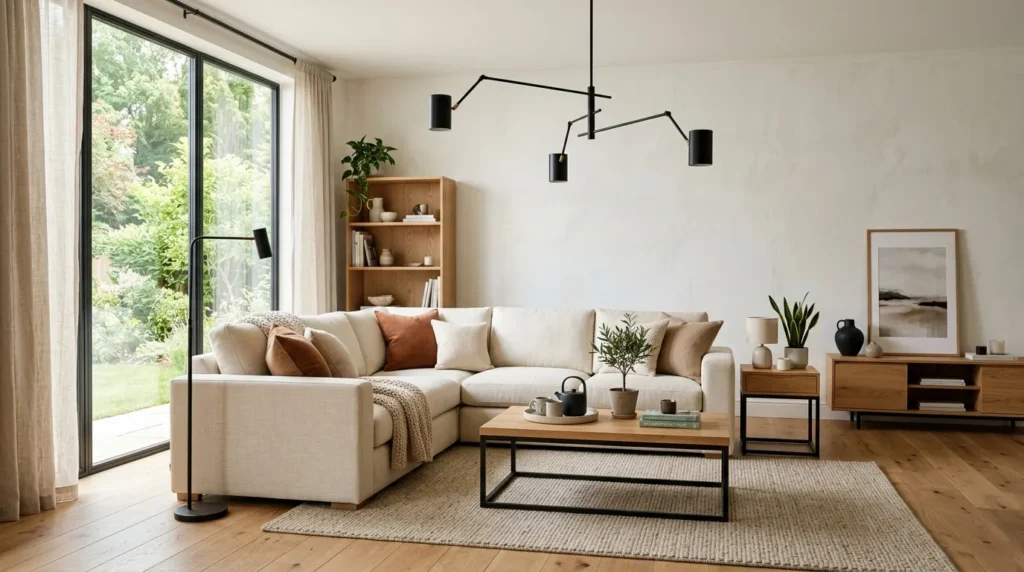
Modern interiors often benefit from combining different materials. Natural wood adds warmth while metal introduces structure and contrast.
Black metal, brushed brass, brushed nickel, and bronze can all work depending on the overall palette.
I’ve found that repeating materials in several places helps the room feel coordinated.
How To Style It
Pair a wood coffee table with black metal lighting or use a wood console with subtle metal accents.
Avoid introducing too many finishes. Two or three complementary materials are usually enough.
8. Keep Décor Intentional
Quick Benefits
- Reduces clutter
- Highlights important pieces
- Creates visual calm
- Makes cleaning easier
- Strengthens the design
Why It Works
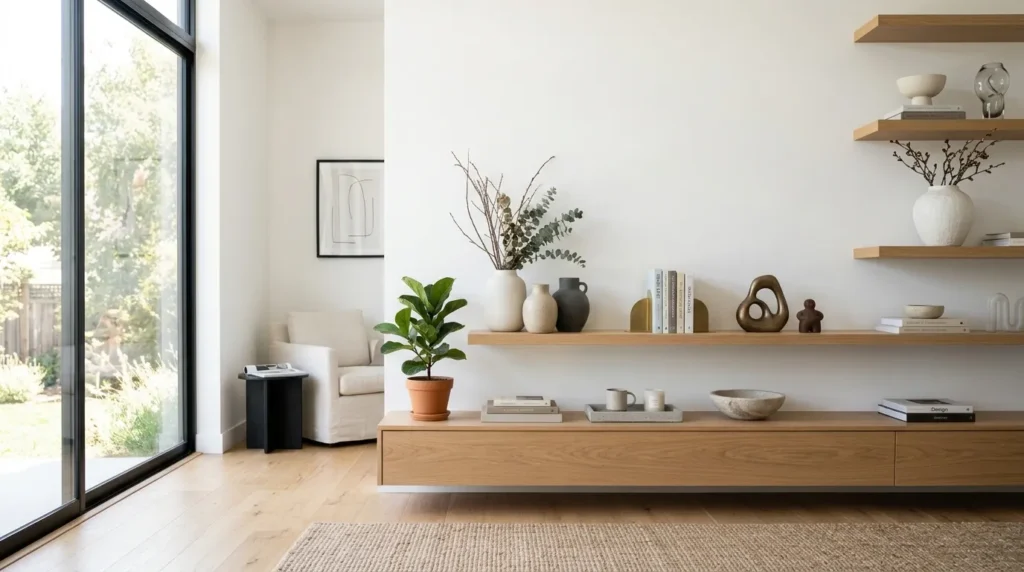
Modern design benefits from restraint. Instead of decorating every available surface, choose a smaller collection of objects that contribute to the room.
A few books, a ceramic vase, a sculptural object, or a plant can have more impact when surrounded by negative space.
I’ve found that editing décor after styling is often the step that makes a room look most polished.
How To Style It
Group accessories in small arrangements rather than scattering individual objects everywhere.
Use different heights and textures while keeping the overall color palette connected.
9. Add Statement Artwork
Quick Benefits
- Adds personality
- Creates a focal point
- Introduces color
- Fills large walls
- Elevates simple furniture
Why It Works
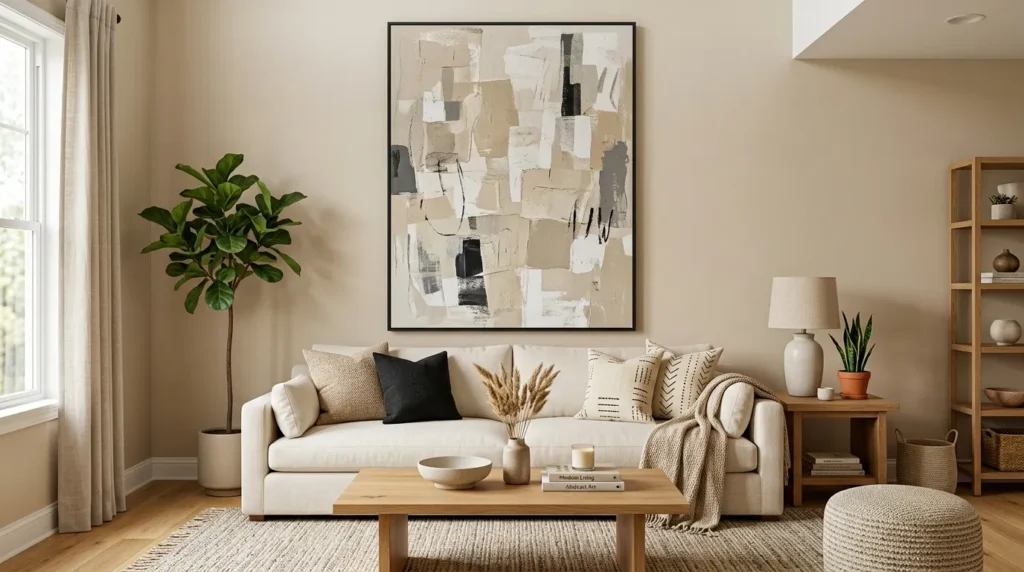
Large-scale artwork can give a modern living room character without requiring lots of accessories. Abstract, photographic, botanical, and graphic artwork can all work depending on the room.
One substantial piece often creates a stronger impression than several tiny pieces.
I’ve found that artwork is also an easy way to introduce a subtle accent color.
How To Style It
Choose artwork that complements the existing palette rather than matching every item exactly.
Hang larger pieces at an appropriate viewing height and relate their scale to the furniture below.
10. Balance Comfort and Style
Quick Benefits
- Keeps the room livable
- Creates visual warmth
- Improves functionality
- Supports everyday use
- Makes modern design inviting
Why It Works
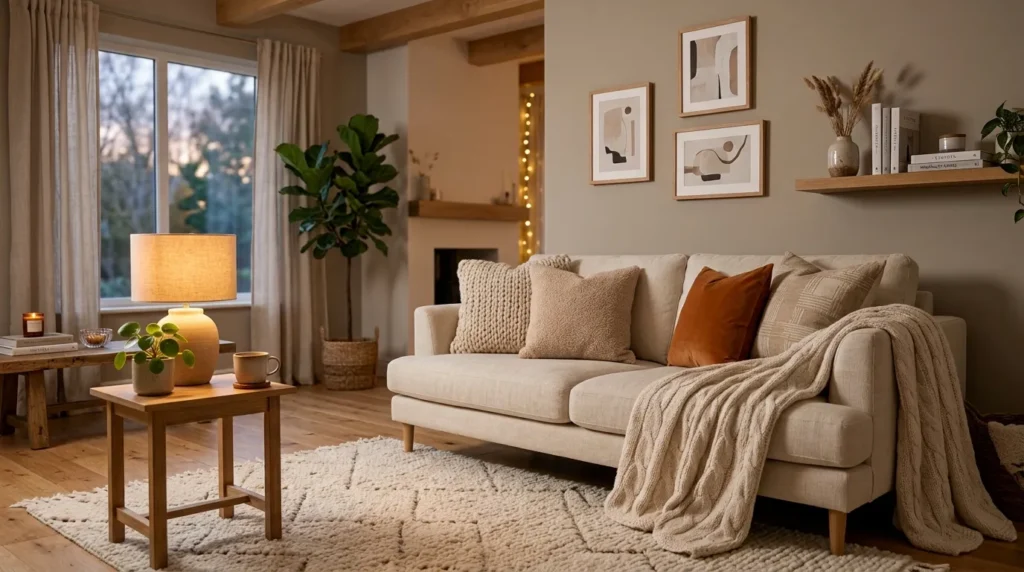
A modern living room should still feel like a place where people can relax. Overly rigid furniture and minimal décor can make a room appear beautiful but uncomfortable.
Soft upholstery, layered cushions, throws, and practical surfaces help create a room that looks polished while remaining functional.
I’ve found that the best modern rooms combine strong design with everyday comfort.
How To Style It
Choose seating with supportive proportions and add a few soft textiles. Keep frequently used items accessible without allowing surfaces to become cluttered.
The goal is a room that looks intentional but still feels easy to live in.
Frequently Asked Questions
How do I make my living room look modern?
Start with clean-lined furniture, a cohesive neutral palette, layered textures, a properly sized rug, modern lighting, and a limited collection of intentional accessories.
What colors work best for a modern living room?
Warm white, beige, taupe, soft gray, charcoal, black, and natural wood tones create versatile modern combinations.
How can I make a modern living room feel cozy?
Add layered textiles, warm lighting, natural wood, woven materials, soft rugs, comfortable seating, and a few personal decorative pieces.
Does modern design have to be minimalist?
No. Modern design often benefits from simplicity, but you can still use artwork, plants, books, textiles, and decorative objects. The key is intentional editing.
What type of furniture looks modern?
Furniture with clean silhouettes, simple profiles, restrained detailing, and well-balanced proportions generally works well in modern interiors.
How can I decorate a modern living room on a budget?
Focus on layout first, then update smaller elements such as lighting, pillows, rugs, artwork, and accessories. A few strategic changes can have a significant visual impact.
Conclusion
Decorating a living room with modern style is less about following a strict checklist and more about creating balance. Clean-lined furniture provides structure, while natural textures, warm lighting, artwork, and comfortable textiles prevent the space from feeling cold.
Start with your layout and largest pieces before adding accessories. Choose a restrained color palette and introduce depth through materials rather than excessive decoration.
Pay attention to proportion, especially when selecting rugs, coffee tables, artwork, and seating. These details can make the difference between a room that simply contains modern furniture and one that genuinely feels designed.
The goal is a living room that looks polished but remains comfortable enough for everyday life. With thoughtful choices and a little editing, modern style can feel warm, practical, and timeless.g room ideas