

What to Do When Modern Pillow-Top Mattresses Sit 30 Inches High Off the Floor
Many homeowners find themselves struggling with the practical realities of what to do when modern pillow-top mattresses sit 30 inches high off the floor. As manufacturing trends shift toward thicker, multi-layered designs, the total elevation of your sleep surface has climbed significantly. This height can make getting into bed feel like a climb and exiting it feel like a leap, impacting your daily comfort and mobility.
By evaluating your current foundation and exploring low-profile alternatives, you can restore a functional and comfortable height to your primary sleeping area. This article explains how to manage these oversized sleep systems effectively, ensuring your bedroom remains both aesthetically pleasing and physically accessible.
Immediate Solutions for Excessive Bed Height

The most direct way to address the issue of a mattress sitting at 30 inches is to audit the components beneath it. Often, the culprit is not just the mattress, but the combination of a high-profile box spring and a traditional bed frame. Replacing a standard 9-inch box spring with a “low-profile” foundation—which typically measures between 2 and 5 inches—can immediately drop your sleep surface by several inches.
You should also examine the legs of your bed frame. Many modern metal frames come with standard 7-inch or 9-inch legs that provide significant clearance but contribute to the overall elevation. Swapping these out for shorter furniture glides or replacement legs can shave off another 3 to 4 inches without requiring you to purchase an entirely new frame.
If you are currently using an adjustable base, check if it has a height-adjustable leg kit. Many premium bases allow you to screw in shorter sections, effectively lowering the entire mechanism. This adjustment is often overlooked, yet it is one of the most effective ways to lower a bed without sacrificing the functional benefits of an adjustable base.
Evaluating Your Mattress Foundation

When assessing what to do when modern pillow-top mattresses sit 30 inches high off the floor, you must consider the structural requirements of your specific mattress. Pillow-top models are heavy and require consistent, firm support to prevent sagging and premature wear. If you remove your box spring entirely, you must ensure your bed frame can support the weight without a center-sagging risk.
Platform beds are an excellent alternative to traditional box-spring setups. These frames feature a solid or slatted surface that sits much closer to the ground, often eliminating the need for a secondary foundation. By transitioning to a platform style, you create a cleaner, lower-profile look while maintaining the structural integrity required for a heavy, plush mattress.
Always check your mattress manufacturer’s warranty before changing your foundation. Some brands specify that the product must be used with a matching box spring or a base with specific slat spacing. Using an improper base could void your warranty, so confirm these requirements before making a permanent change to your furniture setup.
The Role of Bedroom Furniture and Decor
A 30-inch mattress height can make standard nightstands appear disproportionately low, creating a visual imbalance in your room. When your bed sits this high, you might feel like you are looking down at your nightstand, which makes reaching for items like a glass of water or a book inconvenient. Consider upgrading to taller nightstands or adding small risers to your existing ones to bring them back into alignment with your sleep surface.
Visual weight also plays a part in how a tall bed feels within a room. If you have a large, bulky headboard, it might accentuate the height of the mattress and make the room feel cramped. Opting for a slimmer, wall-mounted headboard can help reduce the perceived bulk of the bed, creating a more open and airy atmosphere despite the actual height of the mattress.
Color and texture can also disguise the scale of a tall bed. Using a bed skirt that matches your wall color can help the base of the bed “disappear” into the room’s design. This technique minimizes the visual impact of the gap between the mattress and the floor, making the overall setup feel less imposing.
Understanding Standard Bed Heights

It is helpful to know how your setup compares to common industry standards. Historically, a “standard” bed height—including the frame, foundation, and mattress—usually sat between 20 and 25 inches. A 30-inch height is significantly above this range, which explains why many users feel the bed is physically difficult to manage.
| Component | Standard Range (Inches) | Impact on Total Height |
|---|---|---|
| Bed Frame Legs | 4 to 9 | High impact |
| Box Spring | 2 to 9 | High impact |
| Mattress Thickness | 10 to 16 | Primary factor |
| Total Combined Height | 20 to 30+ | Cumulative |
The table above illustrates how these components aggregate to create your final sleeping elevation. By adjusting even one of these variables, you can move your bed back into the “standard” comfort zone. For more information on ergonomic sleep setups, you can review resources provided by the National Sleep Foundation regarding bed safety and accessibility.
Pros and Cons of Low-Profile Foundations
Moving to a low-profile foundation is a popular choice for those dealing with excessive height, but it comes with specific trade-offs. Understanding these will help you decide if it is the right path for your situation.
- Pros: Significantly lowers the bed height, improves ease of access for seniors or those with mobility issues, and modernizes the visual aesthetic of the room.
- Cons: Reduces under-bed storage space, may require a different style of bed skirt, and could feel “too low” if the mattress itself is thin.
- Considerations: Ensure the foundation is compatible with your frame’s slat system to prevent mattress damage.
If you prioritize under-bed storage, keep in mind that dropping the bed height will limit what you can slide underneath. You may need to invest in thinner, long-form storage bins if you intend to continue using that space. Always measure the clearance height after you have swapped your foundation to ensure your storage items will still fit comfortably.
Assessing Mobility and Accessibility Needs

If your motivation for lowering the bed is related to physical mobility, you should consider the “seat height” of your mattress. An ideal bed height allows your feet to rest flat on the floor while your knees are bent at a 90-degree angle. If you are sitting on the edge of a 30-inch mattress and your feet are dangling, you are likely putting unnecessary strain on your hips and lower back when getting out of bed.
For individuals with chronic pain or joint issues, reaching the “ideal” height is not just about aesthetics; it is about health. If you cannot easily lower the mattress, you might consider using a sturdy, non-slip step stool. While this is a temporary fix, it can provide immediate relief until you can modify the bed frame or foundation.
If you are planning to change your setup, test the height by sitting on your current mattress and placing a stack of books on the floor to see where your feet land. This simple experiment will give you an exact measurement of how many inches you need to remove to reach your personal comfort zone. Most people find that reducing the height by 3 to 5 inches is enough to make a massive difference in daily ease of use.
The Impact of Mattress Thickness
Modern pillow-top mattresses are often thicker because they incorporate multiple layers of foam, gel, and coils. A mattress that is 14 or 15 inches thick is now common, whereas older models were often closer to 10 or 11 inches. When you combine a thick mattress with a standard foundation, you inevitably end up with a high-profile result.
If your mattress is still in good condition, you are likely not going to replace it just for the sake of height. However, if you are shopping for a new one, pay close attention to the “profile” or “thickness” specifications. Many manufacturers now offer “low-profile” mattress options that provide the same plush comfort as their thicker counterparts but with a slimmer internal construction.
If you already own a thick pillow-top, do not try to compress it or remove layers. These mattresses are engineered to work as a single unit, and tampering with the internal structure will ruin the comfort and support. Focus your efforts on the base and frame instead, as these components are designed to be adjusted or swapped.
Selecting the Right Replacement Frame
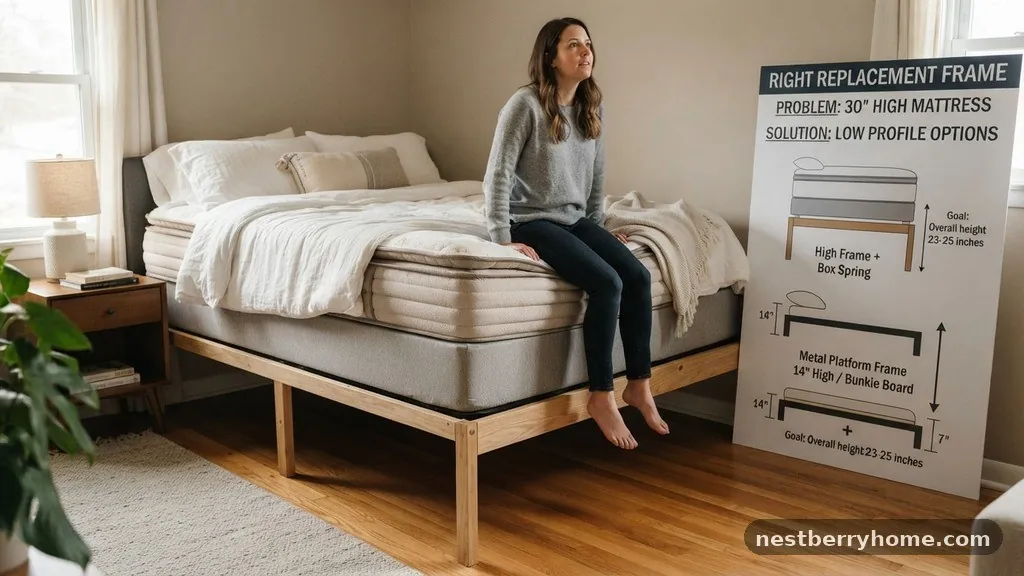
When you decide to replace your frame to solve the height issue, look for “low-profile” or “platform” models. These are specifically marketed for people who want a sleek, modern look and easier access to the mattress. Many of these frames are made from solid wood or steel and are designed to hold the mattress directly, eliminating the need for a box spring entirely.
Check the weight capacity of any new frame you consider. Because pillow-top mattresses are heavy, you need a frame that provides robust support across the entire surface. Look for frames that have a high number of slats or a solid deck to prevent the mattress from bowing in the middle over time.
Consider the assembly requirements of a new frame. Some platform beds come in one or two pieces, while others require full assembly of a dozen or more slats. If you have mobility issues, a simpler, one-piece frame might be worth the extra investment for the ease of setup.
Managing Under-Bed Storage Constraints
Many people use the space under their bed for seasonal storage, and lowering the bed height can create a conflict. If you need to retain this storage, look for beds that feature built-in drawers. These are often integrated into the frame itself, meaning they do not rely on the height of the frame to provide utility.
Alternatively, you can look for “raised” platform beds that offer a specific clearance height. Some frames are designed to sit at a medium height—around 12 to 14 inches—which is low enough to be accessible but high enough to accommodate shallow storage bins. This is often the “sweet spot” for those who want the best of both worlds.
Avoid the temptation to use bed risers if you can avoid them, as they can be unstable. If you must use them, ensure they are high-quality, wide-based units designed for heavy furniture. A 30-inch bed is already high, and adding risers to an already tall setup can create a safety hazard if the bed becomes top-heavy.
FAQ on Bed Height and Comfort
Why do modern mattresses feel so much taller than older ones?
Manufacturers now include more layers of comfort materials, such as memory foam, latex, and cooling gels, on top of the traditional coil base. These additional inches are designed to provide better pressure relief and support, but they naturally add to the total vertical profile of the mattress.
Is it safe to put a mattress directly on the floor?
While you can place a mattress on the floor, it is generally not recommended as it lacks airflow. This can lead to moisture buildup, mold, and dust accumulation beneath the mattress. A platform base or slatted frame is much better for the longevity of your sleep system.
Can I cut the legs off my current bed frame?
In theory, you can, but it is rarely a good idea. Most bed frame legs are engineered for stability and balance; cutting them can create an uneven surface, weaken the structure, and potentially cause the frame to collapse under the weight of a heavy pillow-top mattress.
How do I know if my box spring is a “standard” or “low-profile” model?
A standard box spring is usually 9 inches tall, while a low-profile foundation typically measures between 2 and 5 inches. You can easily verify this by measuring the side of your foundation with a tape measure.
Does bed height affect the quality of sleep?
Bed height itself does not directly change the quality of your sleep, but it does affect your physical ease when getting in and out of bed. If your bed is too high or too low, the physical exertion required to transition into or out of the mattress can cause muscle strain and disrupt your sleep quality.
Summary of Adjustments
Addressing the situation when your modern pillow-top mattress sits 30 inches high off the floor requires a methodical approach to your furniture components. By focusing on your foundation, frame, and overall room balance, you can effectively lower your sleep surface to a height that feels natural and safe. Whether you opt for a low-profile foundation, a platform bed frame, or simply shorter legs for your current setup, the goal is to prioritize your physical comfort.
These adjustments will not only make your bedroom more accessible but will also ensure that your expensive mattress remains properly supported. Take the time to measure your current components and compare them against the alternatives to find the right solution for your home. You will find that even small changes to the base of your bed can significantly improve your daily experience and restore the balance of your bedroom space.