

Floating Wall-Mounted Nightstands: Best Height from Finished Bedroom Floor
Selecting the perfect installation point for floating wall-mounted nightstands requires a balance between aesthetic appeal and daily convenience. When you plan your bedroom layout, ensuring the furniture aligns correctly with your mattress height prevents awkward reaching and creates a cohesive, modern look. Many homeowners struggle with the exact vertical placement, often mounting units too low or too high for their specific bed frame.
This article explores the precise measurements and ergonomic considerations you need to achieve a professional installation. By understanding how to align these pieces with your sleeping surface, you can transform the functionality and visual flow of your personal sanctuary.
Determining the ideal placement for floating wall-mounted nightstands usually lands between 24 and 28 inches from the finished bedroom floor to the top surface of the unit. Most interior designers suggest aligning the top of the nightstand to be level with the top of your mattress or slightly above it by 1 to 2 inches. This height range ensures that your phone, lamp, or book remains within easy reach while you are lying in bed.
If your mattress sits particularly high, such as on a box spring and a thick pillow-top, you might need to adjust toward the 30-inch mark. Conversely, platform beds often require a lower mounting position to maintain the proper ergonomic relationship.
Understanding Mattress Height and Ergonomics

Your mattress height acts as the primary anchor for all bedside furniture decisions. Before you drill into your wall, measure from the floor to the very top of your mattress, including any toppers or protectors. A standard mattress setup often sits around 25 inches, which makes the 26-inch mark a highly popular choice for floating nightstand installation.
This slight elevation allows you to reach for a glass of water or a charging device without straining your arm or shoulder. When the surface is too low, you end up bending awkwardly, which defeats the purpose of a convenient bedside unit.
Ergonomics play a vital role in how you interact with your bedroom space every night. If you frequently read in bed, the height of your lamp shade should be considered in relation to your eye level. A nightstand that is too high can cause the lamp bulb to shine directly into your eyes rather than casting a soft, downward glow.
By keeping the unit roughly even with the mattress top, you maintain a clear line of sight and keep the bedroom lighting balanced. Always test the height by sitting on the edge of your bed before finalizing the wall brackets.
Tools and Preparation for Accurate Mounting

Accuracy during the installation process prevents unnecessary holes in your drywall or plaster. You will need a high-quality stud finder, a spirit level, and a reliable tape measure to ensure the piece stays perfectly horizontal. Floating wall-mounted nightstands rely entirely on the strength of the wall, so locating studs is non-negotiable for safety.
If you cannot align the bracket with a stud, use heavy-duty toggle bolts or appropriate anchors designed for the weight of your specific furniture. Never rely on simple screws into drywall, as the repetitive weight of items placed on the unit will eventually cause it to pull away from the wall.
Preparation also involves marking the desired height on a piece of painter’s tape rather than writing directly on your wall paint. Once you have determined the center point of the unit, hold the bracket against the wall and check it with your level one last time. It is often helpful to have a second person hold the unit in place while you step back to check the visual proportions.
This extra step allows you to see if the chosen height feels right in the context of the entire room. Small adjustments of half an inch can make a significant difference in how the unit feels once it is permanently fixed.
Impact of Bed Frame Design on Installation
The style of your bed frame dictates whether a floating unit will look balanced or out of place. Traditional beds with thick frames and headboards often benefit from slightly higher nightstand placements to avoid the furniture looking swallowed by the bed. Platform beds, which typically have a lower profile, look better when the nightstand is kept closer to the floor.
If you have a low-profile bed, mounting your nightstand at 20 or 22 inches might be necessary to keep the proportions tight and modern. Consider the visual weight of the headboard when deciding on the final vertical position.
The relationship between the nightstand and the headboard is a key element of modern bedroom design. If your headboard is wide, it can create a natural frame that helps integrate the floating piece into the wall. You should aim for a gap of at least 2 to 3 inches between the edge of the headboard and the side of the nightstand.
This prevents the pieces from looking crowded and allows for easier access to the space behind the bed. If your bedroom is small, keeping these proportions clean is essential to preventing the room from feeling cluttered or overwhelmed by furniture.
Comparing Fixed vs. Adjustable Mounting Systems
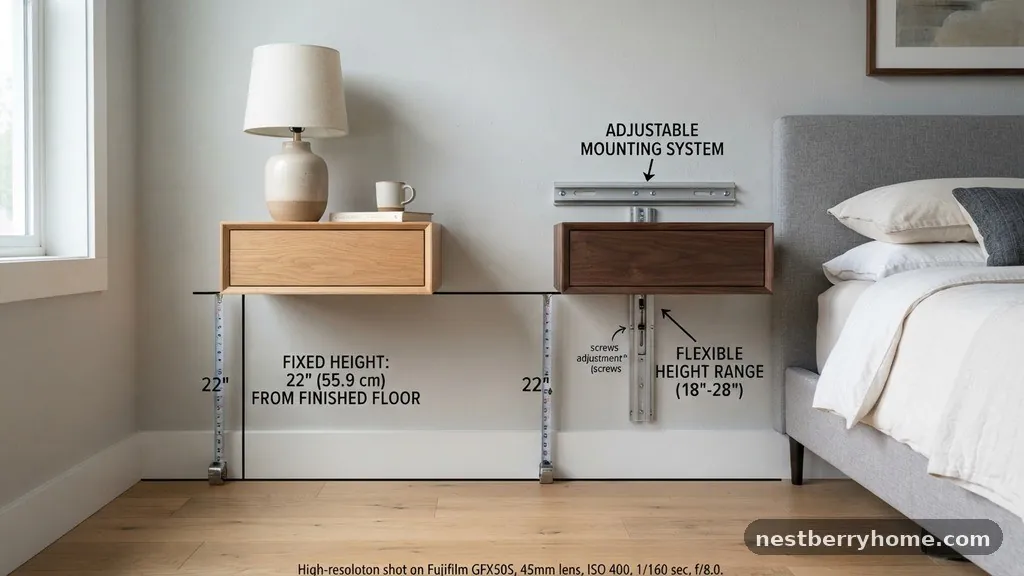
Many modern units come with French cleat systems or heavy-duty steel brackets that offer varying levels of adjustability. A French cleat is particularly useful because it allows the unit to sit flush against the wall while providing a small amount of lateral movement. This can be a life-saver if your stud placement is slightly off-center from where you want the nightstand to sit.
Some manufacturers provide slotted mounting holes that allow you to shift the unit up or down by a fraction of an inch after the initial installation. Taking advantage of these features can make achieving the perfect height much easier.
If you choose a unit with fixed mounting points, you must be significantly more precise with your initial measurements. These units are often more stable, but they provide zero room for error once the pilot holes are drilled. Always read the manufacturer’s manual carefully, as they often include a recommended height range specific to their product’s design.
If the instructions suggest a height that contradicts your personal comfort, prioritize your own ergonomic needs, provided the structural integrity remains uncompromised. Below is a comparison of common mounting hardware types used for these pieces:
| Mounting Type | Adjustability | Best Use Case |
|---|---|---|
| French Cleat | High (Lateral) | Heavy units or uneven stud spacing |
| Keyhole Bracket | Low | Lightweight shelves or minimal decor |
| Steel L-Bracket | None | Maximum structural support |
| Slotted Rail | Medium (Vertical) | Fine-tuning height after installation |
Managing Cables and Charging Stations

Floating wall-mounted nightstands are frequently used as charging stations for phones, tablets, and smartwatches. Because these units are off the floor, managing the associated cables requires a bit of planning to avoid a messy appearance. Many designs now feature integrated cable management ports or hidden channels on the back of the unit.
If your chosen nightstand does not have these, consider installing a small cable grommet or using adhesive clips to secure cords against the wall. Keeping the area around the unit clear of dangling wires is essential for maintaining the clean, floating aesthetic that makes these pieces popular.
Placement of power outlets is another critical factor in your planning process. If your outlet is positioned too high, it might be visible above the nightstand, which ruins the streamlined look. Conversely, if the outlet is hidden behind the nightstand, you must ensure you have enough room for the plug to sit comfortably without pushing the unit away from the wall.
You can find useful advice on electrical safety and outlet placement at the National Fire Protection Association website. Always prioritize accessible power while keeping the hardware hidden from view whenever possible.
Styling Considerations for Floating Units
Once the installation is complete, the way you style the top surface affects how the height is perceived. A tall lamp on a nightstand that is already mounted high can look top-heavy and out of scale. Instead, opt for shorter, wider lamps or wall-mounted sconces that allow you to keep the nightstand surface uncluttered.
A single book, a small plant, or a decorative tray can add personality without making the furniture look like it is struggling to hold weight. The goal is to highlight the “floating” quality of the piece, so avoid piling it high with unnecessary items.
The color and material of the unit also influence how it interacts with the room’s overall design. Dark wood or matte black units can feel more substantial and might require a slightly lower mounting height to avoid feeling like they are “looming” over the bed.
Lighter finishes, such as white or natural ash, tend to disappear into the wall and can be mounted slightly higher without feeling overwhelming. When in doubt, mock up the position with painter’s tape to visualize how the specific finish will look in your unique lighting conditions.
Common Mistakes During Installation
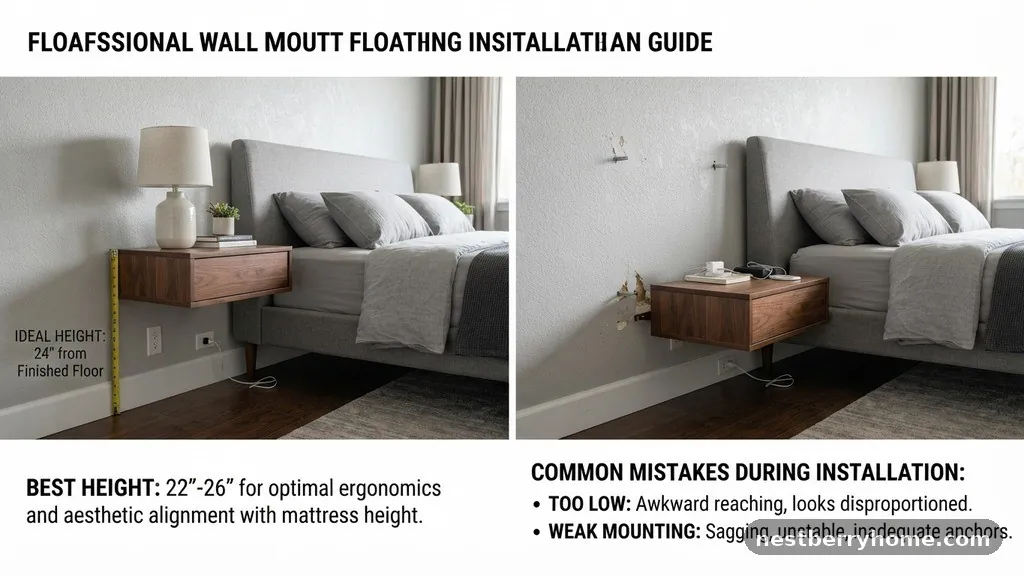
The most frequent error homeowners make is failing to account for the thickness of the floorboards or the baseboard molding. If your room has high baseboards, you must ensure the nightstand clears them entirely or is mounted high enough to sit above them. Trying to mount a unit partially over a baseboard will result in a tilted, unstable surface that looks unprofessional.
Always measure the height of your baseboards before finalizing your placement. If the nightstand must sit above the molding, factor that into your overall height calculation from the start.
Another common mistake is neglecting the clearance needed for drawer operation. If your nightstand has a drawer, ensure that you have enough room to pull it out fully without it hitting the bed or other bedroom furniture. Similarly, check that the drawer does not conflict with any nearby light switches or door frames when opened.
A beautiful, floating unit is useless if its primary function is hindered by a poorly planned installation. Double-check the swing and slide radius of all moving parts before you commit to your final height.
Advantages of a Floating Design
Opting for floating wall-mounted nightstands offers several practical benefits beyond just visual appeal. The most significant advantage is the ease of cleaning the floor underneath the unit. Since there are no legs to navigate, you can vacuum or sweep the entire bedroom floor without moving heavy furniture.
This creates a more hygienic environment and prevents dust bunnies from accumulating in hard-to-reach corners. For smaller rooms, the open floor space makes the entire area feel larger and more airy.
These units also offer a level of flexibility that traditional furniture cannot match. You are not locked into a specific footprint, meaning you can easily reconfigure your room layout if you decide to change your bed size in the future. If you decide to move, the brackets can be removed and the holes patched, leaving no permanent damage to the room’s floor.
This makes them a perfect choice for renters or those who enjoy refreshing their home decor frequently. The combination of utility, style, and space-saving design makes them a top choice for modern interiors.
Frequently Asked Questions
What is the best way to determine the height if my bed is adjustable?
For an adjustable bed, you should set the mattress to your most common sleeping or lounging position. Measure the height at this setting, then mount the nightstand so it aligns with this level. If the bed moves significantly, prioritize the height that feels most comfortable when the bed is in its “flat” or sleeping position.
Should the nightstand be exactly level with the mattress?
Most designers recommend aligning the top of the nightstand to be level with the mattress surface or up to 2 inches higher. This provides a comfortable reach while keeping the nightstand from feeling too low or awkward. It is largely a matter of personal preference, but staying within this 0-2 inch window is the safest bet for daily use.
Can I mount a floating nightstand on a studless wall?
It is generally not recommended to mount heavy furniture to standard drywall without hitting studs. If you cannot align the unit with studs, you must use heavy-duty toggle bolts or specialized drywall anchors capable of supporting the weight of the unit plus whatever items you place on it. Always check the load-bearing capacity of the anchors before proceeding.
How far away from the bed should the nightstand be?
You should aim for a gap of roughly 2 to 4 inches between the side of your mattress and the nightstand. This allows enough space for your bedding to hang naturally and prevents the nightstand from feeling cluttered or difficult to access. It also provides enough room to easily adjust the sheets without bumping into the furniture.
Are there specific trends for nightstands in 2026?
Current trends focus on minimalist, organic materials and hidden storage features. Many people are moving toward light wood tones, integrated wireless charging pads, and asymmetrical shapes. The emphasis remains on maximizing floor space, which continues to drive the popularity of floating wall-mounted units over traditional legged tables.
Final Thoughts on Bedroom Aesthetics
Achieving the perfect look with floating wall-mounted nightstands requires careful measurement and a clear understanding of your specific bed frame. By prioritizing the 24 to 28-inch range and ensuring your installation is structurally sound, you create a functional and stylish bedroom that serves your needs for years to come. Remember that small adjustments based on your personal height and room layout are perfectly acceptable, as long as you maintain the ergonomic relationship between your mattress and the unit surface.
Take your time during the planning phase to map out your power needs, stud locations, and clearance requirements. A well-installed piece of furniture adds a level of sophistication and order that makes a room feel complete.
If you follow these guidelines, you will find that your new setup provides the ideal balance of convenience and modern design. We hope this information helps you approach your bedroom project with confidence and creates a space you truly enjoy.