Minimum Clearance Between Nightstand Edge and Bedroom Door Swing Path
Determining the minimum clearance between nightstand edge and bedroom door swing path is a critical step in effective interior design. Many homeowners overlook this physical interaction until the furniture is already in place, leading to chipped door frames or scratched nightstand finishes. By measuring your floor plan accurately before buying bedroom furniture, you ensure that your room remains functional and aesthetically pleasing.
Proper planning prevents the frustration of a door that hits an obstacle every time you enter or leave the space. This article provides the precise measurements and spatial considerations necessary to build a comfortable, accessible bedroom layout that respects your door’s range of motion.
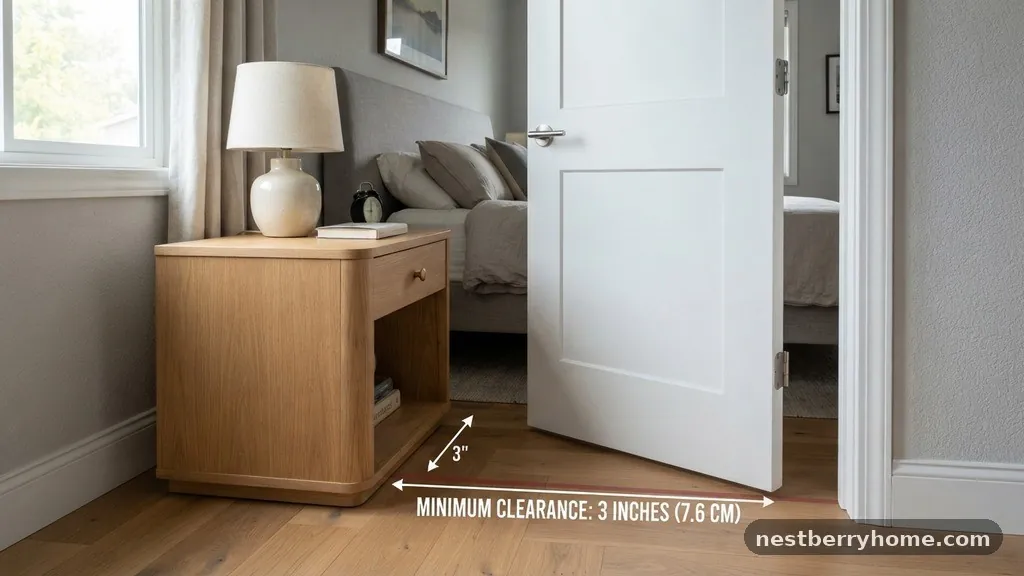
The absolute minimum clearance required to avoid a collision is 3 to 4 inches of buffer space beyond the furthest reach of the door handle. In an ideal scenario, however, you should aim for at least 6 to 10 inches of space between the nightstand edge and the door swing path. This extra buffer accounts for the thickness of the door frame, the protrusion of the door handle, and the potential for a nightstand to be bumped or shifted over time.
If your space is extremely tight, you might consider a wall-mounted nightstand or a floating shelf to minimize the footprint. Always measure from the wall where the door hinges are located to ensure you are accounting for the full arc of the door.
Understanding the Mechanics of Door Swings
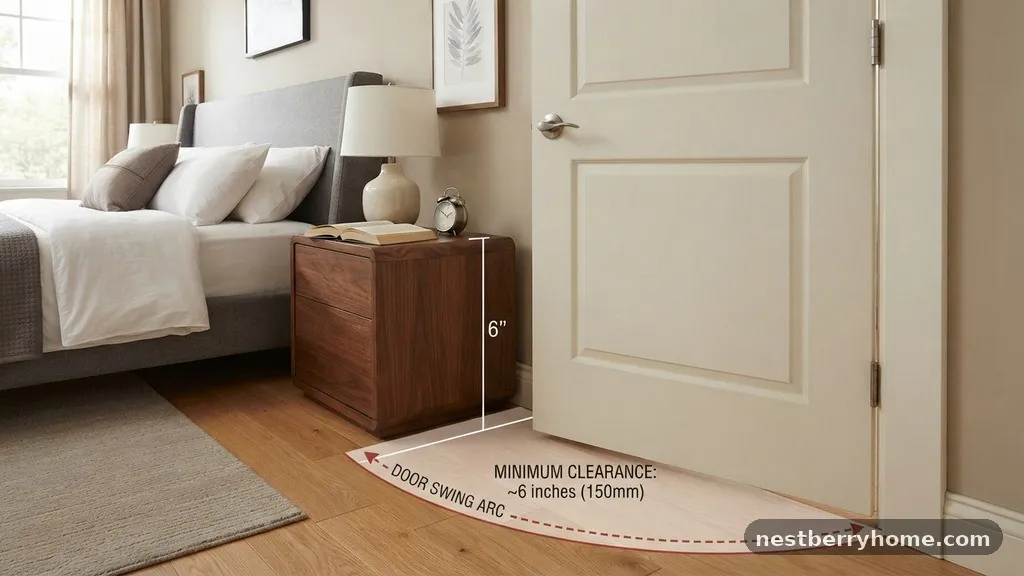
Every bedroom door operates on a hinge mechanism that creates a circular arc when opened. You must calculate the radius of this arc based on the width of your door, which is typically 30 to 36 inches in modern residential construction.
The door swing path is not just the door panel itself but also the hardware attached to it. Door handles and knobs extend outward, meaning the effective sweep of the door is slightly wider than the panel width.
When you place a piece of furniture near a door, you are essentially creating a collision zone. If the door swings toward the nightstand, even a small error in placement can lead to constant contact. This constant friction will damage your nightstand’s finish and potentially strip the paint or wood from the door itself.
Always visualize the door at a full 90-degree angle to see where the handle terminates. If the handle lands within a few inches of your furniture, you have not provided enough room for safe operation.
The Impact of Furniture Depth and Height
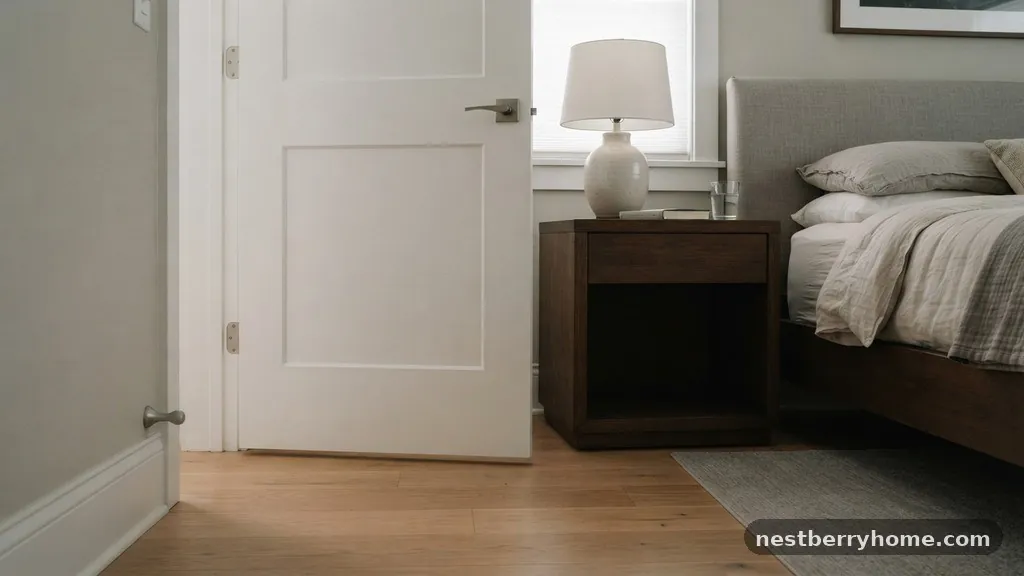
The physical dimensions of your nightstand play a major role in how much space you need to maintain. A deep nightstand, such as one measuring 20 to 24 inches in depth, will naturally protrude further into the room than a slim, modern alternative.
If you have a small room, choosing a shallower piece of furniture can save you precious inches of floor space. Consider the height of the nightstand in relation to the door handle as well.
If your nightstand is significantly lower than the door handle, the door might swing over the top of it without hitting the frame. However, this creates a dangerous “pinch point” where the door could trap items or fingers. It is generally safer to keep the entire footprint of the nightstand outside the arc of the door swing.
You can verify your layout by using masking tape on the floor to mark the full sweep of the door. This visual aid is much more effective than relying on mental estimates during a furniture shopping trip.
Calculating Clearance for Different Bed Sizes
Bed size directly influences where you place your nightstands, which in turn affects your door clearance. A king-size bed is significantly wider than a queen-size bed, pushing your nightstands closer to the perimeter of the room.
If your bedroom is narrow, placing a king bed might force the nightstand directly into the path of the door. You must balance the desire for a large mattress with the reality of your floor space.
If you find that a king bed leaves you with no room for a nightstand, consider placing the nightstand only on the side away from the door. Alternatively, you can use a wall-mounted shelf on the side near the door to maintain a slim profile.
This strategy provides a surface for your phone or book without requiring the floor space of a traditional nightstand. Always prioritize the accessibility of the room over the symmetry of the furniture layout.
Strategic Placement and Room Flow

The flow of traffic in a bedroom is just as important as the placement of individual furniture pieces. You should be able to enter the room, walk to the bed, and move around the space without feeling cramped.
If your nightstand is positioned too close to the door, it creates a bottleneck that makes the room feel smaller than it actually is. Try to keep a clear walkway of at least 30 inches from the door to the primary walking path in the room.
If you are struggling to find the right spot, consider shifting the entire bed configuration. Sometimes moving the bed a few feet toward the opposite wall can clear the door swing path entirely.
You might also consider using a dresser or a bench at the foot of the bed instead of a nightstand if space is at a premium. Flexibility in your furniture choices is the key to creating a bedroom that functions well for your specific floor plan.
Tools and Methods for Accurate Measurement
Measuring for the minimum clearance between nightstand edge and bedroom door swing path requires precision tools. A simple tape measure is your best friend, but a laser distance measurer can provide even faster results.
Start by closing the door and measuring the distance from the wall to the outer edge of the door casing. Open the door fully and mark the floor where the handle travels.
Once you have these points marked, you can place your furniture and check the clearance. If you are ordering furniture online, use the provided dimensions to map out the footprint on your floor before you commit to a purchase.
You can use old cardboard boxes to simulate the size of the nightstand in your room. This physical mock-up is often better than any digital drawing because it allows you to walk around the space and test the actual clearance.
Common Mistakes to Avoid
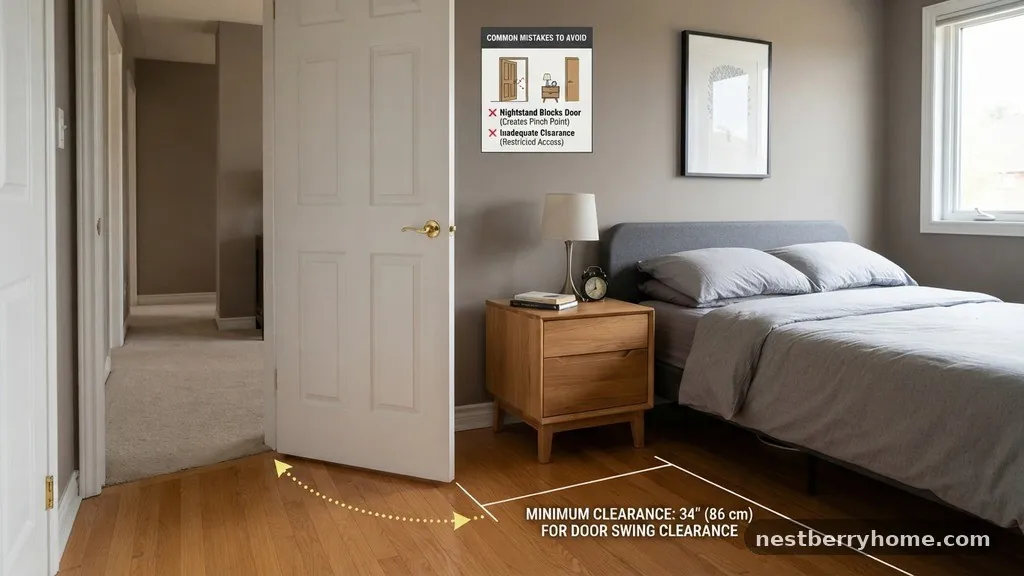
One of the most frequent errors is failing to account for the thickness of the door casing when calculating the swing. The door frame itself adds roughly 2 to 3 inches to the width of the opening, which can drastically change your math.
Another common mistake is ignoring the depth of the door handle. A decorative knob or a long lever handle can extend several inches further than the door panel itself.
People also often forget that rugs or carpet can affect how a door swings. If your rug is thick or has a high pile, it might cause the door to drag or even hit the furniture if the door is slightly misaligned.
Ensure your flooring is level and your door is properly hung before finalizing your furniture placement. For more tips on room dimensions and safety, you can review the standards provided by the International Association of Certified Home Inspectors regarding residential clearance requirements.
Selecting Appropriate Furniture Types
When space is tight, the type of nightstand you choose makes a massive difference. Pedestal-style nightstands with a single central leg often feel lighter and take up less visual space than boxy, four-legged designs.
You might also opt for a nightstand with rounded edges, which are more forgiving if you accidentally brush against them. If you need storage, look for wall-mounted cabinets that provide drawer space without touching the floor.
Glass-topped or acrylic nightstands are another option for small bedrooms. These pieces are visually transparent, which helps the room feel less cluttered even if the furniture is close to the door.
Avoid heavy, dark wooden furniture in tight spaces, as these pieces draw the eye and emphasize the lack of clearance. Instead, choose light colors or reflective surfaces to make the area around the door feel more open.
Managing Small Bedroom Layouts

If your bedroom is truly small, you may need to think creatively about your storage needs. If you cannot fit a nightstand near the door, consider using a headboard with built-in shelves or integrated lighting.
This removes the need for a separate piece of furniture entirely. You can also install a small, wall-mounted swing-arm lamp to save space on your bedside surface.
Every inch counts in a compact room, so be ruthless about removing unnecessary items. If you have a dresser that is blocking the path, consider moving it to a closet or a different room.
A bedroom should be a place of rest, not a storage unit for excess furniture. Focusing on the essentials will help you maintain the required clearance while keeping the room comfortable.
Comparison of Clearance Requirements
Understanding the relationship between furniture depth and door swing helps you choose the right pieces. The following table illustrates how different nightstand depths affect the clearance needed based on a standard 32-inch door.
| Nightstand Depth | Door Swing Radius | Recommended Clearance | Resulting Space |
|---|---|---|---|
| 15 Inches | 32 Inches | 6 Inches | Ample |
| 18 Inches | 32 Inches | 6 Inches | Moderate |
| 22 Inches | 32 Inches | 6 Inches | Tight |
| 26 Inches | 32 Inches | 6 Inches | Likely Collision |
Frequently Asked Questions
How can I tell if my door will hit my nightstand?
You can easily check this by opening the door completely and placing a piece of painter’s tape on the floor where the handle reaches. If the nightstand overlaps this line, you will likely have a collision.
Does the nightstand height matter for door clearance?
Yes, it matters if the door handle is at a height that could strike the side or front of the nightstand. If your nightstand is significantly shorter than the handle, the door might pass over it, but this can create a hazardous trap for items or fingers.
What if I have no other place to put the nightstand?
If you are out of floor space, consider a wall-mounted shelf or a floating nightstand. These options provide the functionality of a surface without the footprint that interferes with the door’s operation.
Can I use a door stop to prevent hitting my furniture?
A door stop is a great temporary solution to prevent damage. However, it will limit how far your door can open, which might make the entrance to your room feel narrow or restricted.
Is there a standard for bedroom furniture spacing?
While there is no single law, most interior designers recommend at least 24 to 30 inches of space around the sides of a bed for comfortable movement. When it comes to doors, safety and ease of access take precedence over these general guidelines.
Conclusion
Achieving the proper minimum clearance between nightstand edge and bedroom door swing path is essential for both the longevity of your furniture and the daily functionality of your home. By taking the time to measure your space accurately and choosing furniture that fits your room’s specific dimensions, you can avoid the common pitfalls of a cramped layout. Remember that your goal is to create a peaceful environment where every piece of furniture serves a purpose without hindering your movement.
Whether you opt for a floating shelf or a smaller nightstand, prioritize the path of your door to ensure your bedroom remains a relaxing, accessible sanctuary. Take these measurements today to save yourself from future frustration and keep your bedroom layout perfectly balanced.