How to Decorate a Bedroom with Modern Furniture
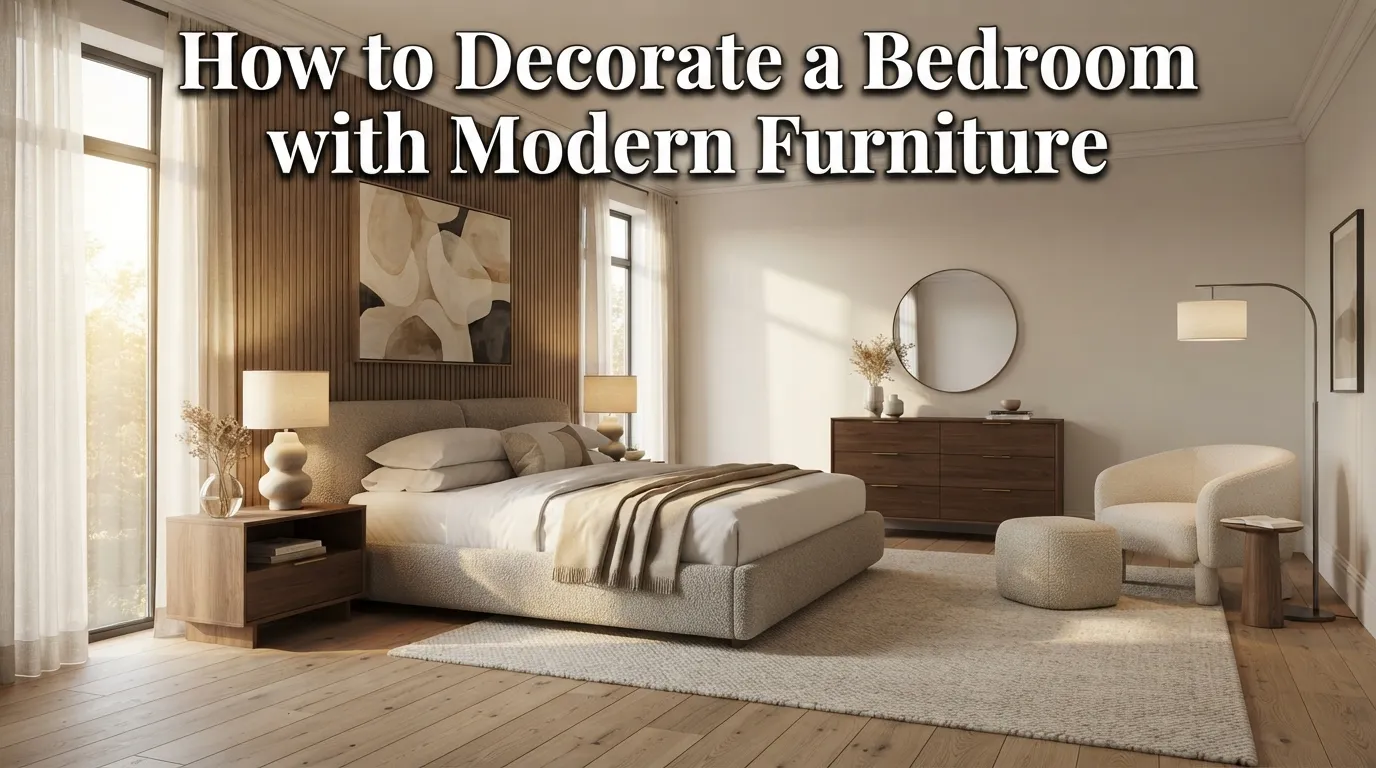
Modern furniture has a reputation for feeling cold. Clean lines, minimal ornamentation, sleek finishes — on paper, it sounds more like a showroom than a bedroom you actually want to sleep in. In my experience helping people rethink their bedrooms, that’s almost never a furniture problem. It’s a styling problem. Modern pieces are some of the most versatile on the market, but they need the right supporting cast to feel warm instead of sterile.
A mistake many homeowners make is buying a modern bed frame or nightstand and assuming the room will style itself. It won’t. Modern design relies heavily on balance — texture against smooth surfaces, warmth against cool tones, negative space against intentional clutter. Without that balance, a modern bedroom can feel unfinished no matter how expensive the furniture is.
I’ve noticed the bedrooms that actually feel restful, not just photogenic, are the ones where every element earns its place. Nothing is there by accident, but nothing feels overly precious either. That’s the real goal of modern design: a room that looks effortless because someone thought about it carefully.
This guide breaks down ten practical ways to decorate a bedroom around modern furniture, from layout and lighting to texture and color. Each idea explains why it works and exactly how to bring it into your own space, whether you’re starting from scratch or working around pieces you already own.
Table of Contents
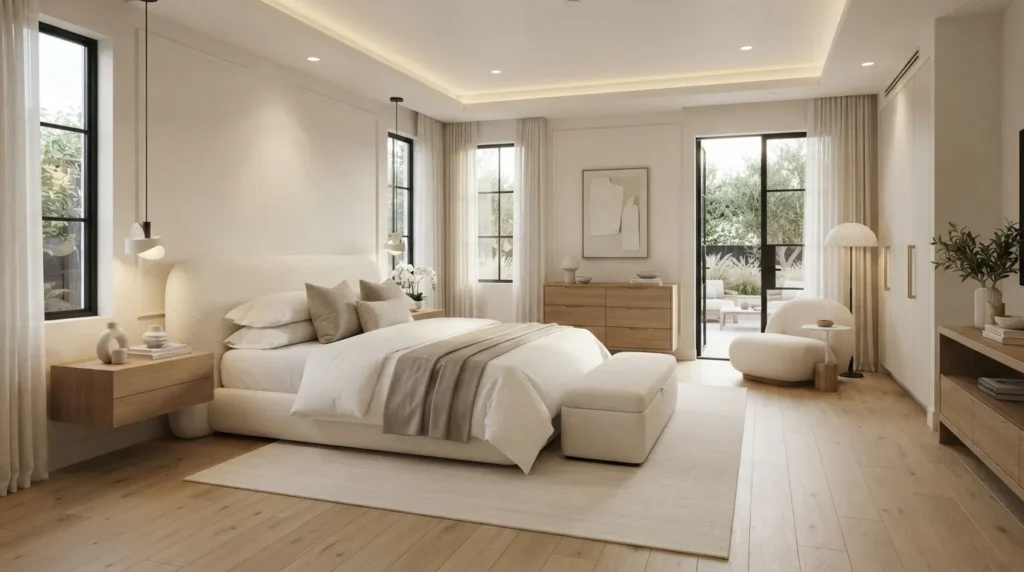
- Low Profile Bed Frame — Anchoring the room with modern scale and proportion.
- Neutral Base Palette — Building a calm backdrop that lets furniture stand out.
- Mixed Metal Accents — Adding contrast without breaking the modern feel.
- Statement Lighting Fixture — Using light as sculpture, not just function.
- Layered Textile Warmth — Softening clean lines with texture.
- Floating Nightstands — Maximizing openness and visual lightness.
- Curated Wall Gallery — Adding personality without visual clutter.
- Negative Space Balance — Letting the room breathe between pieces.
- Natural Material Contrast — Pairing modern shapes with organic texture.
- Functional Accent Seating — Rounding out the room with purpose and style.
1. Low Profile Bed Frame
Quick Benefits
- Creates an instantly modern silhouette
- Makes ceilings feel higher by comparison
- Works in both small and large rooms
- Pairs easily with any headboard style
- Simplifies the room’s visual weight
Why It Works
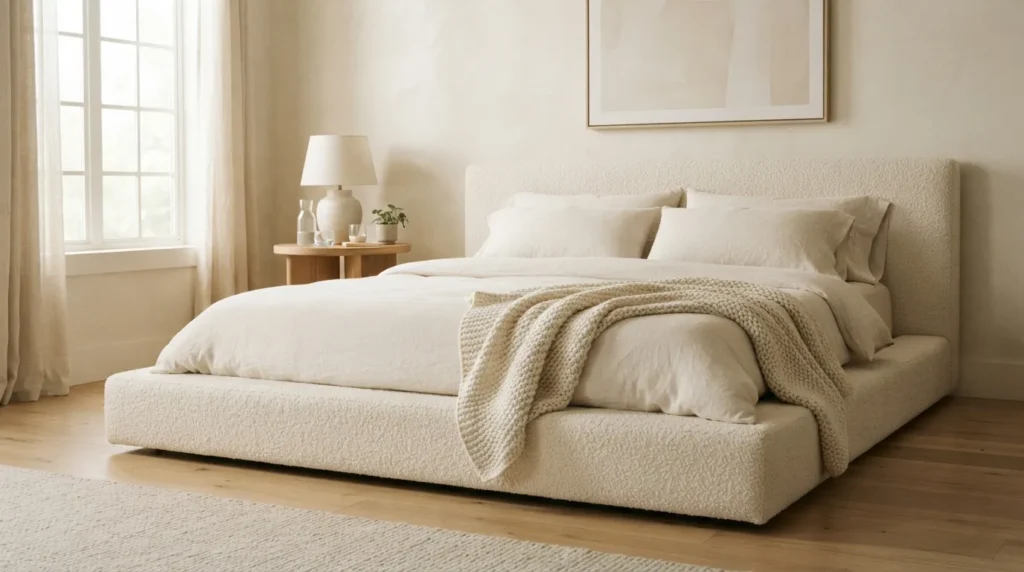
Modern furniture leans heavily on proportion, and nothing sets that proportion like the bed. A low-profile frame, often sitting closer to the floor than a traditional bed, immediately signals a modern aesthetic before a single accessory is added. In my experience, this single choice does more to define the room’s style than any other piece of furniture, since the bed is almost always the visual anchor.
Lower frames also create the illusion of more vertical space in the room, which is especially useful in bedrooms with standard eight- or nine-foot ceilings.
How To Style It
Choose a frame with clean, straight lines and minimal ornamentation — upholstered platform frames in linen or boucle are especially popular right now for softening the modern edge. Keep the headboard simple; an oversized, ornate headboard fights against the low profile you’re trying to create. If your current frame sits high off the ground, a slim platform base or even removing a box spring can shift the entire feel of the room without a full furniture swap.
2. Neutral Base Palette
Quick Benefits
- Lets furniture silhouettes take center stage
- Creates a calm, restful atmosphere
- Easy to update with seasonal accents
- Works with nearly any modern furniture finish
- Photographs cleanly for a curated look
Why It Works
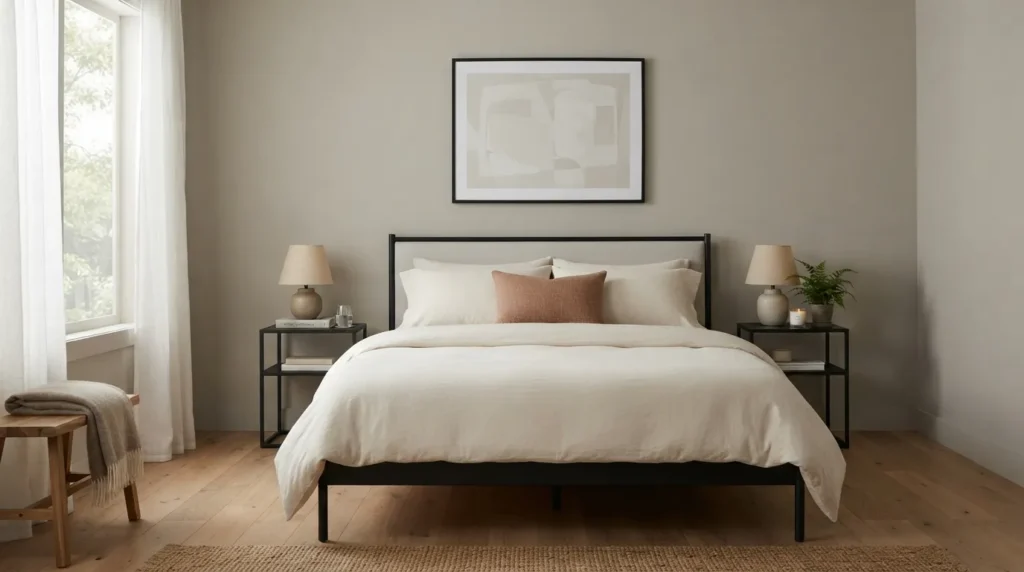
One thing that works especially well with modern furniture is restraint in the background. Bold wallpaper or heavily patterned walls compete with the clean lines modern pieces are known for. A neutral palette — soft white, warm gray, greige, or a muted earth tone — acts as a canvas rather than another design element fighting for attention.
That’s why many designers recommend finalizing the wall color last, after the furniture is chosen, so the palette can be built around the pieces rather than the other way around.
How To Style It
Stick to one dominant neutral across the largest surfaces — walls, and if possible, flooring or an area rug. Introduce warmth through one or two accent tones in bedding or art rather than the walls themselves. If your existing walls are already a stark, cool white, consider a warmer off-white or soft greige to prevent the room from feeling clinical next to sleek modern furniture finishes like matte black or chrome.
3. Mixed Metal Accents
Quick Benefits
- Adds visual interest without clutter
- Ties together lighting, hardware, and decor
- Prevents the room from feeling flat
- Works with almost any furniture finish
- Easy to update without replacing furniture
Why It Works
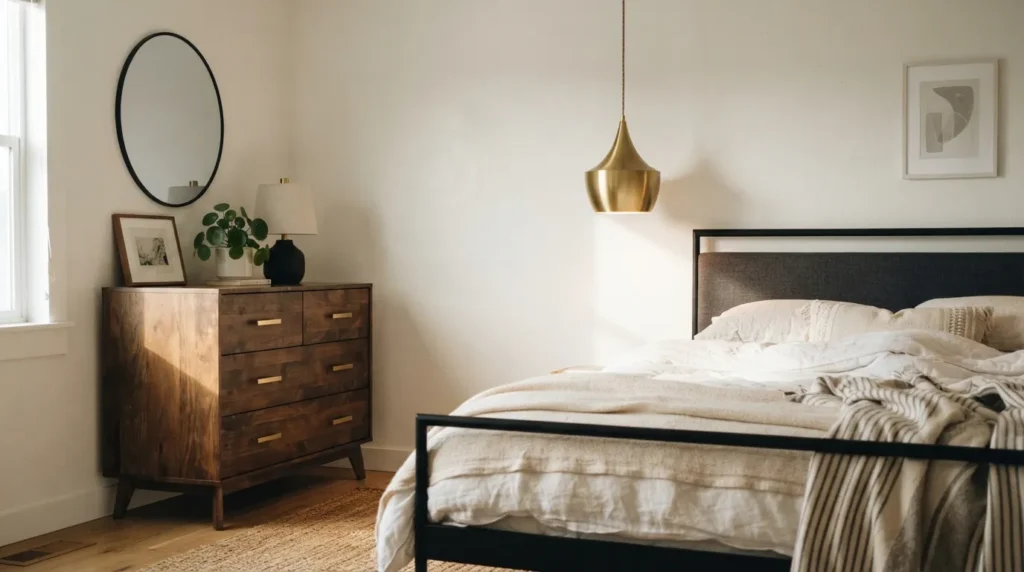
Modern rooms can feel one-note when every metal finish matches exactly. Mixing two complementary metals — like matte black and brushed brass, or brushed nickel and warm gold — adds depth without introducing pattern or color. I’ve seen this idea transform spaces that otherwise felt flat despite having genuinely nice furniture, simply because everything was too uniform.
How To Style It
Pick one dominant metal (often whatever’s already on your major furniture pieces) and one secondary accent metal for smaller elements like lamp bases, drawer pulls, or picture frames. A matte black bed frame pairs well with brushed brass lighting and hardware, for example. Avoid using more than two metal finishes in one room — beyond that, the mix starts to look accidental rather than intentional.
4. Statement Lighting Fixture
Quick Benefits
- Acts as functional sculpture in the room
- Draws the eye upward for better proportion
- Elevates the room without new furniture
- Creates a strong focal point over the bed
- Easy to swap without a full redesign
Why It Works
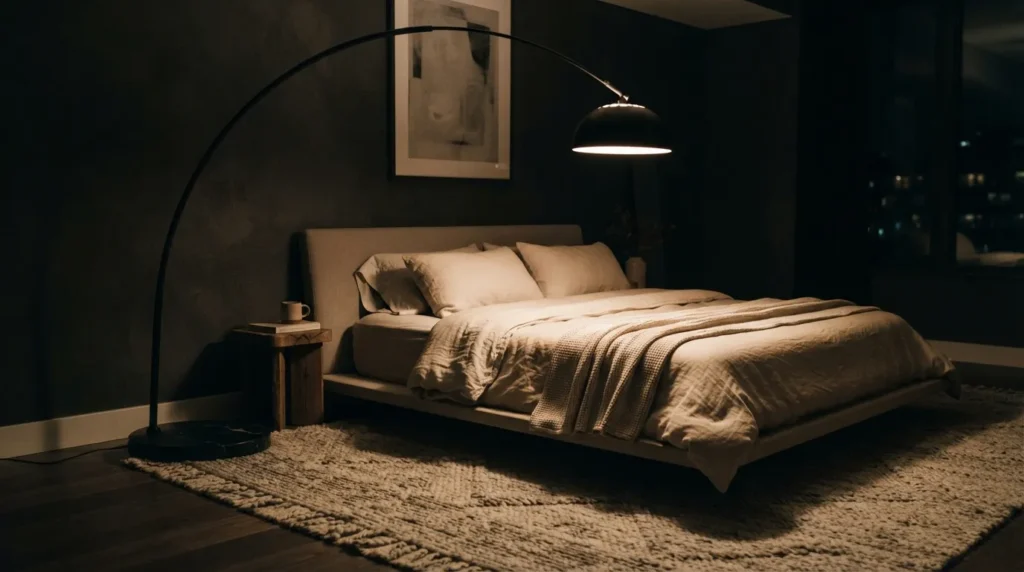
Modern design treats lighting as an object worth looking at, not just a source of illumination. A sculptural pendant, an oversized arc floor lamp, or an architectural sconce does double duty as both function and decor. A mistake many homeowners make is defaulting to a plain flush-mount ceiling fixture, which does nothing to reinforce the modern style already established by the furniture.
How To Style It
If ceiling height allows, a single statement pendant centered above the room or offset to one side of the bed creates immediate visual interest. In rentals or rooms without overhead wiring, a sculptural floor lamp beside the bed achieves a similar effect. Choose a fixture with a clean geometric shape — sphere, arc, or angular metal frame — to stay consistent with the modern furniture’s simple lines.
5. Layered Textile Warmth
Quick Benefits
- Softens the coldness of clean furniture lines
- Adds color and pattern without repainting
- Makes the bed the room’s focal point
- Easy and affordable to rotate seasonally
- Improves everyday comfort
Why It Works
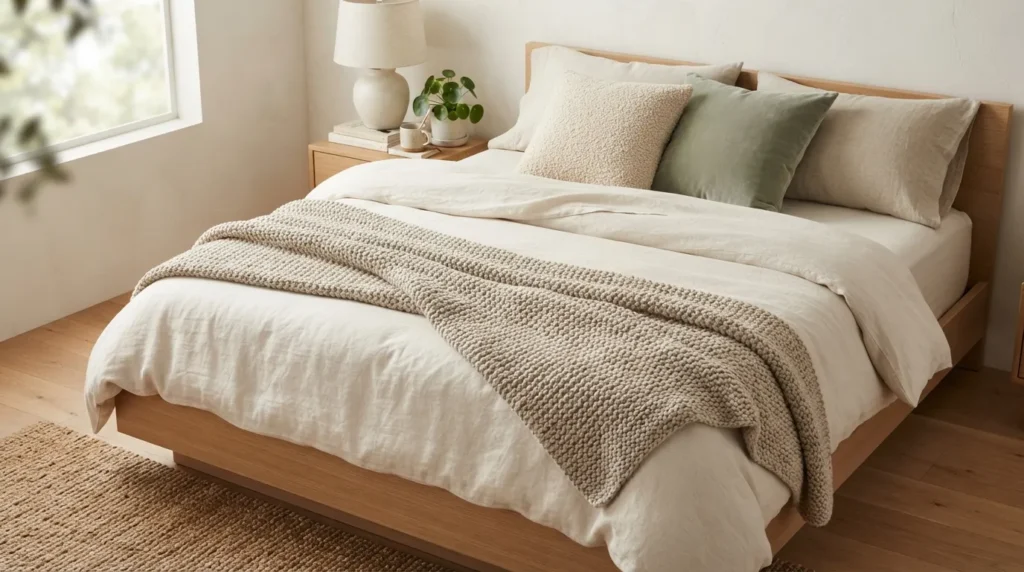
This is the single most important idea on this list for making modern furniture feel livable rather than showroom-cold. Clean-lined furniture needs texture to soften it, and textiles are the easiest way to introduce that without compromising the aesthetic. One simple trick I always suggest is layering at least three different textures on the bed — a woven throw, a knit pillow, a smooth duvet — even within a tightly controlled color palette.
How To Style It
Start with a solid or subtly textured duvet in a neutral tone, then layer a chunky knit or woven throw across the foot of the bed. Add two to three pillows in varied textures — linen, boucle, velvet — staying within the same one or two-color family so the layering reads as intentional rather than mismatched. Swap the throw and pillow covers seasonally to keep the room feeling current without touching the furniture itself.
6. Floating Nightstands
Quick Benefits
- Creates a lighter, more open feel
- Makes small bedrooms feel larger
- Simplifies cleaning underneath
- Reinforces a sleek, modern silhouette
- Works well with low-profile bed frames
Why It Works
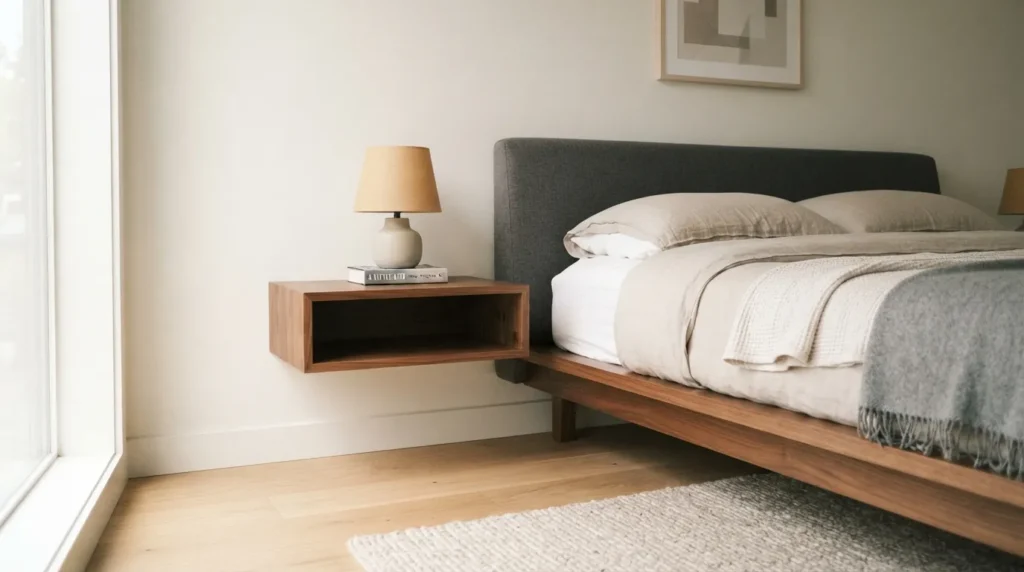
Floating, wall-mounted nightstands are a natural extension of modern design’s focus on visual lightness. Unlike traditional nightstands that sit heavy on the floor, a floating shelf or mounted cabinet appears to hover, which opens up the sightline across the room. In my experience, this is one of the most effective small upgrades for making a bedroom feel larger than it actually is.
How To Style It
Choose a floating nightstand at a height that aligns with or sits just below the top of your mattress for easy reach. Keep the surface styled with only one or two functional items — a small lamp and a single book, for example — since the visual lightness of the piece is lost if it’s cluttered. If wall-mounting isn’t possible in a rental, a nightstand with visible thin metal legs achieves a similar airy effect.
7. Curated Wall Gallery
Quick Benefits
- Adds personality to a minimal room
- Creates a focal point above the bed or dresser
- Inexpensive relative to furniture upgrades
- Easy to update over time
- Keeps the room from feeling too sparse
Why It Works
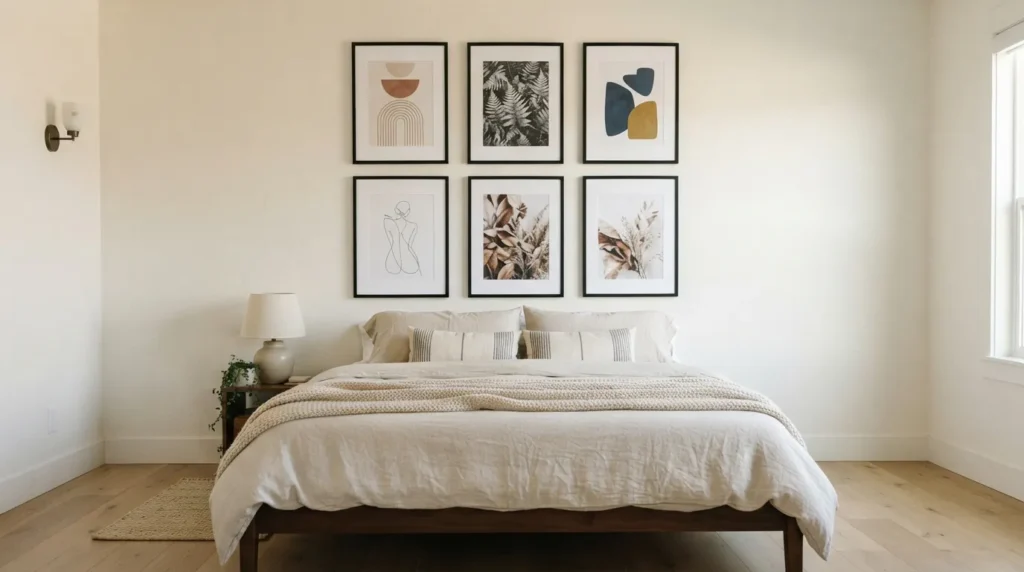
Modern furniture’s clean lines can tip into feeling impersonal if the walls are left completely bare. A curated gallery — a small, intentional grouping of art rather than a single oversized piece — adds personality while staying consistent with the room’s simplicity. I’ve noticed that bedrooms with zero wall decor are the ones most likely to feel unfinished, regardless of how good the furniture is.
How To Style It
Choose three to five pieces in a consistent frame color (black or natural wood works especially well with modern furniture) and vary the artwork itself — a mix of abstract shapes, photography, and simple line art. Arrange them in a loose grid above the headboard or dresser, leaving even spacing between frames. Avoid mixing too many frame colors or styles, which undercuts the clean, cohesive look modern furniture is built around.
8. Negative Space Balance
Quick Benefits
- Prevents the room from feeling cluttered
- Highlights the quality of key furniture pieces
- Creates a calmer, more restful atmosphere
- Makes small rooms feel more spacious
- Core principle of modern design overall
Why It Works
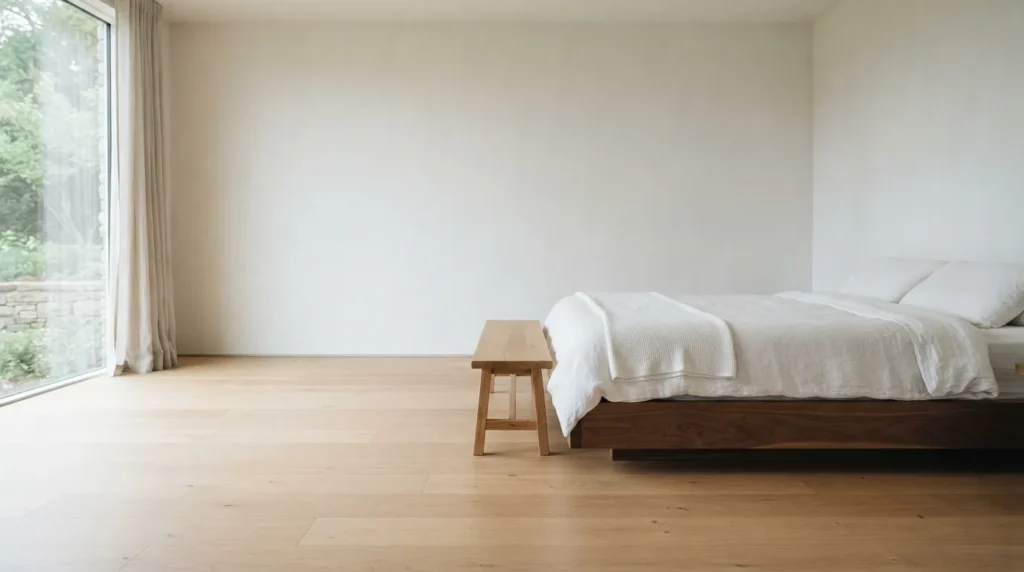
Negative space — the empty, unstyled areas of a room — is arguably the most defining feature of modern design, and the one most often ignored. A mistake many homeowners make is trying to fill every surface and corner, which fights against the very style they’re trying to achieve. Modern rooms rely on breathing room between furniture pieces to let each one stand out individually.
How To Style It
Resist styling every surface. Leave one wall, one corner, or even a portion of the dresser top intentionally bare. When arranging furniture, prioritize clear walking paths and visible floor space over maximizing storage or seating. If the room already feels tight, removing one piece of furniture entirely — even a nightstand or bench — often does more for the room’s overall feel than adding anything new.
9. Natural Material Contrast
Quick Benefits
- Warms up sleek, cool-toned furniture
- Adds texture without adding visual clutter
- Creates a grounded, livable feel
- Works with nearly any modern color scheme
- Balances hard surfaces throughout the room
Why It Works
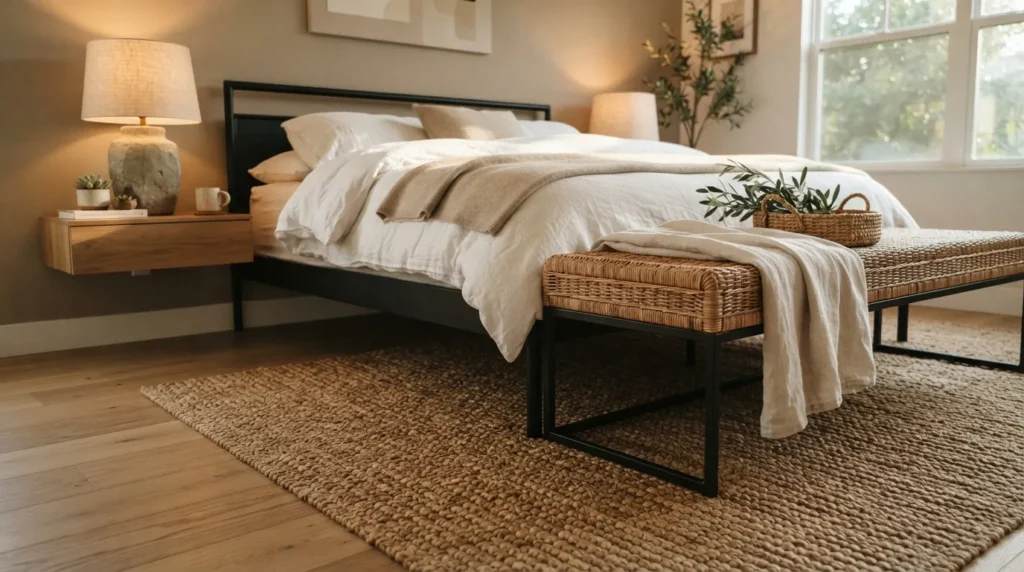
Modern furniture is often built from smooth, cool materials — lacquer, metal, glass, high-gloss laminate. Left completely uncontrasted, a room built entirely from these materials can feel more like a hotel lobby than a bedroom. Introducing natural materials like wood, rattan, or stone creates the same organic balance that works so well in other rooms of the house, grounding the sleekness of the furniture.
How To Style It
A wood or rattan bench at the foot of the bed, a stone-based lamp, or a woven rug beneath the bed frame all introduce texture without disrupting the modern silhouette. If your existing furniture is entirely metal and glass, a single large wood element — a dresser or bench — does more to balance the room than several small accents scattered throughout.
10. Functional Accent Seating
Quick Benefits
- Adds a design layer beyond the bed
- Creates a purposeful reading or dressing spot
- Rounds out the room’s furniture story
- Works even in smaller bedrooms
- Reinforces the room’s overall style
Why It Works
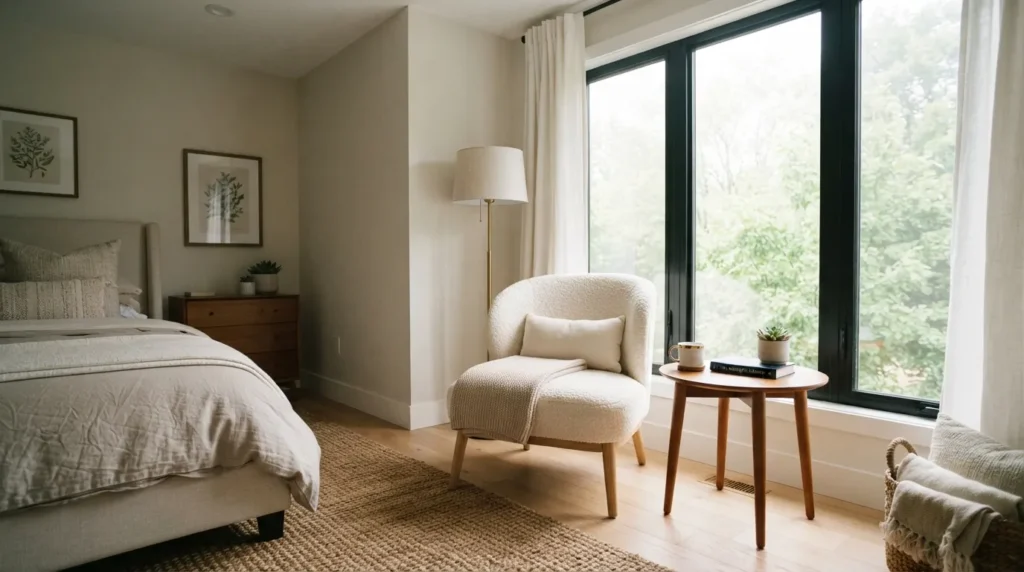
A bedroom built entirely around the bed and storage often feels incomplete once those two categories are checked off. A single accent chair or bench adds both function and a finishing design layer, giving the room a sense of completeness that furniture alone can’t achieve. That’s why many designers treat accent seating as the final piece in a modern bedroom, added only after the core furniture and layout are settled.
How To Style It
A slim accent chair in a bouclé or velvet fabric near a window, or a simple bench at the foot of the bed, adds function without crowding the room. Choose a piece with visible legs rather than a bulky upholstered base to preserve the room’s open, airy feel. If floor space is limited, a wall-mounted fold-down desk or a slim bench doubling as extra storage keeps the addition purposeful rather than decorative clutter.
Frequently Asked Questions
What colors work best with modern bedroom furniture? Warm neutrals like soft white, greige, and muted earth tones work best, since they let the furniture’s clean lines stand out without competing for attention. Bold or heavily patterned walls tend to clash with modern furniture’s minimal aesthetic.
How do I make modern furniture feel cozy instead of cold? Layer in natural textures like wood, rattan, and woven textiles, and add warm lighting rather than relying on a single overhead fixture. Texture and warmth are what separate a cozy modern bedroom from a sterile showroom.
Is a low platform bed better for a modern bedroom? Yes, a low-profile platform bed is one of the clearest signals of modern style and helps rooms with standard ceiling heights feel more spacious. It also pairs easily with a wide range of headboard and bedding styles.
How many pieces of art should go in a modern bedroom? A small curated grouping of three to five pieces in a consistent frame color usually works best, offering personality without cluttering the room’s clean lines. A single oversized piece can also work well above the bed.
Do I need matching furniture for a modern bedroom to work? No — matching sets can actually feel flat. Mixing complementary finishes and materials, like a wood dresser with a metal-framed bed, tends to create a more layered, intentional look than a fully matched set.
What’s the biggest mistake people make decorating around modern furniture? Filling every surface and leaving no negative space. Modern design relies on breathing room between pieces, and overcrowding the room undercuts the clean, calm feel the furniture is meant to create.
Can a small bedroom still use modern furniture? Yes, and it often works especially well. Low-profile frames, floating nightstands, and light-reflecting metal accents all help small modern bedrooms feel more open than heavier, traditional furniture would.
Conclusion
Modern furniture only feels cold when it’s left to stand entirely on its own. The real work of decorating around it happens in the layers built on top — warm lighting, natural textures, layered textiles, and enough negative space for each piece to be seen clearly. None of these changes require replacing furniture you already love; they simply give it the supporting cast it needs.
Start with one or two ideas and gradually build a space that reflects your style and supports genuine rest. A single lighting swap or a well-chosen throw can shift how the whole room feels, long before any bigger changes are made.
Related Articles
- Small Bedroom Layout Ideas
- Neutral Home Styling Tips
- Minimalist Living Room Decor
- Cozy Bedroom Ideas
- How to Mix Metal Finishes at Home