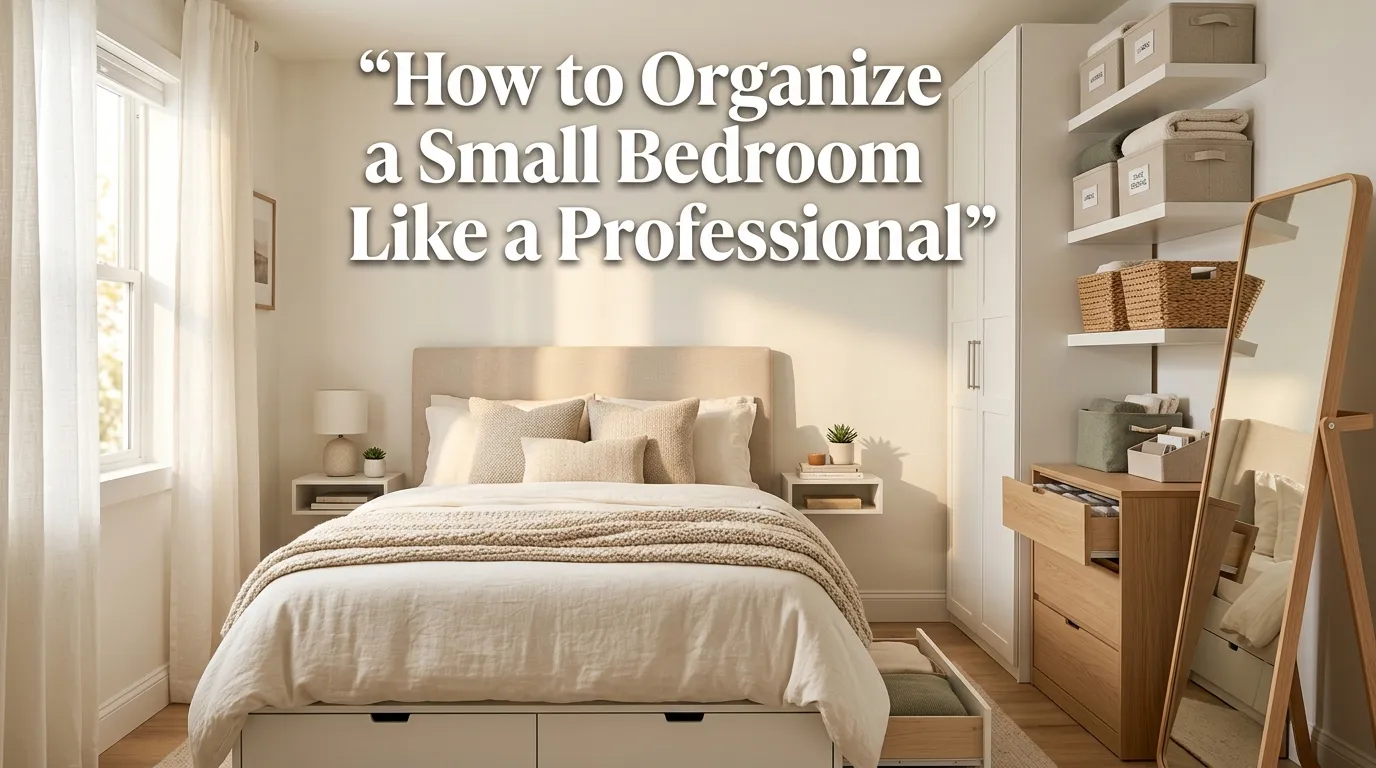
How to Organize a Small Bedroom Like a Professional
Organizing a small bedroom can be challenging when you need to fit clothing, bedding, furniture, accessories, and everyday essentials into a limited footprint. But a small room can still feel spacious and polished when every area is used intentionally.
Professional-looking organization isn’t necessarily about buying lots of storage products. It starts with understanding how the room functions and choosing solutions that make frequently used items easy to access.
In my experience, the biggest improvement usually comes from reducing visual clutter before adding more storage. Once unnecessary items are removed, it becomes much easier to see where additional organization is actually needed.
Vertical space is also incredibly valuable. Walls, the backs of doors, the area beneath the bed, and the upper portions of closets can provide storage without taking away valuable floor space.
Furniture selection matters too. A bed with drawers, a narrow nightstand, or a wall-mounted shelf can perform multiple functions while keeping the room visually light.
The goal isn’t to make every surface completely empty. Instead, create clear zones for sleeping, dressing, storage, and everyday routines.
These practical ideas can help you organize a small bedroom efficiently while keeping it comfortable, attractive, and easy to maintain.
Table of Contents
- Start With a Room Reset
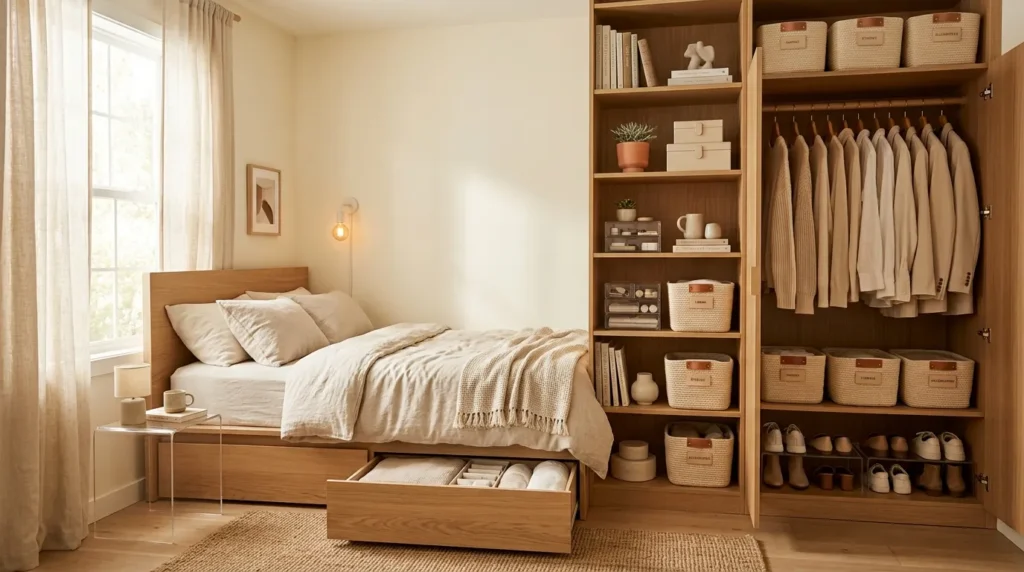
- Use Under-Bed Storage
- Maximize Closet Space
- Go Vertical With Shelving
- Choose Multifunctional Furniture
- Organize the Nightstand
- Use the Back of the Door
- Create a Dedicated Clothing Zone
- Keep Surfaces Visually Clear
- Build a Simple Maintenance Routine
1. Start With a Room Reset
Quick Benefits
- Creates immediate space
- Makes organization easier
- Reduces visual clutter
- Reveals storage needs
- Improves room flow
Why It Works
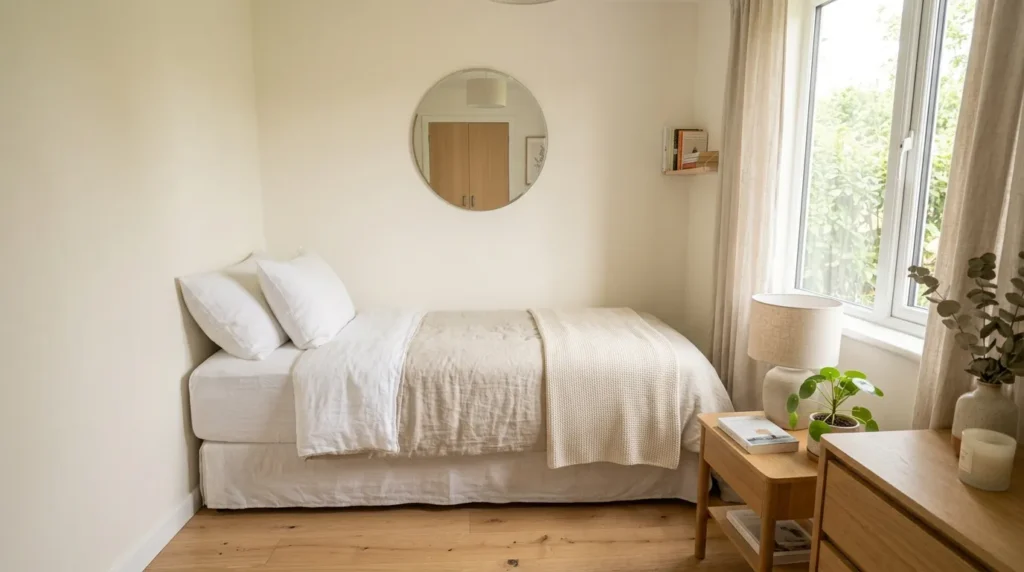
Before adding organizers, reset the room. Remove trash, laundry, items that belong elsewhere, and anything you no longer use.
A clear starting point makes it much easier to evaluate the actual storage challenges rather than trying to organize around unnecessary belongings.
I’ve found that even a small bedroom can feel noticeably larger after a thorough reset.
How To Style It
Work around the room in small sections. Clear the floor first, then surfaces, drawers, and storage areas.
Once everything has a designated category, return only the items that genuinely belong in the bedroom.
2. Use Under-Bed Storage
Quick Benefits
- Uses hidden space
- Stores seasonal items
- Keeps floors clear
- Works in small rooms
- Doesn’t require extra furniture
Why It Works
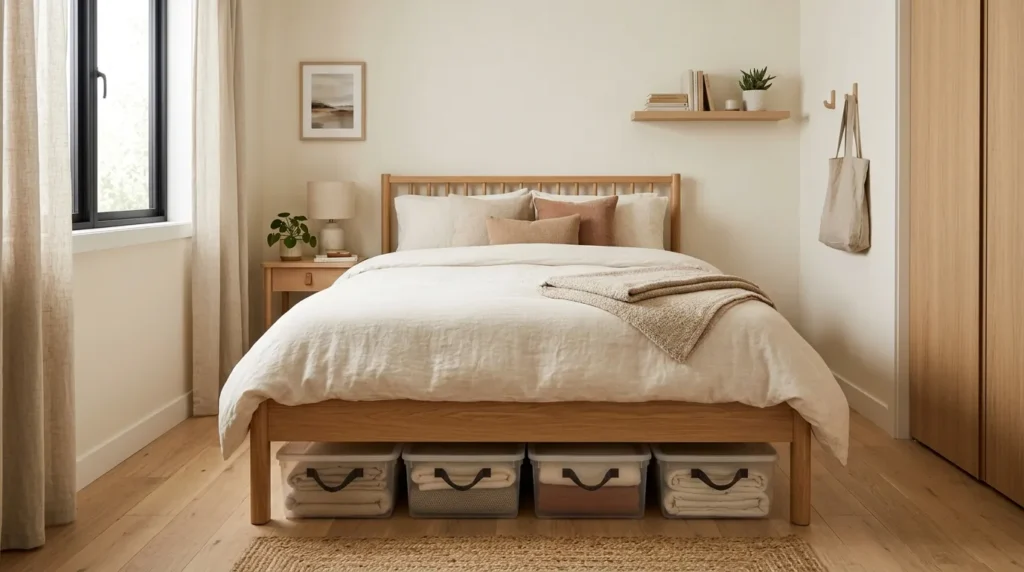
The area beneath the bed is often one of the largest unused storage zones in a small bedroom.
It can hold seasonal clothing, extra bedding, shoes, luggage, or other less frequently used belongings while keeping them out of sight.
I’ve found that under-bed storage works best when items are grouped and clearly labeled.
How To Style It
Use low-profile containers that fit comfortably beneath the bed. Choose boxes or bags that protect contents from dust as appropriate.
Keep frequently used items toward the front and seasonal belongings farther back.
3. Maximize Closet Space
Quick Benefits
- Improves clothing access
- Uses existing storage
- Creates more room
- Reduces closet clutter
- Makes dressing easier
Why It Works
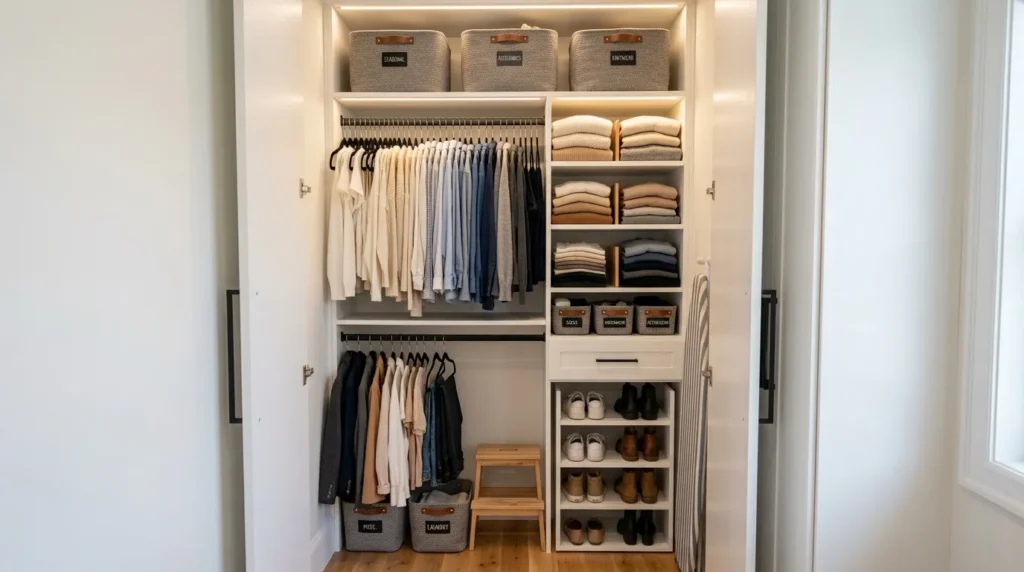
Small closets often feel crowded because vertical space isn’t fully used. Adding another hanging level, shelf organizers, or appropriate storage bins can increase usable capacity.
Decluttering clothing before reorganizing is equally important.
I’ve found that grouping clothing by type makes it much easier to identify what needs to be moved, donated, or stored elsewhere.
How To Style It
Arrange clothes by category and, if helpful, color. Use slim hangers to create additional hanging space.
Store less frequently used items on upper shelves while keeping everyday clothing at comfortable reach.
4. Go Vertical With Shelving
Quick Benefits
- Saves floor space
- Uses empty walls
- Adds storage
- Creates display opportunities
- Works in narrow rooms
Why It Works
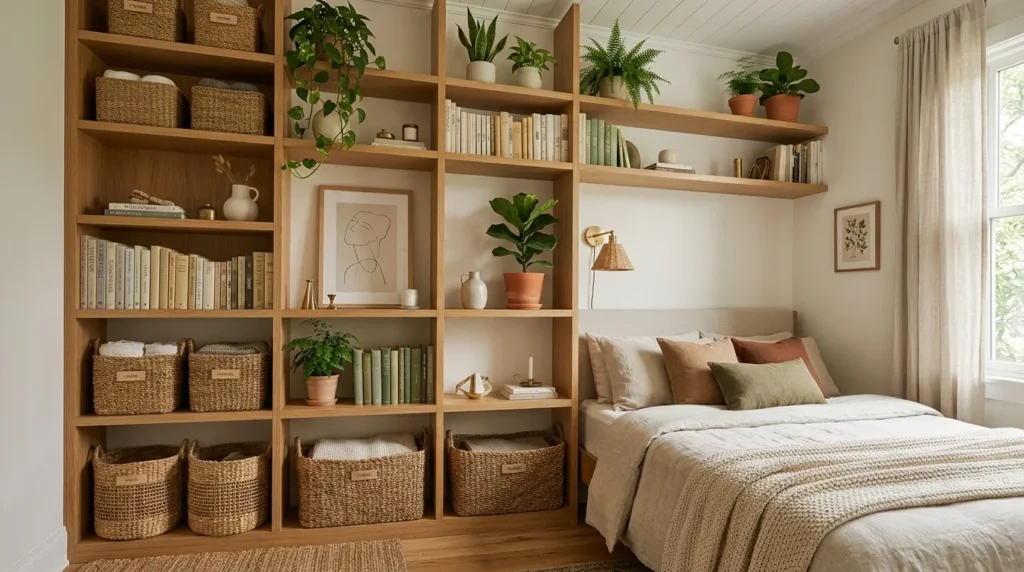
When floor space is limited, walls become valuable storage real estate. Vertical shelving can hold books, baskets, accessories, folded clothing, or decorative pieces without taking up much floor area.
It can also draw the eye upward, making the room feel taller.
I’ve found that open shelves work best when decorative and practical items are balanced.
How To Style It
Install shelves where they won’t interfere with doors, windows, or movement. Use baskets for smaller items to keep the shelves visually organized.
Leave some empty space between groups rather than filling every shelf completely.
5. Choose Multifunctional Furniture
Quick Benefits
- Saves space
- Adds storage
- Reduces furniture count
- Improves functionality
- Creates cleaner layouts
Why It Works
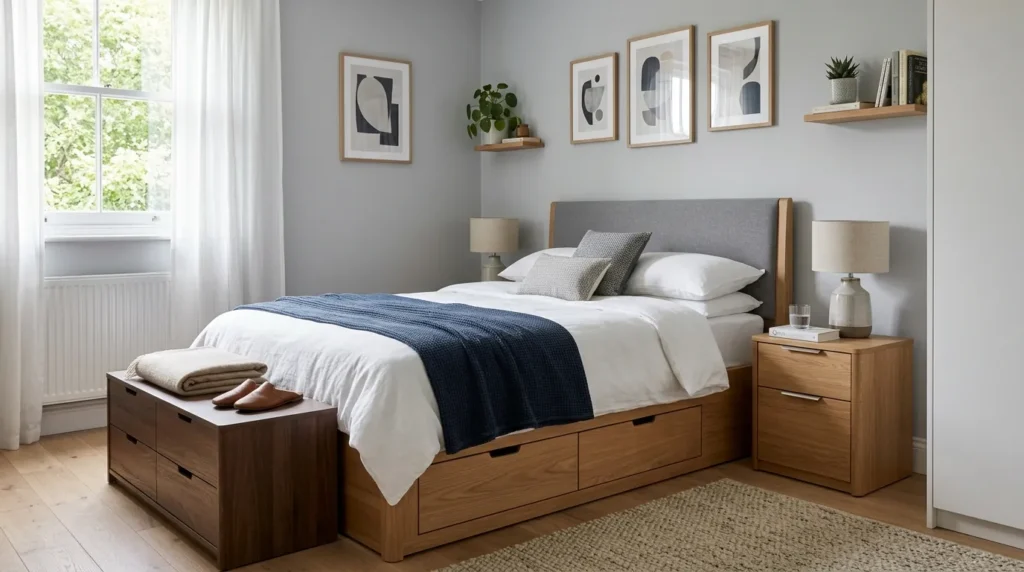
Multifunctional furniture is especially valuable in compact bedrooms. A storage bed, bedside table with drawers, bench with hidden storage, or wall-mounted desk can serve more than one purpose.
Fewer furniture pieces can create better circulation and make the room feel less crowded.
I’ve found that choosing furniture based on actual daily needs prevents wasted space.
How To Style It
Measure carefully before buying or building furniture. Prioritize pieces that provide useful storage without making the room visually heavy.
Choose simple silhouettes and finishes that blend with the rest of the room.
6. Organize the Nightstand
Quick Benefits
- Reduces bedside clutter
- Improves daily routines
- Keeps essentials accessible
- Creates visual calm
- Uses small spaces efficiently
Why It Works
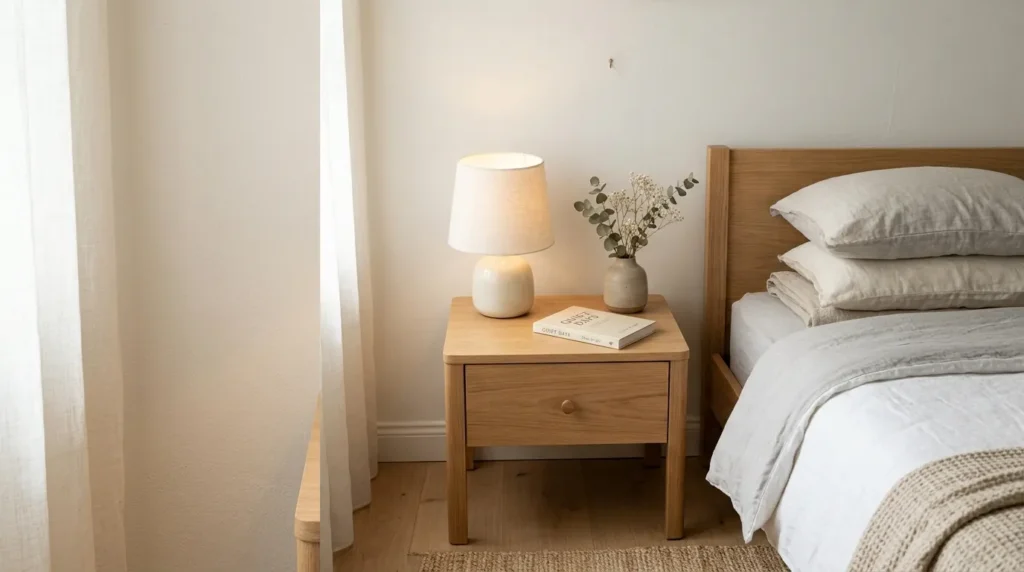
A nightstand can quickly become a collection point for chargers, books, glasses, skincare, receipts, and miscellaneous items. In a small bedroom, even a cluttered nightstand can make the entire room feel disorganized.
The goal is to keep only the things you genuinely use near the bed.
I’ve found that one drawer or small basket can handle most everyday essentials without making the surface crowded.
How To Style It
Keep the tabletop limited to a lamp, a book, a small decorative object, or another necessary item.
Use drawers or a small organizer for chargers, personal items, and other essentials that need to remain nearby.
7. Use the Back of the Door
Quick Benefits
- Creates hidden storage
- Uses unused space
- Works for accessories
- Keeps floors clear
- Easy to customize
Why It Works
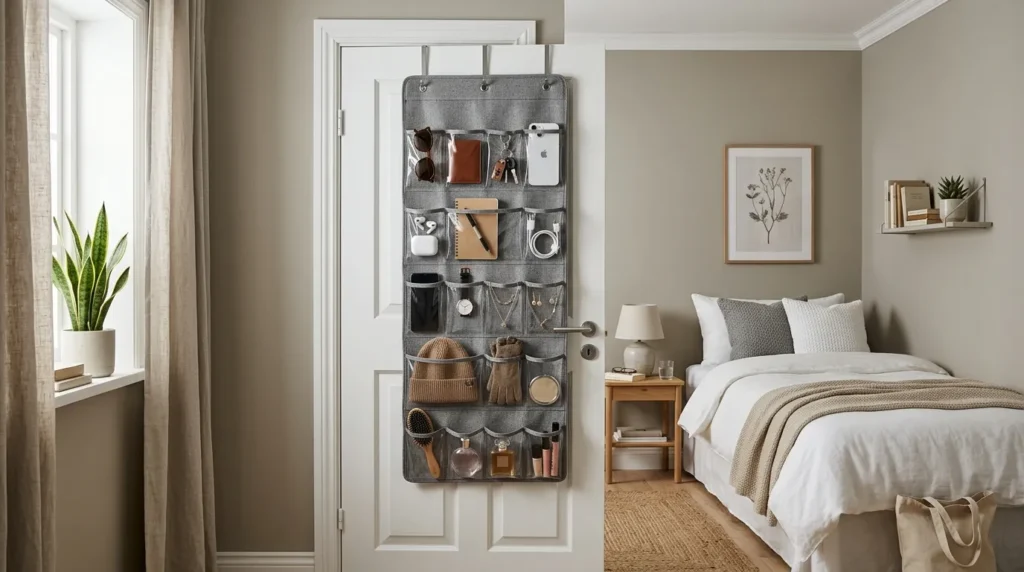
The back of a bedroom or closet door can provide valuable vertical storage without taking up floor space.
Over-the-door organizers can hold accessories, shoes, small bags, hair tools, or other lightweight belongings, depending on the organizer’s design and weight capacity.
I’ve found that door storage is particularly useful when closet space is limited.
How To Style It
Choose an organizer that fits securely without preventing the door from closing properly.
Group similar items together and avoid overloading the organizer so the door remains easy to operate.
8. Create a Dedicated Clothing Zone
Quick Benefits
- Simplifies mornings
- Reduces chair clutter
- Improves organization
- Keeps clothing visible
- Creates clear routines
Why It Works
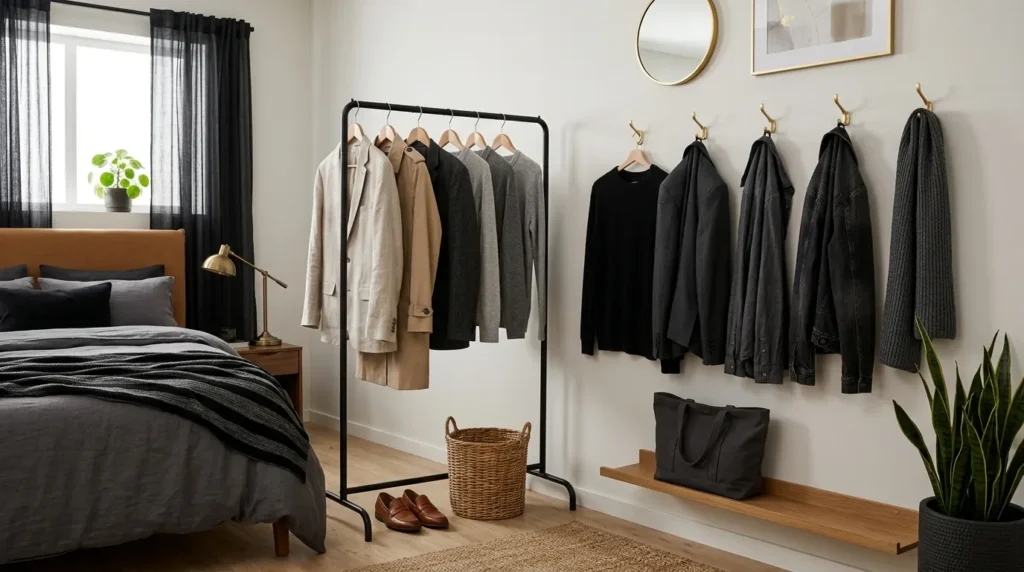
Clothing often becomes bedroom clutter when there isn’t a clear place for worn-but-not-ready-to-wash items.
Creating a designated clothing zone can prevent clothes from accumulating on chairs, floors, and the bed.
I’ve found that even a small wall hook system or slim garment solution can make a noticeable difference.
How To Style It
Use hooks, a narrow clothing rack, or another appropriate storage solution for items that will be worn again.
Keep the zone limited so it doesn’t become another place where clothing can pile up indefinitely.
9. Keep Surfaces Visually Clear
Quick Benefits
- Makes the room feel larger
- Reduces visual noise
- Makes cleaning easier
- Highlights décor
- Creates a professional appearance
Why It Works
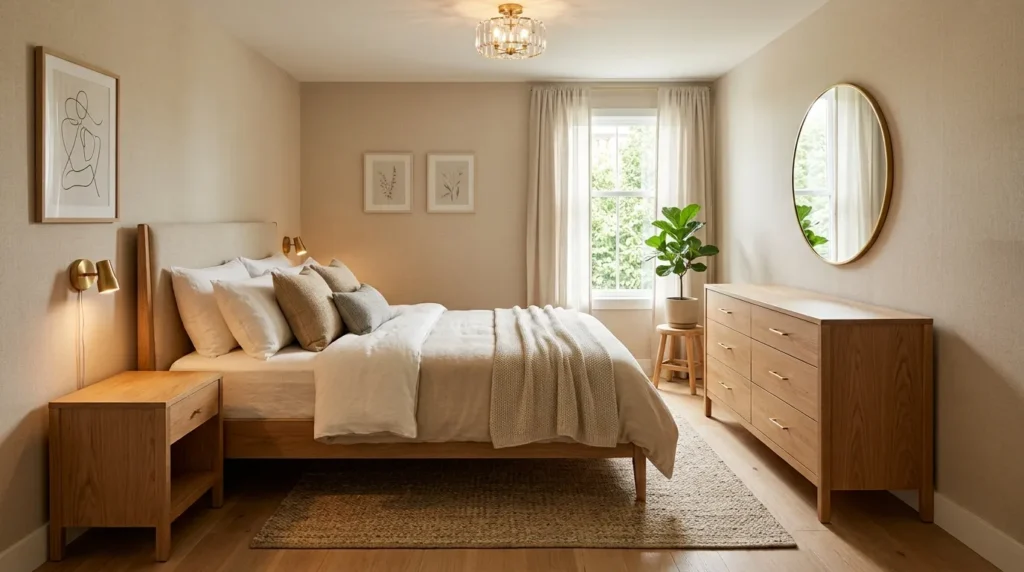
Professional organizers often focus on visual simplicity because cluttered surfaces can make a small room feel significantly smaller.
Clear dressers, shelves, desks, and bedside surfaces create more breathing room.
I’ve found that leaving intentional empty space is one of the easiest ways to make a compact bedroom feel more sophisticated.
How To Style It
Remove everything from one surface and decide what genuinely belongs there.
Return only functional or decorative items that contribute to the room. Store smaller everyday belongings inside drawers, baskets, or designated containers.
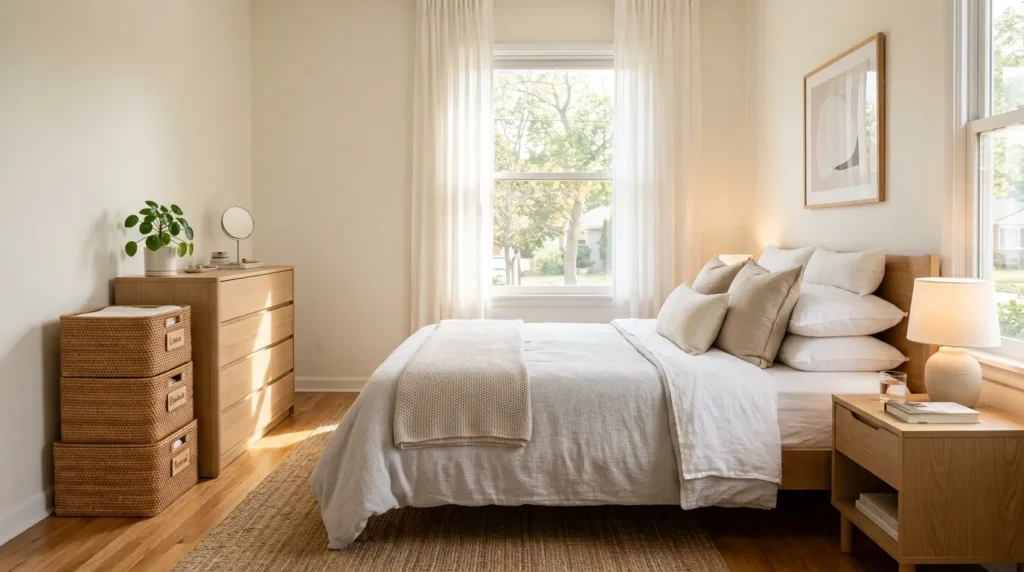
10. Build a Simple Maintenance Routine
Quick Benefits
- Prevents clutter buildup
- Keeps storage functional
- Saves future time
- Makes cleaning easier
- Maintains organization
Why It Works
A small bedroom stays organized more easily when the system is simple enough to maintain every day.
Returning items immediately, putting laundry in its designated place, and doing quick surface resets can prevent small messes from becoming overwhelming.
I’ve found that maintenance is much easier when every frequently used item has an obvious home.
How To Style It
Create a short daily reset that includes clearing the floor, making the bed, returning clothing, and checking visible surfaces.
Once a week, review problem areas and remove anything that no longer belongs.
Frequently Asked Questions
How do I organize a very small bedroom?
Start by decluttering, then use vertical walls, under-bed storage, closet organizers, multifunctional furniture, and door storage to maximize available space.
How can I make a small bedroom look organized?
Keep visible surfaces relatively clear, use matching or coordinated storage containers, group similar items, and avoid overcrowding furniture.
What should I store under my bed?
Seasonal clothing, extra bedding, shoes, luggage, and other less frequently used belongings can be suitable for under-bed storage when properly protected.
How do I organize a small closet?
Declutter first, group clothing by category, use slim hangers, maximize vertical space, and keep frequently worn items easiest to reach.
How can I store clothes without enough closet space?
Consider under-bed containers, vertical shelving, a slim clothing rack, storage furniture, and appropriate door organizers.
How often should I reorganize a small bedroom?
A quick daily reset combined with a short weekly review can prevent clutter from building up and keep your organization system functional.
Conclusion
Organizing a small bedroom is primarily about using space intentionally. Instead of trying to fit more furniture into the room, focus on reducing clutter and making better use of vertical, hidden, and multifunctional storage.
Under-bed containers, closet solutions, wall shelves, door organizers, and storage furniture can dramatically increase usable space without making the room feel crowded.
The most important step is creating a home for the things you use regularly. When everything has an obvious place, tidying becomes much easier.
Keep visible surfaces simple, avoid unnecessary storage products, and establish a short maintenance routine. With these habits, even a compact bedroom can feel organized, comfortable, and professionally styled.